
- 140 students competed in the U.S. National Championship, with 6 winners advancing to the global stage.
- $8,000 is the potential prize for world champions, reflecting high stakes.
- $16,000 annual salary premium for certified employees over uncertified peers.
Experts agree that foundational digital skills, validated through certifications like MOS, remain critical in the AI era, serving as a force multiplier for productivity and career advancement.
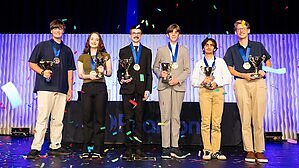
Digital Titans: Why Office Skills Are a Strategic Asset in the AI Era
HOBOKEN, NJ – June 18, 2026 – While headlines are dominated by the complex architectures of artificial intelligence, a quieter, more foundational skill set proved its enduring value last week in Nashville. Pearson, the global education company, crowned the winners of its 24th annual Certiport Microsoft Office Specialist U.S. National Championship, an event that brought together 140 of the nation's most adept young users of Word, Excel, and PowerPoint. Far from a nostalgic nod to office software of the past, the competition highlights a crucial strategic insight for business growth: in the race to build an AI-ready workforce, mastery of the basics is non-negotiable.
The event saw students aged 13 to 22, who had bested thousands of peers in state-level competitions, test their digital fluency under pressure. The winners are now poised not only for academic and professional success but also for a trip to the global stage, underscoring the growing importance of verifiable digital skills in a competitive landscape.
From Nashville to the World Stage
The atmosphere in Nashville was charged with a unique blend of youthful energy and intense focus. Finalists were tasked with recreating documents, spreadsheets, and presentations with speed and precision, demonstrating a level of proficiency that goes far beyond casual use.
In the end, six students earned the coveted title of U.S. National Champion across two different Microsoft Office versions. The winners in the Microsoft 365 Apps category included Scott Chamberlain of Utah (Word), Ethan Strayer of Idaho (Excel), and Rebecca Sutherlin of Texas (PowerPoint). They, along with their counterparts in the Office 2019 category, will now advance to the Certiport 2026 Microsoft Office Specialist World Championship in Anaheim, California, from July 26-29.
These young champions will represent the United States against top finalists from over 100 countries. While the press release mentioned a $3,000 prize for world champions, recent global competitions have awarded top prizes as high as $8,000, suggesting the stakes in Anaheim could be even greater.
"These students have gained a valuable credential for their resumes that highlights their commitment to developing sought-after skills and creating a pathway for continued learning and growth," said Laura Peterson, Managing Director of Professional Assessments at Pearson. "Both the certification they've achieved and the title 'Microsoft Office Specialist' will benefit them as they advance in their academic and professional journeys."
The ROI of Digital Certification
In a marketplace crowded with degrees and self-reported skills, the Certiport Microsoft Office Specialist (MOS) certification provides a clear, verifiable benchmark of competence. This validation is becoming a significant differentiator for students and early-career professionals. The American Council on Education (ACE) even recommends college credit for MOS certifications, giving these high-achieving students a potential head start in higher education.
The benefits extend directly to the bottom line. Research indicates that certified entry-level business employees can earn up to $16,000 more annually than their uncertified peers. This premium reflects a simple reality: employers are willing to pay for proven proficiency. Nearly 80% of recruiters actively seek candidates with Microsoft Office experience, and a formal certification removes all ambiguity.
"This competition shows what's possible when student talent, digital skills, and certification come together – a powerful combination that prepares students for success in the modern workforce," said Jeana Jorgensen, Corporate Vice President, Global Skilling at Microsoft. The technology giant's official backing makes the Certiport program the sole globally recognized certification for its flagship productivity suite.
This impact is felt across a wide array of roles. While administrative and office management positions are obvious beneficiaries, the skills are foundational for project coordinators, research analysts, IT support technicians, and even accountants, who rely on deep Excel knowledge for data analysis and modeling.
The Bedrock of an AI-Ready Workforce
The most compelling strategic narrative emerging from the championship is the relationship between these foundational skills and the looming AI revolution. Some might question the focus on traditional software when generative AI seems poised to automate many routine tasks. However, this perspective misses a critical point: AI is a force multiplier, not a wholesale replacement for human skill.
Proficiency in tools like Excel, Word, and PowerPoint provides the essential framework for interacting with and leveraging AI effectively. An employee who understands the principles of data structuring in Excel is better equipped to prompt an AI for meaningful analysis. A user skilled in the narrative flow of a PowerPoint presentation can more effectively guide an AI to generate compelling visuals and then refine them with human creativity. The future of work is not "AI or Office," but "Office + AI."
This view is supported by broad economic trends. The World Economic Forum reports that while AI and big data are among the fastest-growing skill requirements, technology literacy remains a core competency whose importance is expected to surge by 2030. Yet, a significant skills gap persists. A recent study by Pearson and AWS found that 53% of employers struggle to find AI-ready graduates.
The U.S. Department of Labor's recent publication of an AI Literacy Framework in February 2026 signals a national recognition that this competency must be cultivated across the entire education and workforce system. Experts argue that this training cannot wait for college or professional development; it must begin earlier. Programs like the Certiport championship are, in effect, building the pipeline of a future workforce that is not just AI-aware, but AI-capable, because they possess the underlying digital fluency to make AI tools productive.
Pearson's Strategic Shift to a Skills-First Economy
The Certiport championship is more than a standalone event; it's a key component of Pearson's strategic pivot from a traditional content publisher to a comprehensive lifelong learning company. By fostering and validating essential digital skills, Pearson is positioning itself at the center of the global upskilling and reskilling movement.
The company’s structure now prioritizes "Assessments & Verification," with Certiport as a flagship offering that provides globally recognized credentials. This aligns with a broader market shift towards skills-based hiring, where what a candidate can do is valued as much, if not more, than where they studied.
Furthermore, Pearson is not just teaching the skills for yesterday's technology. The company is actively investing in the future of learning, highlighted by its June 2025 multi-year strategic partnership with Google Cloud. This collaboration aims to integrate Google's powerful AI models, including Gemini, into Pearson's educational products, creating personalized, data-driven learning experiences for K-12 and beyond. By developing its own AI Literacy Modules, Pearson is simultaneously teaching the foundational skills and providing the tools to navigate the next wave of technological innovation.
This dual strategy—fortifying foundational literacy while pioneering AI in education—reveals a nuanced understanding of the evolving business landscape. Pearson is betting that the path to a high-tech future is paved with fundamental skills, and by validating those skills, it's building a powerful and sustainable engine for growth.