
- 855,000 users engaged across two mobile games, with $6M in accrued rewards ahead of TGE.
- 220,000+ Daily Active Users (DAUs) across platforms, demonstrating strong retention.
- 400,000+ ounces of preserved gold in treasury, subject to third-party audits.
Experts would likely view nGRND’s model as an innovative but unproven approach to Web3 asset-backed tokens, with potential ESG benefits pending full validation of its gold reserves and operational execution.
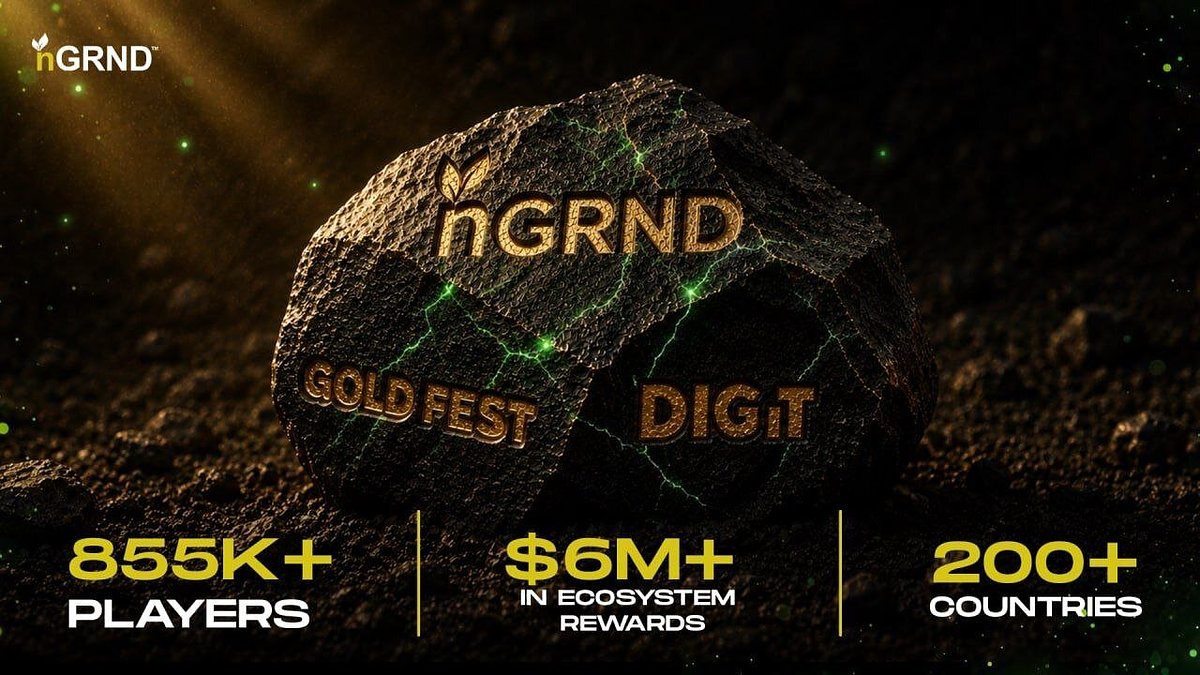
nGRND's 'Green Gold' Games Hit 855K Users, Testing a New Web3 Model
ROAD TOWN, BVI – June 02, 2026 – A Web3 initiative is testing a novel commercialization strategy by linking the digital world of mobile gaming with the tangible, yet untouched, value of gold. nGRND Gold Protocol announced today that its sponsored games have attracted over 855,000 participants, who have collectively accrued an estimated $6 million in rewards ahead of the company's much-anticipated Token Generation Event (TGE). This milestone represents a significant stress test of its unique model: creating value not from mining gold, but from preserving it.
The BVI-based project has captured a massive audience by sponsoring two mobile games: Gold Fest, developed by GAMEE (a subsidiary of Animoca Brands and Alpha Compute Corporation), and Dig It, a Telegram-based game from Funny Till U Die Ltd. With a reported average of over 220,000 Daily Active Users (DAUs) across both platforms, nGRND is demonstrating significant user acquisition and retention—a critical first step on the long road from prototype to profit. But the real innovation, and the core of its business proposition, lies in what backs the digital rewards: a treasury of verified, in-ground gold and revenues from sustainable land use.
The ‘Green Gold’ Model: Value Without Extraction?
At the heart of nGRND's strategy is a concept it calls "Preserved Gold." Instead of funding environmentally costly mining operations, the protocol acquires long-term rights to land with proven gold deposits and keeps the resource in the ground. The company claims its value is then derived from two primary streams: the natural appreciation of the gold itself and revenue generated from "alternative land use monetization."
This second stream is where nGRND's ESG (Environmental, Social, and Governance) ambitions come into focus. By avoiding extraction, the company claims it prevents significant carbon emissions—an estimated 792 kg of CO₂ per ounce of gold—which can then be used to originate carbon credits. These credits, along with other sustainable initiatives on the preserved sites, are intended to create a revenue stream independent of fluctuating gold prices.
“nGRND.io is introducing a new framework for a gold-based utility with participation sustained by real monetised value without extraction or environmental decimation,” said Professor Lisa Wilson, CEO and Co-Founder. “The Protocol connects real world business and sustainability with Web3.”
To lend credibility to this unconventional asset-backing, nGRND states its preserved gold treasury is subject to rigorous third-party auditing in accordance with standards like Canada's National Instrument 43-101 (NI 43-101). This regulation is the gold standard for reporting mineral resources, requiring verification by a qualified, independent professional. The company has stated it holds "over 400,000 classified ounces of gold resources under initial agreements" in Canada and the USA. However, for potential investors and partners, the next crucial milestone will be the public release of these independent NI 43-101 technical reports to fully validate the extent and classification of these assets.
The regulatory path also adds a layer of complexity. While nGRND Inc. is based in the BVI, it states the tokenization of its asset-backed token will be handled by a licensed Virtual Asset Services Provider (VASP) regulated by Dubai's Virtual Assets Regulatory Authority (VARA), placing the asset-backing mechanism within a recognized regulatory framework.
Gaming as the On-Ramp to Web3
While the financial model is complex, the user acquisition strategy has been strikingly simple and effective: meet users where they are. By partnering with established game developers, nGRND has successfully navigated one of the biggest hurdles in Web3—onboarding mainstream users.
Gold Fest, from the Animoca-backed GAMEE, attracted the lion's share of participants with 549,000 players. Leveraging the massive reach of the TON (The Open Network) ecosystem, the game converts in-game points into gold-backed tokens distributed directly to players' TON wallets, simplifying the often-daunting process of setting up crypto accounts. Dig It targeted a different but equally vast audience, drawing 306,000 players through a simple interface on the popular messaging app Telegram.
This approach aligns perfectly with a growing industry trend. Web3 projects are increasingly moving away from complex, high-barrier-to-entry experiences and toward fun, accessible mobile games that abstract away the underlying blockchain technology. By offering tangible rewards tied to a real-world asset, nGRND provides a powerful incentive that transcends the speculative nature of many "play-to-earn" models. The high DAU figures suggest this "proof-of-stake utility" model, which rewards continued engagement rather than just initial sign-ups, is fostering genuine community retention.
From In-Game Points to Real-World Assets
The journey from a high score to a tangible asset is the final and most critical piece of the commercialization puzzle. The $6 million in accrued rewards are designed to convert into nGRND Gold Protocol tokens following the TGE. According to the company, reward claims are scheduled to begin processing by September 30, 2026, a key date that will test the protocol's operational readiness and the seamlessness of its redemption process.
The tokens themselves are intended to function as Real-World Asset (RWA) commodity tokens, with the company stating that for every 35,000 tokens, at least one ounce of Preserved Gold is acquired for its treasury. The rewards for participants who stake their tokens will be sustained by the dual revenue streams of gold appreciation and alternative land use monetization.
Looking ahead, nGRND plans to expand its utility framework far beyond gaming. The protocol is developing eight operational "participation streams"—including Governance, Impact, Learn, and even a channel for AI Agents—designed to create a multifaceted ecosystem where staking rewards can be multiplied through various forms of engagement. This long-term vision positions gaming not as the end-product, but as the primary engine for building an initial, highly engaged user base for a much broader sustainable finance platform. With second seasons for both Gold Fest and Dig It already underway or planned, nGRND is doubling down on its successful acquisition strategy as it prepares for the pivotal transition from distributing points to delivering profit.