
- 35% of high-risk participants reduced their health risk profile within a year
- 71% employee engagement in Manufacturing and Construction sectors with personalized programs
- 80% of participants in Professional Services improved mindfulness, mental health, or stress management
Experts conclude that personalized, data-driven wellbeing programs with clinical support significantly improve employee health outcomes and engagement across industries.
New Report Shows Personalized Wellbeing Programs Cut Employee Health Risks
NEW YORK, NY – March 19, 2026 – For years, corporate leaders have grappled with a persistent question: do employee wellbeing programs actually work? A new report released this week offers a compelling, data-backed answer. According to an impact analysis from Navigate Wellbeing Solutions, unveiled at The Conference Board's 26th Annual Employee Health Care Conference, more than one-third of high-risk participants successfully reduced their health risk profile within a single year.
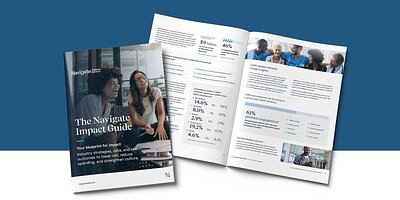
This key finding provides one of the clearest signals to date that strategic, personalized investments in workforce health can yield tangible, measurable outcomes. The report, titled the 'Navigate Impact Guide,' analyzes anonymized data from 2025 across thousands of employees in multiple sectors, challenging the notion that wellbeing initiatives are a soft benefit with unquantifiable returns. Instead, it positions them as a critical lever for building a healthier, more resilient workforce.
"For years, employers and health plans have struggled to determine whether their wellbeing investments are actually working," said Brooke Ossenkop, Executive Vice President of Strategy and Marketing at Navigate Wellbeing Solutions. "Organizations are beginning to see clearer signals of impact when health strategies are embedded into culture, personalized care across physical, mental, social, and financial wellbeing, and supported with clinical wellbeing such as pharmacist-led coaching."
From Expense to Investment: Proving the ROI of Employee Health
The struggle to demonstrate a clear return on investment has long been the Achilles' heel of the corporate wellness industry. While most large companies offer some form of wellness program, industry-wide engagement often hovers between a lackluster 20-30%. This low participation, combined with studies showing mixed results on cost reduction and productivity, has left many executives skeptical.
Navigate's report directly confronts this skepticism by focusing on a crucial metric: the movement of employees out of high-risk health categories. This shift, identified through tools like Health Risk Assessments (HRAs), represents a direct reduction in the factors that lead to chronic conditions, absenteeism, and increased healthcare spending. The report suggests that achieving such results requires moving beyond generic, one-size-fits-all platforms.
The findings indicate that a combination of clinical guidance, cultural alignment, and data-driven personalization is essential. By integrating pharmacist-led coaching with a digital platform that tracks readiness to change, companies can deliver targeted interventions that resonate with employees, driving both engagement and positive health outcomes. This data-driven framework provides the validation that finance and HR leaders need to champion wellbeing as a core business strategy rather than a discretionary expense.
Beyond One-Size-Fits-All: The Impact of Industry-Specific Strategies
A central theme of the report is the profound ineffectiveness of a generic approach to employee health. The 'Navigate Impact Guide' breaks down its findings by sector, revealing how tailored strategies address the unique pressures and realities of different workforces, leading to dramatically different results.
In Manufacturing and Construction, traditionally hard-to-reach sectors with physically demanding work, organizations providing personalized wellbeing support achieved an impressive 71% employee engagement. This figure stands in stark contrast to the low industry averages and demonstrates that when programs are relevant and accessible, even the most challenging-to-engage populations will participate.
For the Healthcare sector, where burnout and stress are endemic, the focus on social wellbeing yielded significant gains. The report found that nearly half of healthcare participants improved from struggling to thriving in social wellbeing. This improvement fosters the communication, connection, and trust that are critical for effective care delivery teams, directly impacting both employee retention and patient outcomes.
Meanwhile, in Professional Services, high-performing knowledge workers face immense pressure to maintain focus and resilience. Here, the report highlights that over 80% of participants improved their mindfulness, mental health, or stress management. This directly addresses a major driver of lost productivity, as poor mental health is estimated to cost the global economy over $1 trillion annually.
Finally, for Public and Labor Organizations, financial stability emerged as a key pillar of resilience. Nearly half of participants in this sector improved their financial wellbeing. With research indicating that money is the top source of stress for a majority of employees, these gains in financial literacy and stability play a crucial role in reducing overall stress and improving an employee's ability to focus at work.
The Architecture of a Resilient Workforce
The report's findings paint a clear picture of modern workforce resilience, one that extends far beyond physical fitness. The success stories across different industries underscore the interconnected nature of physical, mental, social, and financial health. A program that only offers discounted gym memberships while ignoring an employee's financial stress or social isolation is unlikely to have a lasting impact.
Navigate's model appears to succeed by building a comprehensive support system around the individual. This begins with sophisticated data gathering through an NCQA-certified HRA, which assesses not only biometrics and lifestyle but also personal goals and readiness to change. This information allows for the creation of personalized pathways that connect employees with the right resources at the right time.
A key differentiator highlighted in the report is the use of clinical expertise, particularly pharmacist-led health coaching. This provides a level of credible, one-on-one guidance that is often missing from purely digital solutions, helping employees navigate complex health issues and build sustainable habits. This clinical underpinning, combined with a holistic focus, creates a powerful engine for meaningful change.
"Employee expectations continue to evolve, but one thing remains consistent: people perform at their best when their needs are understood and supported," stated Jim Barclay, Executive Vice President of Client Experience at Navigate Wellbeing Solutions. He emphasized that success requires a partnership, where client success and health coaching teams work alongside organizations to translate data into strategies that create real impact.
By embedding these comprehensive strategies into the fabric of company culture, organizations are moving away from the paradigm of a wellness 'program' and toward a sustainable culture of health. This shift appears to be the driving force behind the significant risk reduction and engagement metrics, setting a new standard for what businesses should expect from their wellbeing investments.