
- $8.7 billion: Annual U.S. spending on trend-driven home decor items discarded within a year
- 61%: Americans who regret social media-influenced impulse purchases
- 450%: Increase in discarded furniture since 1960, with 80% ending in landfills
Experts urge consumers to prioritize longevity, personal expression, and sustainability in home decor to break the cycle of trend-driven waste and psychological distress.
The High Cost of 'Viral' Homes: TikTok Trends Fuel an $8.7B Waste Cycle
NEW YORK, NY – January 14, 2026 – The endless scroll through TikTok and Instagram for home inspiration has a hidden, multi-billion-dollar price tag. A new analysis reveals that Americans are spending an estimated $8.7 billion annually on trend-driven home decor items, only to abandon them within a year, fueling a costly cycle of consumer regret, environmental damage, and psychological distress.
The data, compiled by home decor platform AweDeco from online marketplaces and consumer surveys, paints a stark picture of a nation caught on a “trend treadmill.” What starts as a harmless search for a new rug or paint color quickly spirals into a pattern of impulsive spending designed to achieve a fleeting, “TikTok-viral” aesthetic. This chase is leaving wallets lighter, landfills fuller, and many feeling worse about the very spaces meant to be their sanctuaries.
The Financial Fallout of Fast Decor
The financial burden of keeping up with rapidly changing online styles is substantial. Consumers now spend an average of $1,598 each year on home decor, with a significant portion driven by social media influence. The problem is not the spending itself, but the regret that follows. A Bankrate survey found that 61% of Americans regret an impulse purchase they were influenced to make by social media. The remorse is even more acute among younger generations, with 70% of Gen Z and Millennials reporting buyer's remorse within six months of a trend-driven purchase.
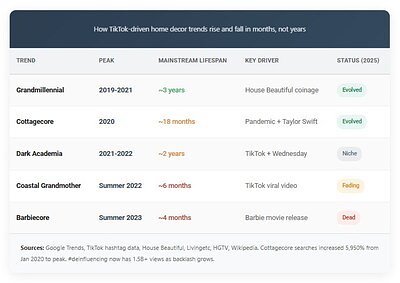
This dissatisfaction stems from the dramatically compressed lifespan of modern design trends. While styles once lasted for years or even decades, viral aesthetics now rise and fall in a matter of months. The once-ubiquitous “Cottagecore” aesthetic of 2020 has been replaced by a graveyard of other micro-trends, including “Coastal Grandmother” (2022) and the vibrant but short-lived “Barbiecore” (2023), which lasted only about four months. For the one-third of consumers who admit to making purchases specifically to achieve an “Instagram-worthy” look, this means their expensive new decor can feel dated almost as soon as it's unboxed.
This cycle of buying and discarding creates a significant financial drain. The $8.7 billion in waste represents items purchased and then quickly relegated to the basement, sold for pennies on the dollar, or, most often, thrown away as the next viral aesthetic takes over social media feeds.
From Feed to Landfill: The Environmental Crisis
The consequences of this disposable mindset extend far beyond personal finances, creating a staggering environmental crisis. The U.S. Environmental Protection Agency (EPA) reports that Americans now discard over 12 million tons of furniture and furnishings annually. This figure has ballooned by a shocking 450% since 1960, mirroring the rise of mass-produced consumer goods.
The fate of this mountain of unwanted decor is grim. Over 80% of it—more than 9.6 million tons—ends up in landfills. The materials are often a mix of particleboard, plastics, and synthetic fabrics that do not biodegrade, leaching chemicals into the soil and water for decades. In stark contrast, a minuscule 0.3% is recovered for recycling.
This phenomenon, often termed “fast furniture,” parallels the well-documented problems of the fast fashion industry. It relies on a model of producing low-cost, low-quality goods designed not to last, but to be replaced. The constant demand for newness, amplified by social media algorithms that reward novelty, has turned homes into another frontier for disposable consumerism, where functional items are discarded simply because they are no longer in vogue.
The Psychological Price of a Picture-Perfect Home
Perhaps the most insidious cost of the trend treadmill is its impact on mental well-being. The curated perfection of social media feeds is creating a new form of home-related anxiety. According to survey data, a majority of frequent social media users—58%—report feeling that their own home is “inadequate” after browsing online content. This digital-age version of “Keeping Up with the Joneses” is taking a heavy toll.
Further data reveals that 56% of people feel anxious when comparing their homes to those of their friends on social platforms, and 42% feel actively stressed when viewing home content online. For 40% of users, this constant comparison contributes to feelings of loneliness and isolation. The pressure to project a perfect life online has transformed the home from a private refuge into a public stage, leading to chronic dissatisfaction.
This psychological strain directly fuels impulsive behavior. The fear of missing out (FOMO), often triggered by limited-time offers and the sense that everyone else is participating in a trend, is a powerful motivator. A staggering 64% of consumers admit to buying something on sale that they later regretted, a decision frequently driven by the social pressures cultivated online.
Breaking the Cycle: Designing for Life, Not Likes
In the face of these mounting costs, interior design experts and consumer advocates are urging a shift toward more conscious and personal decorating habits. The consensus is a call to break free from the trend treadmill by prioritizing longevity, personal expression, and sustainability.
One of the most practical pieces of advice is to implement a “6-month rule”: before purchasing any major trend-driven item, wait six months. If the desire is still there after the initial hype has faded, it’s more likely to be a considered choice rather than an impulse. Experts also recommend a strategy of investing in high-quality, timeless foundation pieces—sofas, tables, and beds—that will last for years, while indulging in trends through smaller, less expensive accessories like throw pillows, art prints, or decor objects.
Another powerful tool is a digital detox. Studies have shown that limiting social media use to just 30 minutes per day can significantly reduce anxiety and depression. By consciously limiting exposure to content that triggers spending and comparison, individuals can create the mental space to define what they truly want in their homes.
Ultimately, the solution lies in a change of mindset. “Your home should reflect you, not TikTok,” advises Andreea Dima, an interior designer with AweDeco. “The most beautiful homes are the ones that tell a personal story—not the ones that look like everyone else's feed.” This philosophy encourages creating a space that supports your actual life, filled with meaningful objects and personal touches, rather than one curated for an audience of strangers. By embracing personal style and making mindful choices, consumers can build a home that offers lasting comfort and satisfaction, far beyond the lifespan of the next viral video.