
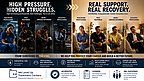
- 70% of C-suite leaders report considering leaving their roles due to burnout
- 30% of first responders develop behavioral health conditions like PTSD
- 11% of executives struggle with substance use
Experts agree that specialized, trauma-informed care is critical for addressing burnout and addiction among high-stress professionals, emphasizing the need for confidential, career-conscious treatment.
New Rehab Program Targets Silent Crisis of Professional Burnout
LAWRENCEVILLE, N.J. – May 14, 2026 – In response to a growing mental health crisis quietly afflicting the nation's most demanding professions, We Level Up Treatment Centers has announced the launch of a specialized Executive Rehab Program. The initiative aims to provide a confidential lifeline to executives, union workers, medical staff, and first responders who are privately grappling with burnout, addiction, and mental health challenges.
This new program arrives at a critical time. Federal health data and numerous studies paint a stark picture of the toll high-stress careers take on individuals who are often seen as pillars of society. From the corporate boardroom to the hospital emergency room and the front lines of public safety, the pressure to perform is leading to staggering rates of emotional exhaustion and substance misuse, frequently hidden behind a facade of high-functioning professionalism.
"Many professionals continue performing at a high level while privately struggling with burnout, anxiety, depression, alcohol misuse, or drug dependency," said Ryan Zofay, founder of We Level Up Treatment Centers, in a statement announcing the launch. "This program recognizes the unique pressures faced by executives, union members, healthcare workers, and emergency personnel."
The Hidden Toll of High-Stakes Careers
The need for such a specialized program is underscored by alarming statistics across multiple sectors. For executives, the relentless pace of corporate life has pushed burnout to critical levels, with some reports indicating nearly 70% of C-suite leaders are considering leaving their roles for better well-being. This stress often manifests in unhealthy coping mechanisms, with studies suggesting over 11% of executives struggle with substance use.
Our essential workers are facing a similar, if not more acute, crisis. Nearly half of all U.S. health workers reported feeling burned out in 2022, a significant increase from pre-pandemic levels. Physicians and nurses, who face life-and-death decisions daily, report high rates of depression and anxiety. For first responders, the numbers are even more concerning. An estimated 30% of police, firefighters, and paramedics develop behavioral health conditions like PTSD, and they are twice as likely as the general population to develop substance abuse problems, often turning to alcohol to cope with cumulative trauma.
Union workers, particularly in physically demanding fields like construction, are not immune. The industry sees substance use disorder rates significantly higher than the national average, fueled by job-site injuries, physical strain, and high-pressure work environments. For all these professionals, the fear of stigma and career repercussions creates a formidable barrier to seeking help. The very real threat of losing a license, a promotion, or the respect of colleagues forces many to suffer in silence until a crisis erupts.
"High-functioning dependence often goes unnoticed until it becomes a crisis," Zofay added. "The rehab track for professionals allows clients to seek help early, regain stability, and protect their jobs, health and their future."
A New Approach: Trauma-Informed and Career-Conscious Care
To address these complex challenges, We Level Up's program is built on two core principles: trauma-informed care and career-conscious treatment. This dual approach acknowledges that for many professionals, addiction is not a standalone issue but is deeply intertwined with underlying stress and trauma.
Trauma-informed care shifts the focus from asking "What's wrong with you?" to "What happened to you?" It recognizes that repeated exposure to critical incidents, as experienced by first responders, or the immense pressure of executive leadership can be traumatic. The program integrates evidence-based therapies like Cognitive Behavioral Therapy (CBT), Dialectical Behavior Therapy (DBT), and Eye Movement Desensitization and Reprocessing (EMDR) to help individuals process these experiences in a safe and supportive environment.
Simultaneously, the program is designed to be "career-conscious," directly tackling the professional anxieties that prevent many from seeking treatment. It offers a confidential setting where individuals can receive care without jeopardizing their careers. The initiative includes individualized treatment plans designed around work demands and provides crucial return-to-work support, helping patients build sustainable coping skills to manage high-pressure environments long-term.
Specialized Tracks for Essential Workers
A key component of the new initiative is its specialized treatment pathways tailored to the unique cultures and stressors of different professions. The program offers distinct tracks for medical professionals, first responders, and union workers, recognizing that a one-size-fits-all approach is insufficient.
The track for medical professionals focuses on managing occupational stress and emotional fatigue in a confidential setting that understands the specific pressures faced by doctors and nurses. For first responders, the program addresses the cumulative trauma experienced by firefighters, police officers, and paramedics, creating a space for them to heal alongside peers who understand their experiences.
Similarly, the services for union workers are designed to address issues like physical strain from job-site injuries, long shifts, and work-related stress, all while supporting career continuity through Employee Assistance Programs (EAPs) and other partnerships. By creating these specialized cohorts, the program aims to leverage the power of peer support, reducing the isolation that many high-functioning individuals feel.
As the conversation around mental health in the workplace grows louder, initiatives like this represent a critical step forward. While accreditations from national bodies like The Joint Commission and CARF, which the treatment center holds, provide a benchmark for quality and safety, the ultimate success of such programs hinges on their ability to build trust and deliver on the promise of confidential, effective care. For the countless professionals battling in silence, the availability of a path to recovery that respects their career and understands their unique struggles could make all the difference.