
- The secondhand market is projected to surpass $66 billion in the U.S. by 2027
- Online resale market has grown over 650% since 2018
- Brijjworks tracks landfill diversion metrics to measure environmental impact
Experts would likely conclude that Brijjworks represents a significant advancement for thrift retail, offering a purpose-built AI solution to streamline operations, maximize revenue, and quantify sustainability impact—addressing critical bottlenecks in the rapidly growing secondhand market.
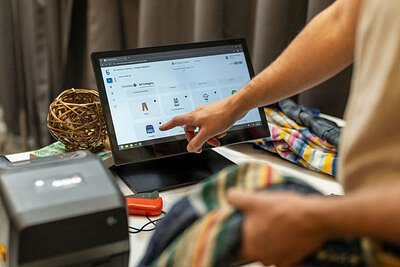
New Platform Uses AI to Fix Thrift Retail's Biggest Bottlenecks
By Michael Bennett
LEBANON, N.H. – March 18, 2026 – As the secondhand market booms, thrift retailers are grappling with a paradox: soaring demand and a mountain of donations are straining operational systems never designed for such complexity. Today, Retail Control Systems (RCS), a 30-year veteran in retail technology, launched Brijjworks, a platform aimed squarely at solving this problem. It promises to unify the chaotic journey of a donated item—from drop-off to the sales floor and even online—using a single, integrated system powered by artificial intelligence.
The announcement comes as the secondhand market is projected to surpass $66 billion in the U.S. by 2027. This growth, fueled by consumers seeking sustainability and affordability, has pushed traditional thrift stores to their limits. They face unique challenges that generic retail software cannot address: immense item variability, rapid and unpredictable inventory turnover, and the need to manage a complex production process in the backroom. Brijjworks enters this environment not as a repurposed tool, but as a purpose-built solution designed to transform operational bottlenecks into streamlined, data-driven workflows.
Cracking the Thrift Code
For decades, the backbone of thrift store operations has been a combination of manual processes, educated guesswork, and disparate software for point of sale, inventory, and accounting. This fragmented approach creates data silos and inefficiencies. An item's history, value, and journey through the store are often lost, leading to inconsistent pricing, missed revenue opportunities, and a limited understanding of the business's true performance.
Brijjworks addresses this by creating a single ecosystem that connects what were previously four separate domains. Its integrated product suite includes:
- Donation: An application to manage donor intake, track donation history, and provide digital receipts, capturing crucial data at the very start of an item's lifecycle.
- Thrift Production Manager (TPM): The operational core of the platform, TPM centralizes the sorting, grading, pricing, and tagging of goods. This multilingual tool turns the traditionally unseen labor of the backroom into a source of actionable data.
- POS (Point of Sale): A checkout system designed for the speed and unique needs of thrift, such as color-tag-based discounts, which seamlessly integrates sales data back into the central inventory system.
- Lister: An AI-enhanced tool that identifies high-value items and prepares them for sale on e-commerce channels like eBay or ShopGoodwill, extending a store's reach beyond its physical walls.
By unifying these functions, the platform provides a real-time, 360-degree view of inventory. A manager can see not just what sold, but where it came from, how it was processed, and how long it took to sell, enabling smarter decisions about everything from staffing to pricing strategy.
The AI Edge in a Variable World
The most significant innovation within Brijjworks is its use of artificial intelligence to tackle the thrift industry's most persistent challenge: pricing unique, one-of-a-kind items. Unlike traditional retail where a SKU has a set price, every donated shirt, lamp, or book is different. The platform's AI analyzes vast datasets to help standardize pricing, identify premium brands or valuable collectibles that might otherwise be overlooked, and ensure that items are priced to maximize revenue without languishing on the shelf.
"Brijjworks uses AI during production to help standardize pricing, identify high-value items, and capture sustainability data automatically, so teams can process more goods with less manual effort and clearly measure both revenue and landfill diversion," said Kevin Albert, President and CEO of Retail Control Systems. This move away from manual price guns and subjective valuation toward data-driven consistency promises to boost margins and reduce the training burden for new employees.
This AI-driven approach extends to online sales. The Lister tool can flag items suitable for e-commerce, automate the creation of listings, and manage inventory visibility across multiple online marketplaces. This helps thrift organizations tap into the lucrative online resale market—a segment that has grown over 650% since 2018—without needing a dedicated team of e-commerce experts.
Measuring What Matters: Mission and Minimized Waste
For many thrift retailers, particularly nonprofits, the mission extends far beyond the bottom line. They are engines for community programs, job training, and environmental stewardship. However, quantifying this impact has always been difficult. Brijjworks is designed to make that impact measurable and demonstrable.
By tracking every item from donation to sale or disposal, the platform automatically calculates key sustainability metrics. The most prominent of these is landfill diversion—the total weight and volume of goods that have been successfully resold, repurposed, or recycled instead of being sent to a landfill. This provides organizations with hard data they can use in annual reports, grant applications, and marketing to communicate their environmental contributions.
This capability aligns with growing demands for transparency from consumers, donors, and regulatory bodies. As frameworks like the Sustainability Accounting Standards Board (SASB) become more influential, the ability to produce reliable ESG (Environmental, Social, and Governance) data is becoming a strategic advantage. By embedding impact tracking directly into daily operations, Brijjworks allows thrift organizations to prove their value in a language that resonates with a new generation of socially and environmentally conscious stakeholders.
With early implementations already supporting high-volume operations that handle millions of items monthly, the platform is proving its ability to scale. By equipping one of the oldest forms of circular commerce with the latest technology, Brijjworks may not only fix thrift retail's bottlenecks but also empower the entire sector to grow its profitability and its purpose in lockstep.