
- <5% pacemaker rate: The Trisol valve demonstrated a very low rate of patients requiring a new permanent pacemaker, a known complication of transcatheter valve procedures.
- Improved quality of life: Patients reported better health status as measured by the Kansas City Cardiomyopathy Questionnaire (KCCQ).
- Reduced heart failure symptoms: Observed improvement in New York Heart Association (NYHA) functional class and increased 6-minute walk distance.
Experts view the Trisol valve as a promising advancement in treating severe tricuspid regurgitation, particularly for high-risk patients with weakened right ventricles, offering a safer, minimally invasive alternative to open-heart surgery.
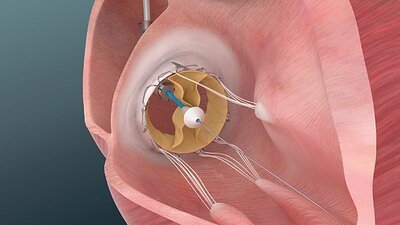
New Heart Valve Shows Promise for Untreated Tricuspid Regurgitation
YOKNEAM, Israel – January 21, 2026 – In a significant development for cardiac care, Trisol Medical today announced positive results from an early-stage U.S. study of its novel transcatheter tricuspid valve replacement (TTVR) system. The findings suggest a promising new avenue for patients suffering from severe tricuspid regurgitation (TR), a debilitating heart condition that has long been undertreated due to the high risks of conventional surgery.
The Israeli medical device company reported that its minimally invasive valve demonstrated a strong safety profile and led to significant functional improvements in a group of high-risk patients. These results, emerging from an FDA-approved Early Feasibility Study, are particularly noteworthy for their success in patients with reduced right ventricular function—a subgroup associated with poor outcomes and limited therapeutic options.
The Overlooked Epidemic of Tricuspid Regurgitation
Tricuspid regurgitation occurs when the heart's tricuspid valve fails to close properly, causing blood to leak backward from the right ventricle into the right atrium. While mild forms are common, moderate to severe TR affects millions and is independently associated with increased hospitalizations and mortality. Historically, it has been dubbed the “forgotten valve disease,” often diagnosed late and managed medically until symptoms become severe.
The primary treatment has been open-heart surgery, either to repair or replace the valve. However, this is a high-risk procedure, with in-hospital mortality rates approaching 10%, especially when performed as an isolated operation. Consequently, many patients, particularly the elderly or those with comorbidities like a weakened right ventricle, are deemed ineligible for surgery, leaving them with diuretics and a managed decline in their quality of life.
This gap has spurred a race to develop less invasive transcatheter solutions, which can be delivered through a vein without the need to open the chest. While several companies, including industry giants like Abbott and Edwards Lifesciences, have made strides with valve repair devices, the development of a safe and effective transcatheter replacement valve has remained a critical frontier, especially for patients whose native valves are too damaged for repair.
A Closer Look at the Clinical Data
Trisol’s Early Feasibility Study provides a crucial glimpse into the potential of its replacement system. The study enrolled 22 patients with severe to torrential TR, all considered high-risk for surgery. The procedures were performed at top U.S. institutions, including Cedars-Sinai Medical Center and Columbia University Medical Center, using a trans-jugular (through the neck vein) approach.
The results at the 30-day follow-up were highly encouraging. From a safety perspective, one of the most significant findings was a very low rate—less than 5%—of patients requiring a new permanent pacemaker. Pacemaker implantation is a known complication of transcatheter valve procedures, as the device frame can interfere with the heart's electrical conduction system. A low rate suggests a more anatomically friendly design.
Functionally, the Trisol valve delivered on its core purpose, achieving a considerable reduction in tricuspid regurgitation after implantation. This translated directly into tangible patient benefits. Follow-up data at both 30 days and 12 months showed notable improvements across several key metrics:
- Quality of Life: Patients reported better health status as measured by the Kansas City Cardiomyopathy Questionnaire (KCCQ).
- Heart Failure Symptoms: A reduction in symptom severity was observed, reflected by an improvement in New York Heart Association (NYHA) functional class.
- Physical Endurance: Patients demonstrated an increased 6-minute walk distance, a standard measure of exercise capacity.
Critically, the study also documented improvements in right ventricular function and cardiac output, indicating the treatment may help reverse some of the damage caused by chronic TR. The device itself performed well technically, with successful deployment in all cases and no incidents of the valve migrating from its intended position.
Innovation in a Competitive Field
The positive outcomes, especially in patients with pre-existing right ventricular dysfunction, set Trisol’s technology apart. The company’s approach addresses a core challenge that has stymied other therapies. The device’s novel features appear to be central to this success.
Dr. Pradeep Yadav, a clinical investigator in the study, commented on these advantages. "Trisol brings several novel features from ease of use to recapturable anchors, broad size range, lower pacemaker rate and performance in dysfunctional right ventricles," he stated. The ability to recapture and reposition the anchors during the procedure gives physicians more control and can help ensure optimal placement, a key factor in procedural success.
These design elements could prove to be a key differentiator in a competitive landscape. As more transcatheter options become available, devices that are not only effective but also user-friendly, safe, and applicable to the broadest and sickest patient populations will likely gain a significant advantage. The reported success in patients with weakened right ventricles directly addresses a major unmet need highlighted by cardiologists.
The Path Forward: From Feasibility to Pivotal Trials
Completing the trans-jugular cohort of this Early Feasibility Study is a major milestone for Trisol Medical. An EFS is designed to provide proof-of-principle and initial safety data, and these positive results provide the validation needed to advance to the next stage of clinical development.
"We are thrilled by these positive outcomes, which further validate the potential of our best-in-class technology to improve care for patients with severe TR," said Ron Davidson, CEO of Trisol Medical. He also extended thanks to the clinical investigators and their teams for their dedication.
The company is now proceeding with the next phase of its study, which will utilize a newly developed trans-femoral delivery system. Accessing the heart through the femoral vein in the leg is a more common and less invasive approach than the jugular route, potentially expanding the pool of eligible patients and simplifying the procedure for clinicians. This advancement signals a clear path toward a larger, pivotal trial, which will be required for ultimate FDA approval and commercialization.
Dr. Shimon Eckhouse, Chairman of Trisol and a veteran MedTech entrepreneur, framed the results in the context of the broader healthcare landscape. "Millions of Americans suffer from TR, and despite recent advances, effective treatment options remain limited for patients with severe TR," he said. "The Trisol valve was developed to address this significant unmet need and has the potential to redefine the standard of care."
While the journey from an early study to a widely available therapy is long and rigorous, these results represent a tangible step forward. For the many patients living with the debilitating effects of severe tricuspid regurgitation, this progress offers a powerful dose of new hope.