
- Projected 2026 S&P 500 returns: 10-12% (Goldman Sachs, JPMorgan)
- Forward P/E ratio: 22x (elevated, rivaling 2021 bull market peaks)
- Top 10 companies' market cap share: Over 40% (up from historical 20-25%)
Experts endorse the S&P 500 as a reliable long-term investment strategy, emphasizing disciplined participation over speculative trading, despite current market risks like high valuations and concentration in mega-cap stocks.
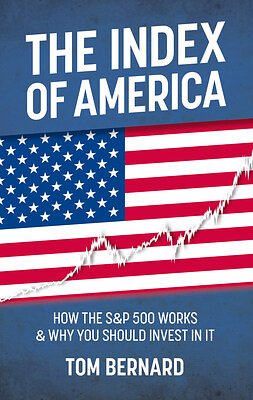
New Book Champions S&P 500 Simplicity in a Volatile Market
NEW YORK, NY – March 04, 2026 – As investors grapple with a volatile global economy and a stock market showing signs of both unprecedented strength and significant risk, a new book argues for a return to fundamentals. Author and former Wall Street executive Tom Bernard has released The Index of America: How the S&P 500 Works & Why You Should Invest in It, a guide aimed at demystifying one of the world's most important financial benchmarks and positioning it as a reliable vehicle for long-term wealth creation.
Released today, the book enters a market environment defined by contradictions. While analysts project double-digit returns for the S&P 500 in 2026, driven by an AI-fueled tech boom, concerns are mounting over record-high valuations and a heavy concentration in a handful of mega-cap companies. Bernard’s work wades into this climate with a clear message: disciplined, long-term participation in the broad market is a more effective strategy than trying to outsmart it.
The Power of Simplicity
At the core of The Index of America is a defense of simplicity. Bernard, who once served as the head of global credit for Lehman Brothers, leverages his insider experience to advocate for a strategy accessible to all: investing in the S&P 500. The book argues that attempting to pick individual stocks or engaging in complex, high-fee trading strategies is a losing game for most. Instead, it champions owning a piece of the 500 largest publicly traded companies in the U.S. as a direct path to participating in consistent economic progress.
This message has already resonated with industry veterans. Bill Bengen, the celebrated financial advisor best known for articulating the "4% Rule" for retirement withdrawals, offers high praise for the book. "An intriguing and fact-filled study of an investing cornerstone," Bengen states in an endorsement. "Written in plain English, with an abundance of useful and interesting information. A must for the aspiring investor, a treat for the experienced one."
Bengen's endorsement lends significant weight, as his work has been a foundational concept in retirement planning for decades. The praise suggests Bernard’s book successfully bridges the gap between novice investors who feel intimidated by the market and experienced professionals looking for a refresher on core principles. "My goal is to help readers see it not simply as a ticker symbol, but as an accessible vehicle for participation in consistent economic progress," Bernard says in the book's announcement.
Unpacking the "DNA of Growth"
Unlike many investment guides that focus purely on strategy, The Index of America delves into the history and mechanics of the S&P 500 itself. Bernard traces what he calls the "DNA of growth," charting the index's evolution since its modern formation in 1957. The narrative follows the shift from 20th-century industrial titans to today's digital leaders, framing the index as a dynamic reflection of American innovation and resilience.
By explaining how the index works—how companies are added and removed, and how it has adapted through technological revolutions and economic shifts—the book aims to build a deeper level of financial literacy. This historical context is designed to give investors the confidence to stick with their strategy during periods of market turmoil, understanding that the index's composition is designed to evolve with the economy. This approach differentiates it from other popular index investing guides, which often focus more on the "what" and "why" of the strategy rather than the "how" of the underlying index.
Promise and Peril in the 2026 Market
The book's release is particularly timely. The S&P 500 has demonstrated remarkable performance, and many analysts remain bullish for 2026. Major firms like Goldman Sachs and JPMorgan are projecting returns between 10% and 12%, citing strong corporate earnings, potential Federal Reserve rate cuts, and continued growth in the technology sector. The index's historical average annual return of around 10% over the long term provides a powerful backstop to Bernard's thesis.
However, the current market is not without its perils. The S&P 500's forward price-to-earnings ratio stands at an elevated 22x, a level that rivals the peaks of the 2021 bull market and approaches the highs of the dot-com bubble. More concerning for some analysts is the index's increasing concentration. The top 10 largest companies now account for over 40% of the index's total market capitalization, a significant increase from the historical average of 20-25%. This "narrow breadth" means the market's fortunes are heavily dependent on a small number of mega-cap tech stocks, creating a potential vulnerability if those leaders falter.
Prediction markets even signal a 58% chance of a significant market correction—a decline of at least 11%—sometime in 2026. It is within this landscape of high reward and high risk that Bernard's call for a disciplined, long-term, and diversified approach through the S&P 500 finds its relevance, offering a steady course through potentially choppy waters.
A New Chapter in Financial Literacy
The Index of America joins a respected library of works advocating for passive index investing, pioneered by figures like Vanguard founder John Bogle. Books such as The Simple Path to Wealth and A Random Walk Down Wall Street have already converted millions to the philosophy of owning the market through low-cost funds. Bernard’s contribution aims to build on this foundation by providing a detailed biography of the S&P 500 itself, treating it not just as a tool but as a subject worthy of study.
By combining historical insight with practical, evidence-based principles, the author aims to empower a new generation of investors. In an era where speculative trends can dominate financial headlines, the book serves as a powerful reminder that building generational wealth is often achieved not through risky bets, but through a patient and informed understanding of the engines that have historically powered economic growth. It repositions financial literacy as the ultimate tool for navigating an uncertain future.