
- $200,000: Nespresso Canada's foundational contribution to the Biodiversity Restoration Initiative.
- 1,300 hectares: Targeted for restoration to support Woodland Caribou habitat.
- 40% decline: Woodland Caribou populations have dropped by over 40% in recent decades due to habitat loss.
Experts emphasize that while focused, collaborative restoration efforts like this are essential for healing impacted landscapes, long-term recovery of ecosystems and species like the Woodland Caribou will require sustained, science-backed, and Indigenous-led conservation strategies.
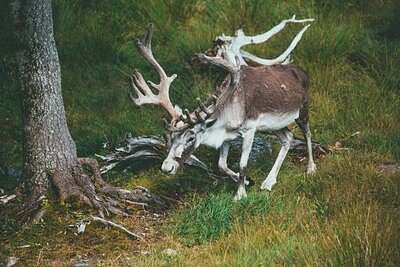
Nespresso's New Mission: Saving Canada's Vanishing Caribou
MONTREAL, QC – May 22, 2026 – On the International Day for Biological Diversity, a new alliance has formed to combat the growing silence in Canada's forests. Nespresso Canada and Tree Canada have announced a landmark partnership, launching a new Biodiversity Restoration Initiative with a foundational $200,000 contribution from the coffee giant. The ambitious project aims to restore over 1,300 hectares of critical wilderness, focusing on a single, iconic species teetering on the brink: the Woodland Caribou.
This initiative marks a strategic pivot from general tree planting to a more targeted, science-backed approach to conservation. The initial projects will unfold in Skeena, British Columbia, and Pessamit, Quebec, two regions vital to the survival of caribou herds whose populations have been decimated by habitat loss and fragmentation.
"Nespresso has a long-standing global commitment aimed at advancing the protection and restoration of biodiversity across coffee-growing regions worldwide," said Carlos Oyanguren, President of Nespresso Canada. "Our continued partnership with Tree Canada translates that commitment into local action... supporting habitat restoration and more resilient ecosystems for the future of Canadians."
A Crisis in the Boreal
Once a symbol of the vast Canadian wilderness, the Woodland Caribou is now a ghost in its own home. Federally listed as a "Threatened" species, its numbers have plummeted by more than 40% in recent decades. The primary cause is habitat destruction. Industrial activities like forestry, oil and gas exploration, and the creation of roads and seismic lines have carved up the vast, ancient forests caribou depend on.
These linear clearings act as highways for predators like wolves, allowing them to travel easily into the deep woods and prey upon vulnerable caribou. For a caribou population to be self-sustaining, Environment and Climate Change Canada estimates its range needs to be at least 65% undisturbed—a threshold many herds in Canada no longer meet. Across the country, forests that once provided refuge are becoming landscapes of risk, pushing the species closer to local extinction in many areas.
This new initiative directly confronts this issue by targeting the scars left on the land. The goal is not just to plant trees, but to functionally restore the forest, making it a safe haven for caribou once again.
Beyond Planting Trees: A New Restoration Blueprint
The partnership signals a significant evolution in corporate-funded conservation, moving away from simple metrics of trees planted and towards measurable ecological outcomes. The Biodiversity Restoration Initiative is built on a simple but powerful premise: planting the right species, in the right places, with the right partners.
"The greatest impact comes from planting the right species, in the right places, with the right partners," affirmed Nicole Hurtubise, CEO of Tree Canada. "We are grateful for Nespresso Canada's $200,000 foundational donation, which allows us to invest in hectare-based restoration projects that help communities, partners and funders advance meaningful biodiversity action in Canada."
This means planting native and climate-adapted trees and shrubs to rebuild the complex structure of a healthy forest. In addition to trees, the program will also support baseline wildlife monitoring. Using tools like photo and audio monitoring in select sites, researchers will track the presence of birds, bats, amphibians, and other key indicator species. This data is critical for establishing a scientific baseline to measure the true long-term impact of the restoration work, answering the crucial question: is the ecosystem actually recovering?
Indigenous Knowledge at the Forefront
Crucially, this work is not being imposed on the land but guided by its traditional stewards. The two flagship projects are being led by Indigenous communities, blending deep-rooted traditional knowledge with modern ecological science.
In British Columbia, the Yinka Dene Economic Development LP, representing the Wet'suwet'en First Nation, is spearheading a four-year initiative to restore over 500 hectares of Southern Mountain Caribou habitat. The project will plant more than 1.1 million native trees and shrubs to rehabilitate seismic lines and decommissioned roads that have fragmented the Telkwa and Tweedsmuir-Entiako herd ranges.
Meanwhile, in Quebec, a three-year project led by the Conseil des Innus de Pessamit will restore approximately 800 hectares of boreal forest within the range of the Pipmuacan Woodland Caribou herd. Conceived by Elders and carried out by Indigenous Land Guardians, the initiative is rooted in Innu Aitun—the Innu way of life and relationship with the land. It combines black spruce restoration to support caribou forage with climate-adapted plantings to bolster the forest's resilience against future disturbances like wildfires.
This Indigenous-led model has proven to be one of the most effective approaches to conservation in Canada. The successful recovery of the Klinse-Za caribou herd in British Columbia, which tripled its population through a program led by the West Moberly and Saulteau First Nations, stands as a powerful testament to its efficacy.
The Long Road to Recovery
For Nespresso, this investment is the next step in a growing partnership with Tree Canada, which has already seen over $775,000 in contributions since 2021. It reflects the company's broader sustainability commitments, which earned it a B Corp certification in 2022. This initiative moves the collaboration beyond disaster recovery and into proactive, biodiversity-driven action.
Experts in restoration ecology caution that healing these landscapes is a long-term endeavor. Research has shown that while restoring seismic lines is a critical strategy, wildlife responses can be slow, and it may take decades for a forest to fully recover its ecological function. Protecting intact, existing old-growth habitat remains the most important conservation tool.
However, in landscapes already heavily impacted by human activity, this type of focused, collaborative restoration is essential. By combining corporate funding, the scientific expertise of a national non-profit, and the invaluable leadership of Indigenous communities, this partnership offers a promising and necessary blueprint for how to begin healing Canada's wounded wilderness and give species like the Woodland Caribou a fighting chance at a future.