
- 40% of the world's soils are already degraded (UN estimate).
- $400 billion annual cost of soil degradation to the global economy.
- 5 million hectares of habitat to be regenerated by LVMH by 2030.
Experts agree that soil degradation poses a systemic threat to global food security and economic stability, making collaborative, cross-industry initiatives like Moët Hennessy's World Living Soils Forum essential for addressing this critical environmental challenge.
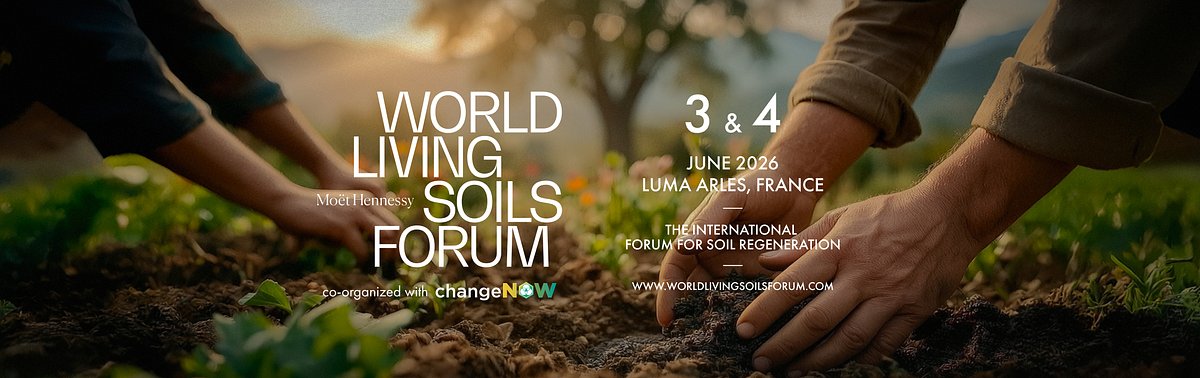
Moët Hennessy's Soil Gambit: A New Blueprint for Business?
PARIS, France – December 04, 2025
In a move that signals a profound shift in corporate environmentalism, Moët Hennessy, the prestigious wines and spirits division of luxury titan LVMH, has announced the third edition of its World Living Soils Forum (WLSF) for June 2026. While another corporate forum might seem routine, this announcement is anything but. By redesigning the event’s governance to invite other major companies into its core planning, Moët Hennessy is attempting to transform a signature initiative into a collaborative, cross-industry platform. This pivot away from proprietary leadership toward collective action highlights a growing understanding in the C-suite: the world’s most pressing environmental challenges, like the degradation of our soils, are too large for any single entity to solve alone.
The stakes are alarmingly high. According to the United Nations, over 40% of the world's soils are already degraded through erosion, pollution, and overexploitation. This isn't just an ecological footnote; it's a systemic threat to global food security, climate stability, and economic prosperity. Healthy soils are a powerhouse of biodiversity, store double the carbon of the atmosphere, and are essential for water filtration. Their decline represents a foundational risk to countless industries, none more so than the one built entirely on the unique character of the land: fine wine and spirits.
The Business Case for Buried Treasure
For the twenty-seven Houses under the Moët Hennessy umbrella—including iconic names like Dom Pérignon, Veuve Clicquot, and Krug—the concept of terroir is the very essence of their brand and product. It’s the unique combination of soil, climate, and geography that gives each vintage its distinct identity and value. From this perspective, investing in soil health is not a matter of corporate social responsibility, but one of fundamental asset protection and strategic foresight.
The economic implications are stark. Regenerative agriculture—a suite of practices including cover cropping, reduced tillage, and composting—is at the heart of the WLSF's mission. These methods move beyond mere sustainability to actively rebuild soil organic matter and restore biodiversity. For a vineyard, this translates into more resilient vines that can better withstand the increasing pressures of climate change, such as drought and extreme weather. It also reduces dependence on costly synthetic fertilizers and pesticides, directly impacting the bottom line. Research indicates the economic fallout from inaction is staggering, with soil degradation costing the global economy an estimated $400 billion annually, and the loss of ecosystem services valued in the trillions. In contrast, businesses that embrace regenerative practices can cultivate not only healthier soil but also stronger brand loyalty among a new generation of environmentally conscious consumers.
A New Blueprint for Collaboration
What makes the 2026 World Living Soils Forum particularly noteworthy is its structural innovation. Founded in 2022, the forum has already established itself as a key meeting point for scientists, farmers, NGOs, and investors. The first two editions, held at the striking LUMA Arles arts center, brought hundreds of stakeholders together to share knowledge and solutions. However, the decision to evolve the governance model represents a deliberate strategy to scale its impact.
By inviting other "committed companies" to co-design and organize the event alongside its existing Advisory Board of sixteen external experts, Moët Hennessy is effectively open-sourcing its platform. This move aims to break down competitive silos and foster a pre-competitive environment where shared challenges can be met with collective solutions. It’s a recognition that the health of an entire agricultural ecosystem is more critical than the competitive advantage of any single player within it.
This collaborative push is amplified by the continued partnership with ChangeNOW, a key facilitator of the ecological transition best known for its massive "solutions for the planet" summit. ChangeNOW brings expertise in identifying and scaling innovations, ensuring the WLSF remains focused on actionable outcomes rather than theoretical discussions. Their involvement helps connect promising soil-health startups and technologies with the corporate partners and investors needed to bring them to a global scale.
Integrating Sustainability into the Fabric of Luxury
The World Living Soils Forum is not an isolated project; it is a highly visible component of LVMH's comprehensive environmental strategy, known as LIFE 360 (LVMH Initiatives for the Environment). Launched in 2021, this ambitious program sets clear, quantified targets for climate, biodiversity, creative circularity, and traceability across all its business groups.
Moët Hennessy's 'Living Soils Living Together' program feeds directly into LVMH's overarching goals. For instance, the luxury group has committed to implementing regenerative agriculture practices across all its strategic agricultural raw material supply chains and aims to regenerate five million hectares of habitat by 2030—a target it is already making significant progress toward. Furthermore, with goals for 100% certification of strategic materials and complete supply chain traceability by 2026, the company is embedding environmental performance into the core of its operations.
This integration demonstrates a crucial shift in the luxury sector. Sustainability is no longer a peripheral marketing story but a central pillar of value creation, risk management, and brand integrity. For a group whose reputation is built on heritage, quality, and long-term vision, ensuring the resilience of its natural resource base is paramount to securing its future.
Catalyzing an Industry-Wide Movement
While Moët Hennessy's leadership is significant, it is also part of a broader, accelerating movement within the agricultural and viticultural sectors. Organizations like the Regenerative Viticulture Foundation and the Regenerative Organic Alliance are building momentum, creating standards, and providing resources for producers to transition their practices. Wineries from California to France are demonstrating that regenerative farming is not only ecologically beneficial but also commercially viable at scale.
By leveraging its considerable influence and financial muscle, Moët Hennessy is acting as a powerful catalyst. The World Living Soils Forum serves as a convergence point, amplifying existing efforts and inspiring new ones. The forum's new collaborative governance could become a blueprint for how industries can unite to tackle complex, systemic issues that transcend corporate borders. In doing so, a leader in luxury goods is helping to write the next chapter for one of the world's oldest industries, proving that the future of business may depend on what we choose to cultivate just beneath our feet.