
- Project Completion: 58 utility poles replaced along a 12.8-mile transmission line.
- Cost Savings: $2 million under budget.
- Timeline: Finished 3 months ahead of schedule.
Experts would likely conclude that the Line 932 project demonstrates how strategic planning, workforce development, and efficient execution can serve as a scalable model for modernizing America's aging energy grid.
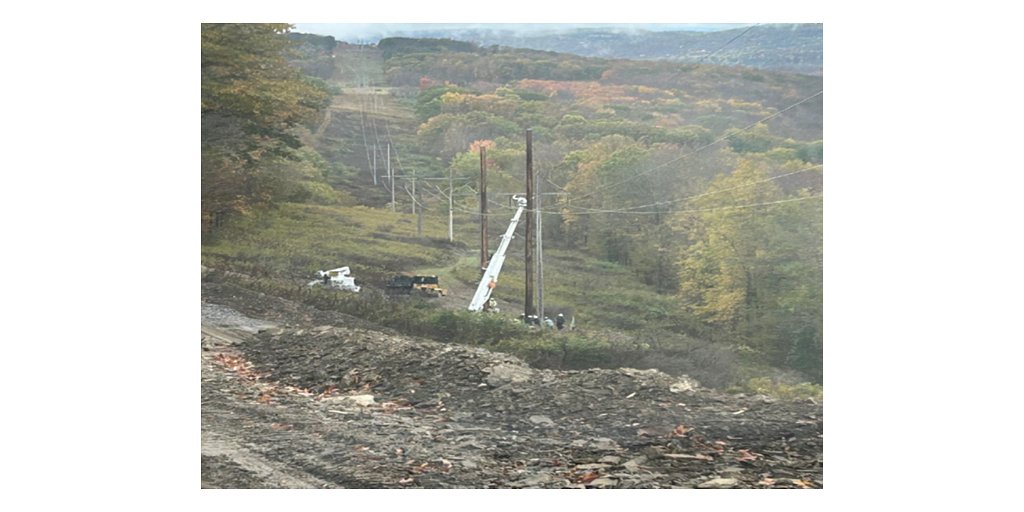
More Than Wires: A NY Project Reveals the Blueprint for America's Grid
HORNELL, NY – June 18, 2026 – In the rolling hills of New York’s Allegany and Steuben Counties, a seemingly routine infrastructure project just concluded. Avangrid subsidiary NYSEG replaced 58 aging utility poles along a 12.8-mile stretch of transmission line. On the surface, it’s the kind of maintenance work that happens constantly, unseen and uncelebrated. But the completion of Line 932 is an event that deserves our attention. It was finished three months ahead of schedule and more than $2 million under budget.
In an era where major infrastructure projects are synonymous with delays and massive cost overruns, this small victory is a profound anomaly. It serves as a powerful case study for how the United States can tackle one of the most monumental challenges of the 21st century: rebuilding its energy backbone for a new era. This isn't just a story about poles and wires; it's a story about efficiency, decarbonization, workforce development, and the complex financial trade-offs that will define our energy future. The success of Line 932 offers a rare, tangible blueprint for how to get it right.
A Blueprint for Efficiency in an Age of Delay
The statistics of the Line 932 project are a masterclass in execution. What was planned as a standard upgrade became a benchmark for Avangrid, a leading U.S. energy company and part of the global Iberdrola Group. Completing a project of this nature not only ahead of schedule but with a $2 million saving passed directly to ratepayers is a testament to meticulous planning and operational excellence.
"Completing this major transmission project ahead of schedule and under budget reflects Avangrid’s continued focus on delivering smart, efficient investments that strengthen the grid while providing real value to our customers across New York,” said Avangrid CEO Jose Antonio Miranda. His statement points to a core challenge for the entire industry: balancing the urgent need for grid modernization with the equally pressing need for fiscal responsibility.
This success stands in stark contrast to the national narrative. The U.S. energy grid is aging, with much of its infrastructure operating beyond its intended lifespan. This leads to inefficiencies, reliability issues, and a growing vulnerability to extreme weather. While the need for a nationwide overhaul is universally acknowledged, the execution is fraught with challenges. The efficiency demonstrated in Hornell, therefore, is not merely a local success but a model that regulators, utilities, and investors across the country should be deconstructing. It proves that with the right management and partnerships, the daunting task of upgrading our national infrastructure can be tackled with a speed and cost-effectiveness that many have deemed impossible.
Unlocking the Grid for a Greener New York
The true significance of replacing 58 wooden poles goes far beyond simple maintenance. Each new, resilient structure helps fortify a small but critical section of the grid. More importantly, this upgrade increases the line's capacity, a crucial factor in our transition to clean energy. The project enables NYSEG to install a power flow control device, which will help regulate voltage more effectively—a key requirement for integrating the variable output of renewable energy sources like wind and solar.
This is the unglamorous, foundational work that underpins New York State's ambitious climate goals. While headlines often focus on new solar farms or offshore wind turbines, those assets are useless if they cannot reliably connect to the grid. Nationally, thousands of gigawatts of proposed clean energy projects are stuck in a bureaucratic and physical traffic jam known as the "interconnection queue." The primary reason for this bottleneck is a lack of adequate transmission capacity.
The Line 932 project is a direct assault on this problem at the local level. It is the first major project completed under NYSEG’s ‘Powering New York’ program, a broader initiative designed to upgrade 25 substations and 420 miles of high-voltage lines. By removing bottlenecks and increasing capacity, these upgrades create the "on-ramps" necessary for future renewable generation facilities to connect to the grid. It’s a powerful reminder that the green energy revolution will be won not just with solar panels, but with new steel poles, high-capacity wires, and modern substations.
The Human Infrastructure: Forging the Workforce of Tomorrow
Technology and capital alone cannot build the grid of the future. The Line 932 project highlights the most critical and often overlooked component: a skilled, dedicated workforce. The project's success was driven by a close partnership between NYSEG and the International Brotherhood of Electrical Workers (IBEW) Local 10. The team included 13 lineworker apprentices who gained invaluable real-world experience climbing structures and working on a live transmission project.
"This project showcases the best qualities of union labor,” said Roman Cefali, business manager of IBEW Local 10. “Our journeymen bring an unmatched expertise, while apprentices gain hands-on experience that will help shape their careers." This synergy is not just a feel-good story; it is a strategic necessity. As a generation of experienced lineworkers nears retirement, the industry faces a looming skills gap.
Proactive partnerships like the one between NYSEG, IBEW, and educational institutions such as SUNY Broome Community College are creating a pipeline of talent. Their Lineworker Training Program combines classroom learning with paid, hands-on training, preparing a new generation for these high-demand, critical roles. The efficiency of the Line 932 project is proof that investing in people is as important as investing in hardware. It demonstrates that building critical infrastructure and building a future workforce are two sides of the same coin.
The Unseen Arbiter: Navigating the Regulatory Maze
While the on-the-ground execution of Line 932 is a clear success, its story unfolds within a complex and challenging regulatory environment. The New York Public Service Commission (NYPSC) is the ultimate gatekeeper for utility investments, tasked with the delicate balancing act of ensuring a reliable grid while protecting consumers from exorbitant rate hikes.
The broader 'Powering New York' program, for which Line 932 is the inaugural proof point, still requires NYPSC approval for its future projects. The path forward is not guaranteed. Just last month, the NYPSC approved only temporary, and significantly smaller, rate increases for NYSEG and its sister utility RG&E, pushing back a final decision on one of the largest rate cases in recent state history. The utilities had argued that substantial increases were necessary to fund their ambitious grid modernization plans, but they faced intense scrutiny from consumer advocates concerned about affordability.
This regulatory tension is the central drama of the U.S. energy transition. Utilities must make a compelling case that massive capital investments are both necessary and will be executed efficiently. In this context, the successful completion of Line 932—ahead of schedule and under budget—is NYSEG’s most powerful piece of evidence. It is a tangible demonstration of prudent investment and operational excellence that can be presented to regulators and a skeptical public. The project proves the utility can deliver on its promises, strengthening its position as it seeks approval to build the rest of the infrastructure New York desperately needs.