
- $4 million in federal funding for pH7 Technologies' expansion
- 80% reduction in energy consumption with pH7's technology
- 98% reduction in water usage compared to conventional methods
Experts would likely conclude that pH7's technology represents a significant advancement in sustainable metal recovery, offering a cleaner and more efficient alternative to traditional methods while strengthening North America's critical mineral supply chains.
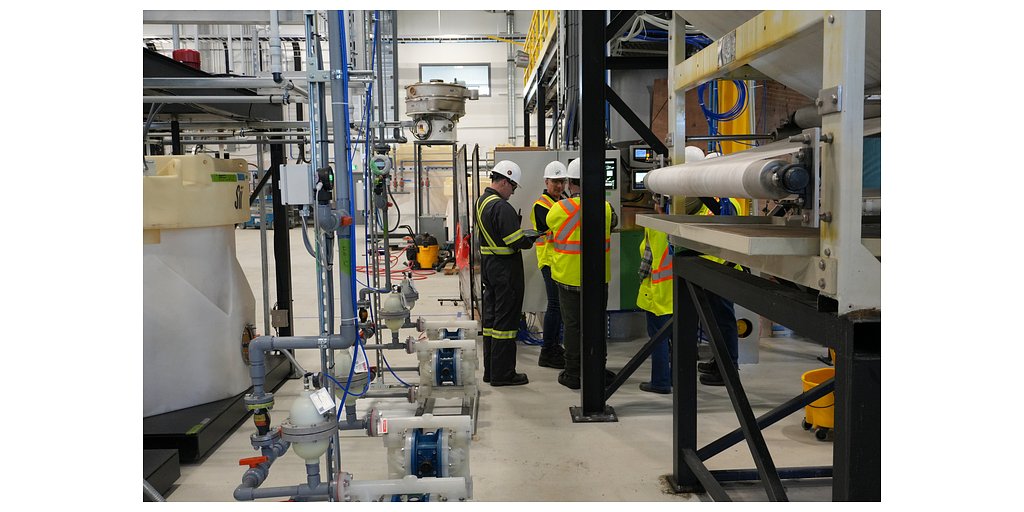
Canada's Green Metal Push: pH7 Tech to Secure Critical PGM Supply
VANCOUVER, BC – March 24, 2026 – A Vancouver-based technology firm is scaling up its operations to tackle two of the 21st century's most pressing challenges: securing the critical metals needed for the green economy and cleaning up the notoriously dirty business of producing them. pH7 Technologies Inc. has announced a major expansion of its Vancouver processing facility, backed by up to $4 million in federal funding, in a move that positions Canada at the forefront of a global race for supply chain resilience and sustainable industry.
The initiative will accelerate the deployment of pH7's groundbreaking technology to recover platinum group metals (PGMs)—including platinum, palladium, and rhodium—from secondary materials like industrial waste and end-of-life electronics. These metals are indispensable components for hydrogen fuel cells, emissions-control systems, and advanced electronics, making a secure supply vital for North America's technological and environmental ambitions.
A Green Revolution in Metal Recovery
At the heart of the expansion is pH7's proprietary closed-loop organo-electrochemical process, a system that represents a paradigm shift from traditional metal extraction. Conventional methods, like pyrometallurgy and hydrometallurgy, are infamous for their immense environmental footprint. They often involve smelting materials at extreme temperatures, consuming vast amounts of energy, or using harsh acids and chemicals that produce toxic waste and significant water pollution.
In stark contrast, pH7's technology operates as a circular system where electricity is the main consumable. The process uses a unique combination of organic chemistry and electrochemistry to selectively dissolve and extract valuable metals from complex materials. A key innovation is its ability to regenerate and reuse its chemical agents, effectively eliminating wastewater and air emissions like NOx and SOx. Company data suggests the process slashes energy consumption by over 80% and water usage by up to 98% compared to conventional methods.
This leap in efficiency not only mitigates environmental damage but also unlocks new economic potential. The technology can profitably process low-grade ores and complex waste streams that have historically been considered uneconomical, turning liabilities into valuable assets.
“Critical metals like platinum and palladium are essential to modern industry, yet their supply chains remain concentrated and environmentally intensive,” said Mohammad Doostmohammadi, Chief Executive Officer of pH7 Technologies. “Our technology allows us to recover and process these metals locally while eliminating wastewater and dramatically reducing the carbon footprint of production.”
Fortifying North America's Critical Supply Chains
The expansion is more than a technological showcase; it is a strategic move to de-risk North America's access to essential resources. Currently, the global supply of PGMs is geographically concentrated in a handful of nations, primarily South Africa and Russia, leaving industries vulnerable to geopolitical instability and supply disruptions. The projected surge in demand for PGMs, driven by the expansion of hydrogen technologies and electrification, only amplifies this vulnerability.
This initiative directly aligns with the goals of Canada’s Critical Minerals Strategy, a nearly $4 billion federal plan designed to bolster domestic production and processing of key resources. By developing a robust capacity to recover PGMs from recycled materials within its borders, Canada aims to reduce its reliance on foreign suppliers and create a more secure, resilient, and ethical supply chain for itself and its allies.
“For Canada, this means stronger economic security, more resilient supply chains, and a clear advantage in the global race to supply the critical minerals our allies depend on,” stated The Honourable Tim Hodgson, Minister of Energy and Natural Resources, highlighting the project's national significance.
The ability to process these metals domestically ensures that the value-added benefits, from refining to manufacturing, can be captured within the North American economy, fostering industrial growth and high-tech manufacturing close to home.
Public Investment Fuels Private Innovation
The project's acceleration is being made possible through a significant partnership with the federal government. pH7 Technologies is receiving advisory services and up to $4 million in funding from the National Research Council of Canada Industrial Research Assistance Program (NRC IRAP). This support is part of NRC IRAP's Clean Technology initiative, which targets Canadian innovators developing sustainable solutions in critical sectors.
This public-private collaboration exemplifies the government's strategy of using targeted investments to nurture homegrown innovation and scale it for global impact. By de-risking the costly and complex process of scaling up industrial technology, the funding enables companies like pH7 to move from the laboratory to commercial production more quickly, creating jobs and building a competitive advantage for the nation.
“The Government of Canada supports the creation of competitive supply chains for critical minerals and value-added products, processes, and technologies,” said The Honourable Mélanie Joly, Minister of Industry. She emphasized that the investment will “help Canada capitalize on the rising global demand for critical minerals, add value and jobs here at home, and reinforce our global leadership in responsible mineral development.”
Mitch Davies, President of the National Research Council of Canada, added, “We are supporting projects that strengthen domestic capabilities and contribute to a sustainable and competitive Canadian economy.”
This strategic infusion of capital and expertise is designed to ensure that Canadian ingenuity not only solves complex technical problems but also translates into tangible economic and environmental benefits. The success of this partnership could serve as a blueprint for future collaborations aimed at building Canada’s industrial capacity in other key sectors of the future economy. With this expansion, pH7 is not just building a factory; it is helping to construct a more secure and sustainable industrial foundation for North America.