
- 25,000 residents projected in Griffintown with nearly 16,000 new homes
- $600 million expected from land value capture levy over decades
- 2,800 new homes planned in Wellington Basin, with 13,500 units in adjacent Bonaventure corridor
Experts would likely conclude that while the new REM stations present a transformative opportunity for Montréal's urban development and transit infrastructure, their success hinges on CDPQ Infra's ability to navigate complex construction challenges and minimize disruptions during the four-year timeline.
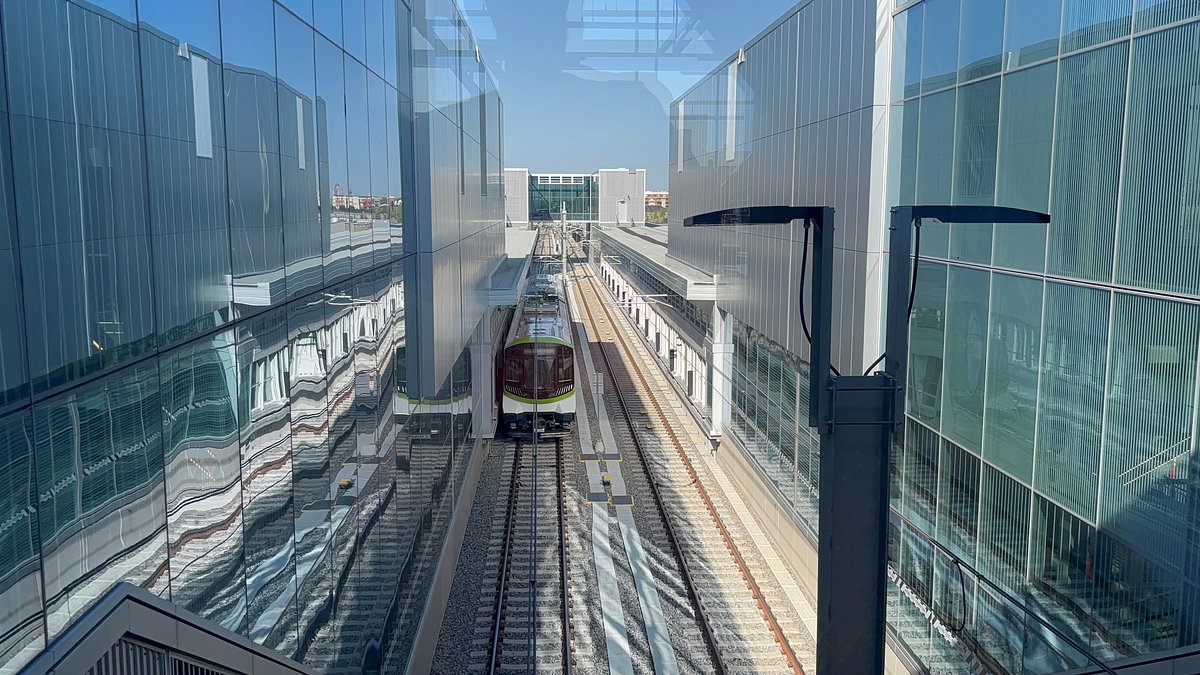
Montréal's Next Stop: Two REM Stations to Reshape the Urban Core
MONTRÉAL, QC – June 16, 2026 – Montréal's ambitious public transit evolution is taking another significant leap forward. CDPQ Infra, alongside the governments of Québec and Montréal, today announced the launch of a detailed planning phase for two new Réseau express métropolitain (REM) stations, poised to dramatically reshape the city’s post-industrial heartland along the Lachine Canal.
The two stations—Griffintown–Bernard–Landry and a new stop near the intersection of Bridge and Wellington streets—represent more than just dots on a map. They are strategic linchpins in a broader vision to unlock vast urban development potential, promising to transform burgeoning neighborhoods while navigating the immense complexities of building major infrastructure within a dense, active city. While the announcement signals progress, it also marks the beginning of a four-year journey where the promise of growth will be weighed against the realities of cost and construction disruption.
Unlocking Montréal's Next Growth Engine
The new stations are set to serve as powerful catalysts for two of Montréal’s most dynamic redevelopment zones. Griffintown, a neighborhood that has risen from industrial ashes into a high-density residential hub, has long been described by residents as a "transit desert." The Griffintown–Bernard–Landry station, part of the REM's original blueprint but previously delayed, is seen as the critical missing piece to support a community projected to house 25,000 residents in nearly 16,000 new homes.
To help fund its construction, the City of Montréal has already implemented an innovative levy on new developments within a kilometer of the station site, a land value capture strategy expected to generate up to $600 million over several decades.
Meanwhile, the new station at Bridge and Wellington is the key to unlocking the future of the Wellington Basin and the broader Bridge-Bonaventure sector. This area, a swath of underutilized land south of the Lachine Canal, is slated for a massive transformation. Plans include 2,800 new homes in the Wellington Basin alone, a third of which are designated for social and affordable housing, alongside a new urban beach and artisan district. The city views the REM connection as a prerequisite for this vision, with development potential in the adjacent Bonaventure corridor recently soaring to 13,500 housing units.
This focus on transit-oriented development was underscored by Ehren Cory, CEO of the Canada Infrastructure Bank (CIB), which is contributing an additional $250 million to the project. "This new station in the Wellington Basin area will help unlock underutilized land and support the construction of thousands of new homes," he stated, highlighting the project’s dual role in improving mobility and addressing housing needs. The Government of Québec is also contributing $25 million to the planning phase.
The High Wire Act of Urban Construction
While the long-term vision is compelling, the path to completion is fraught with technical and logistical hurdles. CDPQ Infra, the Caisse de dépôt et placement du Québec subsidiary managing the project, faces the delicate task of building two "infill stations" directly onto an active, elevated REM line that serves thousands of commuters daily.
In a move to "limit potential impacts," CDPQ Infra President and Chief Executive Officer Daniel Farina announced that the recommended approach is to build both stations simultaneously. "The simultaneous construction of these two stations is the best solution for users and for the network," Farina explained, noting it allows for the most efficient methods while limiting service disruptions and community impacts.
However, the complexity of integrating new structures above active rail infrastructure cannot be understated. Urban planning experts have noted that such projects are technically demanding and could necessitate temporary shutdowns of the REM line, potentially for weeks or even months. This would directly affect commuters from areas like the South Shore who now rely exclusively on the REM after legacy bus routes were eliminated—a past point of contention for the network.
The four-year timeline, which includes planning and a potential 2028 construction start, will be a critical test of CDPQ Infra's ability to balance ambition with execution. The detailed planning phase now underway will be crucial in developing mitigation strategies to minimize noise, traffic, and service interruptions for the residents and businesses of Griffintown and Pointe-Sainte-Charles.
A Strategic Piece in a Grand Transit Vision
The addition of these two stations is a pivotal moment in the ongoing saga of the REM, solidifying its role as the backbone of Greater Montréal’s 21st-century transit strategy. Since its first segment opened in 2023, the fully automated light-rail network has progressively expanded, with branches to Deux-Montagnes and Anse-à-l'Orme opening in 2025 and 2026, and a direct link to Montréal-Trudeau Airport slated for 2027.
These new infill stations demonstrate a strategic shift from broad network expansion to targeted densification, ensuring the system serves the city’s fastest-growing internal districts. This project fits within a larger municipal and provincial commitment to sustainable mobility, which also includes the long-awaited extension of the Metro's Blue Line.
The project’s financing structure, a public-private partnership involving CDPQ Infra, the federal CIB, and the Québec government, continues a model that leverages the pension fund's investment power for public good while seeking a return for its depositors. With CDPQ Infra's final financial contribution to be determined by the project's ultimate cost, the detailed planning and procurement processes beginning in the coming months will be watched closely by all stakeholders. For now, Montréal has its next major transit project on the horizon, one that promises to further connect the metropolis and fuel its next wave of urban transformation.