
- $27M financing round secured
- Up to 75% immediate operating cost reductions
- Electricity costs up to 60% cheaper per mile than gasoline
Experts would likely conclude that Mitra EV's fleet-as-a-service model offers a pragmatic, financially compelling solution for small and mid-sized businesses to adopt electric vehicles without significant upfront costs or operational disruptions.
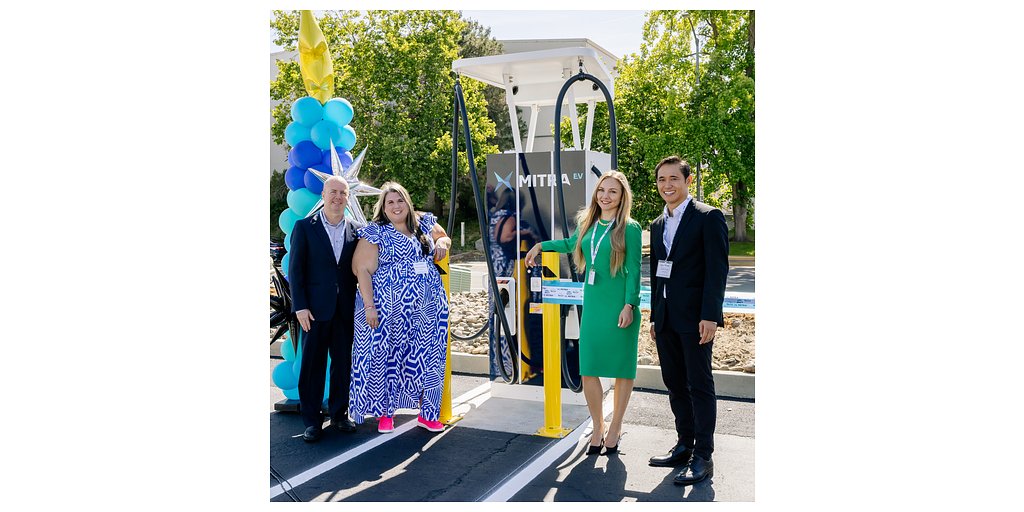
Mitra EV Secures $27M to Make Fleet Electrification Instantly Profitable
LOS ANGELES, CA – February 03, 2026 – As capital markets tighten and businesses scrutinize every dollar, commercial fleet electrification platform Mitra EV has secured a $27 million financing round to scale a model that promises immediate savings without the typical upfront costs. The funding, which includes equity from lead investor Ultra Capital and a credit facility from S2G Investments, signals strong investor confidence in a pragmatic approach to EV adoption at a time when some industry giants are pulling back.
The financing arrives as fleet operators, particularly small and mid-sized businesses (SMBs), face a paradox: the long-term total cost of ownership for electric vehicles is often lower than for their gasoline counterparts, yet the high initial investment and complex logistics of charging infrastructure remain prohibitive barriers. Mitra EV aims to solve this by offering a comprehensive, managed service that makes switching to electric not just a future goal, but an immediate financial benefit.
A 'No-Brainer' Financial Model
At the heart of Mitra EV's strategy is a 'fleet-as-a-service' (FaaS) model that eliminates the primary obstacle to electrification: capital expenditure. Instead of purchasing vehicles and building charging depots, fleet operators enter a leasing agreement with a single monthly payment. This turnkey solution bundles EV leasing from top-tier manufacturers like GM, Ford, and Mercedes-Benz with dedicated overnight charging and access to a growing network of shared fast-charging hubs.
By taking on the financial and operational risks of EV adoption, the company allows businesses to preserve capital for core operations. The economic proposition is compelling, with Mitra EV claiming it can deliver immediate operating cost reductions of up to 75%. These savings are driven primarily by two factors: the significantly lower and more stable cost of electricity compared to volatile gasoline prices—which can be up to 60% cheaper per mile—and the drastically reduced maintenance needs of electric vehicles, which lack engines, oil, and complex exhaust systems.
This approach is resonating with its target market. Small and mid-sized businesses, which constitute 99% of fleet operators in the United States, often lack the resources and expertise to navigate the fragmented landscape of vehicles, chargers, and incentives. Mitra's platform is designed to remove this complexity entirely.
“Mitra plugged directly into our existing fleet cycle - no disruptions, no heavy lift on our end,” said Jason Hanson, President and CEO of Sierra Pacific, a California-based home services company. “As a business owner operating a midsize, mixed fleet, I’m always looking for ways to optimize performance and reduce operating costs. Choosing electric through Mitra wasn’t about checking a box, it was simply the smarter, more efficient option that improved our bottom line almost immediately.”
Solving the Urban Charging Puzzle
Beyond the financial model, Mitra EV is tackling one of the most persistent physical challenges of commercial electrification: charging infrastructure in dense urban environments. Most public fast-charging stations are designed for passenger cars and are often inaccessible or impractical for larger commercial vans. Building private depots is expensive and can be complicated by grid limitations and lengthy permitting processes.
To address this, Mitra recently launched what it calls the nation's first shared DC fast-charging hub network built specifically for urban commercial fleets. These hubs, strategically located in key commercial zones, are designed to increase charging availability where it's most needed. This shared model improves asset utilization, reduces the need for duplicative private infrastructure, and simplifies the complex process of connecting to the electrical grid.
This network is a key part of Project REEF, a U.S. Department of Energy-supported program aimed at creating standards for scalable, revenue-generating EV infrastructure. The company has already opened hubs in Rancho Cordova, California, with more reportedly under construction across California, Colorado, Ohio, and Georgia. By offering both dedicated overnight charging at a client's site and on-demand access to this fast-charging network, Mitra provides operational flexibility crucial for modern fleet logistics.
A Pragmatic Path in a Shifting Market
The timing of Mitra EV’s expansion is significant. Amid recent reports of some automakers scaling back ambitious EV production targets, Mitra’s model offers a dose of pragmatism. The company is both vehicle- and charger-agnostic, meaning it is not locked into a single manufacturer or technology. This flexibility allows it to source the best-fit vehicles and equipment for each client's specific use case, future-proofing fleets against a rapidly evolving technological landscape.
“Fleet electrification makes economic sense when you focus on the right use cases and remove operational friction, which is why we built Mitra,” said Galina Russell, co-founder and CEO of Mitra EV. “Our customers want solutions that work for their business today, not five years from now.”
This focus on immediate, tangible economics provides a stable path forward for businesses wary of the risks associated with a major technological transition. By guaranteeing cost savings from the outset, the company de-risks the decision to electrify, turning it from a sustainability initiative into a core business optimization strategy.
Strategic Capital for Disciplined Growth
The structure of the $27 million financing is as strategic as the business model it supports. The combination of growth equity from Ultra Capital, which also led the company's $5 million seed round in 2023, and a dedicated credit facility from S2G Investments provides a robust foundation for scaling.
“We backed Mitra early because of the team and their clear-eyed focus on execution,” said Kristian Hanelt, Partner at Ultra Capital. “They’ve built a charging-led model that scales quickly and delivers real economics for fleets, even without federal tax credits.”
The credit facility from S2G Investments is specifically designed to support the deployment of assets—the vehicles and chargers that form the backbone of Mitra's service. This type of tailored, asset-backed financing is crucial for capital-intensive businesses and aligns the cost of capital with the operational realities of the fleet industry.
“Switching to electric is becoming one of the most compelling economic decisions a fleet can make,” noted Marisa Sweeney, Principal at S2G Investments. “Mitra removes the complexity that typically slows deployment and delivers the advantages of fleet electrification from day one, giving operators a practical path to immediate, measurable ROI.”
With this new injection of capital, Mitra EV plans to accelerate its growth by expanding its shared charging network, deploying additional fleet solutions, and scaling its proven electrification model into new markets across the country.