
- €430 billion: The projected market size for Physical AI by 2030, which includes advanced robotics capable of physical interaction.
- 32 Gbps: The high-speed data transfer capability of Inova’s APXpress interface, enabling real-time coordination of complex robotics.
- 22FDX® process technology: The semiconductor manufacturing process used to create energy-efficient, high-performance chips for edge devices like robots.
Experts would likely conclude that the MIPS-Inova alliance represents a significant step toward democratizing advanced robotics development, offering an open, modular, and cost-effective alternative to proprietary solutions, which could accelerate innovation in the field.
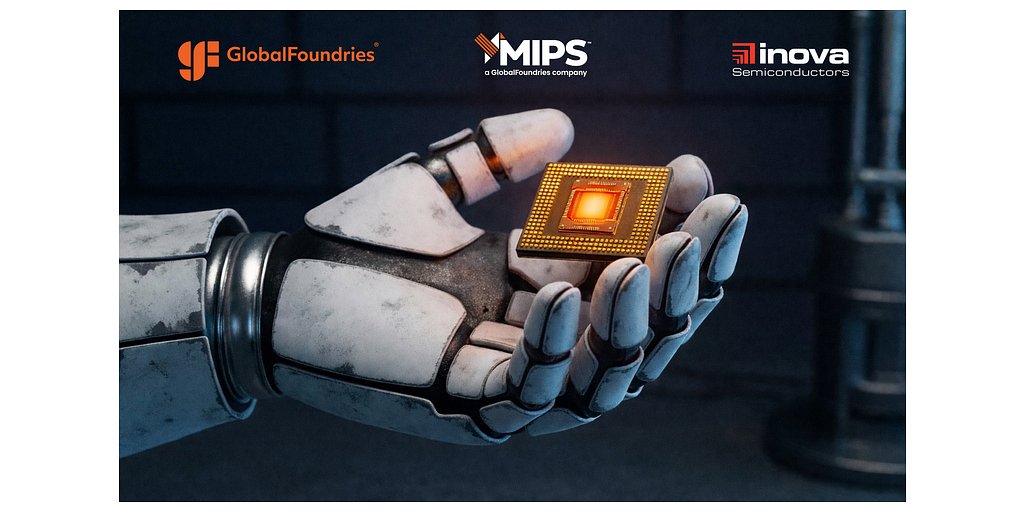
MIPS & Inova Unveil Blueprint for an 'Android Moment' in Robotics
SAN JOSE, Calif. – March 09, 2026 – A new strategic alliance is aiming to do for humanoid robots what Android did for smartphones: create a standardized, accessible, and cost-effective blueprint for development. MIPS, a subsidiary of semiconductor manufacturer GlobalFoundries, has announced a collaboration with German high-speed data specialist Inova Semiconductors. Together, they are launching a robotics control reference platform designed to accelerate the creation of advanced humanoids and other intelligent machines that can physically interact with the world.
The partnership seeks to address the biggest hurdles in advanced robotics: immense complexity, high costs, and long development cycles. By creating a modular, open-standard "building block," the companies hope to empower a new wave of innovation, enabling developers to move complex robots from the prototype stage to mass production far more quickly and affordably.
Decoding the Physical AI Blueprint
The collaboration is a direct response to the rise of "Physical AI," a term describing intelligent systems that sense, reason, and act in the physical world. Unlike generative AI models that create digital content, Physical AI powers machines that perform physical work, from navigating warehouse floors to assisting in surgical procedures. This market, projected to reach over €430 billion by 2030, demands a new class of hardware that balances real-time control, secure AI processing, and extreme power efficiency.
"Together with INOVA, we’re delivering a Physical AI reference platform that simplifies robot design, reduces BOM cost, and gives builders an open, standards-based path to create whole product families with low latency and functionally safe connectivity,” said Sameer Wasson, MIPS CEO, in the announcement.
This new platform establishes a zonal architecture, a concept borrowed from the advanced automotive sector where Inova has deep expertise. Instead of a single, monolithic central computer, a zonal approach uses multiple, specialized processing units distributed throughout the robot. This simplifies wiring, enhances modularity, and allows for mixed-criticality computing—where safety-critical functions like motor control can run securely alongside complex AI workloads like environmental perception.
“The creation of a reference zonal architecture for advanced robotics will enable simpler and faster creation of humanoid and other robotic form factors,” noted Robert Isele, CEO at INOVA.
A Trifecta of Technology Under the Hood
The power of the reference platform lies in the synergy between three distinct technologies. It’s a custom System-on-Chip (SoC) that integrates expertise from MIPS, Inova, and their parent manufacturer, GlobalFoundries.
First is Inova’s APXpress high-speed interface, which acts as the robot's central nervous system. Originally designed for software-defined vehicles, APXpress provides a high-speed data backbone capable of supporting hundreds of data channels at speeds up to 32 Gbps with minimal latency. For a complex humanoid robot with dozens of motors, sensors, and cameras, this deterministic, high-bandwidth communication is essential for coordinating fluid, real-time motion.
Second is MIPS’ RISC-V processor IP, which forms the robot's brain. The platform uses a combination of MIPS' Atlas processors. The Atlas M8500 microcontroller handles the "Act" phase—the deterministic, real-time control of motors and limbs. The Atlas S8200 AI processor serves as the "Think" engine, a powerful Neural Processing Unit (NPU) designed to run modern AI models for perception, navigation, and decision-making directly on the device. By basing this on the open RISC-V instruction set, MIPS offers an alternative to proprietary architectures, fostering a more open and flexible development ecosystem.
Finally, the entire system is manufactured on GlobalFoundries' 22FDX® process technology. This specialized semiconductor manufacturing process is crucial for edge devices like robots. It enables the creation of chips that are both powerful and extremely energy-efficient, a critical requirement for battery-powered mobile robots. The FDX platform's ability to deliver ultra-low power consumption and reliable performance makes it the foundation upon which the entire Physical AI building block is built.
Navigating a Competitive Landscape
The MIPS-Inova alliance is not entering an empty field. The race to build the brains for the next generation of robots is fiercely competitive, with semiconductor giants like NVIDIA, Intel, and ARM all staking significant claims. NVIDIA, in particular, has been aggressive in the space with its Jetson line of processors and its "Project GR00T" foundation model for humanoids.
However, the MIPS-Inova-GF trio is betting on a different strategy. Where competitors often offer powerful but proprietary and sometimes costly solutions, this new platform emphasizes openness, modularity, and cost-effectiveness. By leveraging the open-source RISC-V architecture, they aim to attract developers who want to avoid vendor lock-in.
Furthermore, the vertical integration of MIPS within GlobalFoundries provides a unique advantage. It allows for tight optimization between the chip design (IP) and the manufacturing process, potentially leading to superior performance-per-watt and lower costs. This strategy positions the platform not just as a high-performance option, but as a pragmatic, scalable solution for companies looking to deploy robots in the thousands or millions, rather than just dozens.
To further lower the barrier to entry, the partners are offering early access through MIPS Atlas Explorer, a simulation platform. This allows software developers to begin writing and optimizing their AI models on a virtual version of the hardware long before physical chips are available, dramatically shortening the overall development timeline. This approach is crucial for an industry where software and hardware must evolve in lockstep to achieve true physical intelligence.