
- 20,000 artists in 120 countries contribute to Minted's platform
- Over 776,000 artist submissions processed, with 100 million consumer votes cast
- Minted artists spend over 80% of their time on creative work, compared to a 50/50 split on other platforms
Experts would likely conclude that Minted's model successfully demonstrates how technology can amplify human creativity without replacing it, offering a balanced approach to AI integration in the arts.
Minted’s Stand: Championing Human Artists in the Age of AI
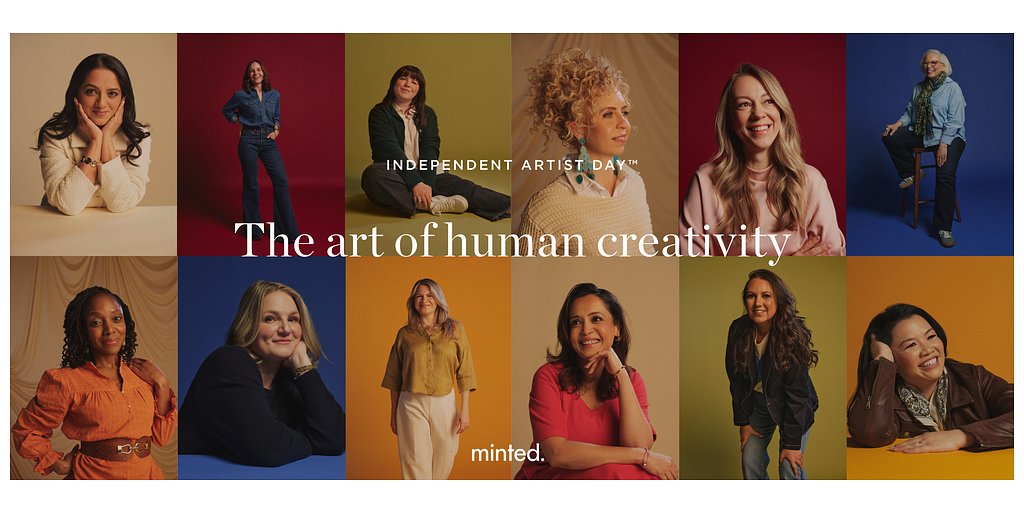
SAN FRANCISCO, CA – April 02, 2026 – In a world increasingly captivated and concerned by the rapid rise of artificial intelligence, design marketplace Minted is drawing a line in the sand. With its fifth annual Independent Artist Day™ approaching on April 3, the company is doubling down on a mission that feels more relevant than ever: celebrating the indispensable role of human creativity. The global initiative serves as a powerful statement, arguing that while algorithms can replicate, only human experience can truly create.
Founded on a community-powered model, Minted has built an empire on the unique designs of independent artists. As AI tools that generate images and text become ubiquitous, the debate over the future of creative professions has intensified. Minted's 2026 campaign wades directly into this conversation, positioning itself not as a luddite, but as a proponent of a symbiotic relationship where technology serves, rather than supplants, the artist.
A Human-Powered Curation Engine
At the heart of Minted’s operation is a unique business model that merges crowdsourcing with e-commerce. Instead of employing an in-house design team, the company runs continuous open design challenges for its global community of over 20,000 artists spanning 120 countries. Artists submit their original work—from wedding invitations to fine art prints—and the community, including customers and fellow artists, votes on the submissions.
This democratic process is more than just a feel-good feature; it's a sophisticated curation engine. The platform has processed over 776,000 artist submissions and tallied more than 100 million consumer votes to date. This firehose of data allows Minted to identify emerging trends and surface designs with proven appeal before making a single production investment. Winning artists receive an upfront cash prize and, critically, an ongoing commission for every sale of their design. This model has proven its scale, with Minted products having reached over 90 million homes and the company having sold more than 500 million holiday cards.
This structure offers a stark contrast to more open marketplaces like Etsy, where sellers manage their own production and logistics, or Zazzle, which offers artists more flexibility on royalty rates but less curation. Minted's approach is a walled garden, but a deliberately cultivated one. The company handles all manufacturing, fulfillment, and customer service, freeing artists from administrative burdens. According to the company's internal data, this allows their artists to spend over 80% of their time on creative work, a significant shift from the 50/50 split often faced by artisans on other platforms. However, this support comes with trade-offs. Winning designs are typically exclusive to Minted, a condition that provides the company with a unique product catalog but limits an artist's ability to sell their most successful work elsewhere.
Technology as Amplifier, Not Author
While the campaign for Independent Artist Day champions human craft, Minted is, at its core, a technology company. It leverages machine learning and data analytics to parse voting patterns and consumer insights, ensuring its product assortment is both fresh and commercially viable. This is the central pillar of Minted's argument in the AI era: technology and human creativity are most powerful when working together.
“While AI is trained to learn from the past, human creativity is what pushes ideas forward,” said Melissa Kim, Co-Founder and CEO of Minted, in a statement. “At Minted, we believe technology and human creativity are most powerful together, which is why we continue to invest in tools that help our artists reach more people, grow their businesses, and bring their most authentic work to life.”
This philosophy positions the company's use of technology as an amplifier. Data helps identify what consumers want, but it doesn't dictate the initial creative spark. The platform's technology accelerates feedback loops and expands economic opportunity, but the genesis of the work—the story, the emotion, the unique perspective—remains firmly in human hands. This presents a compelling case study for other creative industries grappling with AI integration: using technology to enhance discovery and efficiency without sacrificing the authenticity that consumers crave.
Stories an Algorithm Can't Write
The most potent element of Minted's campaign is its focus on the artists themselves. The initiative underscores that great design is not a product of prompts and processing power, but of lived experiences, cultural heritage, and personal struggle. This year’s featured artists serve as powerful embodiments of this idea.
Maja Cunningham, an architect-turned-artist from Texas, brings a history shaped by her experience as a child refugee from Yugoslavia. Her work, often created through tactile processes like printmaking, is a testament to the belief that art is a fundamentally human act. “Art will survive,” Cunningham stated. “I will always go back to the physical act of creating art. I do it for enjoyment and personal growth—both things AI cannot give me.” Her perspective directly confronts the notion that AI can replicate the emotional depth derived from a lifetime of experience.
Similarly, Mumbai-based illustrator Sweta Modi’s journey from corporate hospitality to a design career at the Rhode Island School of Design informs her fearless, experimental approach. Her work reflects a belief that creativity is a global practice, discovered and honed through curiosity. Meanwhile, photographer and mixed-media artist Kamala Nahas views creativity as a mindset of constant experimentation, where even “ugly” creations are valuable learning experiences. “Creativity is a way of seeing the world,” Nahas explained. These are narratives that an algorithm, trained on existing data, cannot spontaneously generate.
This focus on human authorship is particularly resonant amidst growing ethical concerns over AI-generated art. Questions of copyright, data bias, and the potential for AI to devalue creative labor by mimicking artistic styles without compensation are at the forefront of industry discussions. The U.S. Copyright Office has clarified that works generated solely by AI cannot be copyrighted, reinforcing the legal and cultural value placed on human authorship. By championing individual artists and their stories, Minted is not only curating a product line but also cultivating a brand ethos that aligns with a growing consumer desire for authenticity and provenance in a world of synthetic media.
As the creative landscape continues its rapid, technology-fueled evolution, the line between tool and creator is becoming increasingly blurred. Minted’s Independent Artist Day is more than a marketing campaign; it is a well-timed thesis on the future of creative work. It argues that the most valuable commodities in the new creative economy won't be processing power or vast datasets, but the very human qualities that have always defined great art: a unique point of view, a compelling story, and an authentic, emotional connection.