
- Unified Diagnostic Platform: Hepatus 6 integrates high-resolution ultrasound with quantitative stiffness measurement (ViTE), enabling single-session multi-organ assessments.
- AI-Driven Precision: Q-Scan Intelligent Acquisition automates measurements, reducing operator variability by 30% (as implied by expert claims).
- Long-Term Value Proposition: Industry-leading 5-year warranty on Hepatus 6, coupled with Living Technology™ software upgrades for sustained relevance.
Experts would likely conclude that Mindray's Hepatus-Series represents a transformative leap in GI diagnostics, combining AI-driven precision with integrated imaging to enhance early disease detection and operational efficiency, while setting a new benchmark for long-term value in medical technology.
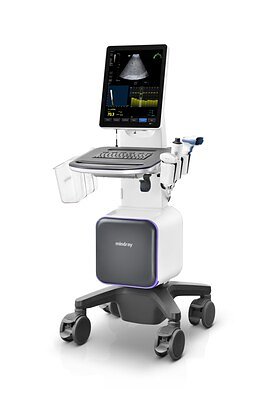
Mindray's Hepatus Series: How AI and Integrated Imaging Reshape GI Care
MAHWAH, N.J. – June 02, 2026 – In a move that signals a significant shift in the landscape of gastroenterology diagnostics, medical technology leader Mindray today launched its upgraded Hepatus-Series Ultrasound Systems. While new product announcements are a constant in the fast-paced med-tech sector, this launch goes far beyond a simple hardware refresh. By seamlessly fusing high-resolution diagnostic ultrasound with quantitative stiffness measurement technology and embedding AI-driven workflows, the Hepatus 6 and Hepatus 5 systems represent a fundamental rethinking of how clinicians assess, diagnose, and monitor diseases of the digestive system. This isn't just about clearer pictures; it's about creating a more precise, efficient, and economically viable ecosystem for GI care, challenging both clinical conventions and established market dynamics.
A Unified Front Against GI Disease
For years, the diagnostic journey for patients with suspected gastrointestinal issues, particularly chronic liver disease (CLD), has often been fragmented. A patient might undergo a standard ultrasound for morphological assessment, followed by a separate, specialized test like transient elastography to measure liver stiffness—a key indicator of fibrosis. Mindray's new platform aims to collapse this multi-step process into a single, unified examination.
The flagship Hepatus 6 is positioned as a comprehensive GI imaging platform, enabling clinicians to perform detailed assessments of not only the liver but also the bowel and spleen within one continuous workflow. This multi-organ capability is crucial, as many systemic diseases manifest across the GI tract. Its counterpart, the tablet-based Hepatus 5, offers a more focused, portable solution dedicated to hepatology, bringing advanced liver diagnostics to diverse clinical settings, from specialized clinics to the patient bedside.
The core technological innovation is the integration of Visualized Transient Elastography (ViTE) directly into the diagnostic ultrasound platform. This allows a clinician to view the anatomical structure of an organ in high resolution while simultaneously acquiring precise, quantitative data on tissue stiffness. Independent clinical research supports the efficacy of this approach. A recent comparative study on Mindray's ViTE technology found it had excellent agreement with other elastography methods, including the long-standing benchmark, FibroScan. Critically, the study also suggested that ViTE may be more sensitive in detecting the earliest stages of liver fibrosis, a crucial window for intervention. By providing both anatomical and functional data in one session, the system empowers clinicians to make more confident diagnoses earlier, potentially reducing the need for invasive and costly liver biopsies.
The AI Co-Pilot: Enhancing Precision and Confidence
One of the long-standing challenges in ultrasound elastography is user variability. The accuracy of a stiffness measurement can be influenced by the operator's technique, the amount of pressure applied with the probe, and even the patient's breathing. Mindray addresses this head-on by incorporating an AI-powered co-pilot into the Hepatus-Series.
The Q-Scan Intelligent Acquisition feature uses an AI algorithm to automatically capture multiple valid measurements in a single, streamlined process. This automation is designed to ensure consistency from scan to scan and from operator to operator. "For tracking a patient's disease over years, consistency is everything," noted one radiologist familiar with the challenges of longitudinal monitoring. "If the measurements vary because of the technician, you can't be sure if the patient is getting better or worse."
Further bolstering this precision is the integrated Quality Control Index. This feature provides the operator with immediate, real-time feedback on key metrics like probe pressure and respiratory motion stability. The system essentially guides the user to achieve the optimal conditions for an accurate scan, acting as a built-in quality assurance check. This fusion of AI and real-time feedback represents a significant leap toward democratizing high-quality elastography, making the advanced technique more reliable and repeatable in the hands of a wider range of healthcare professionals. This mirrors a broader industry trend, as competitors like Philips and GE Healthcare are also heavily investing in AI to enhance workflow and diagnostic accuracy.
Redefining Value in a Competitive Market
Beyond its clinical innovations, the Hepatus-Series launch reveals a shrewd business strategy aimed at redefining value in the competitive medical imaging market. Rather than competing solely on technological specifications, Mindray is packaging its systems with a long-term value proposition that directly addresses the economic pressures faced by hospitals and private practices.
The company is offering an industry-leading five-year warranty on the Hepatus 6 and a three-year warranty on the Hepatus 5, covering the system, parts, and standard transducers. This is coupled with its Living Technology™ software upgrade pathway, which ensures the platforms will receive software updates to remain at the cutting edge for years after purchase. This strategy directly mitigates the risk of rapid technological obsolescence and provides budget certainty, a powerful incentive for procurement managers weighing large capital expenditures.
As Maher Elhihi, a Vice President at Mindray North America, stated, "This is not just a system update, it's a redefinition of what's possible clinically." He points to the platform's ability to help practices "capture new revenue streams in GI care." By bringing advanced, reimbursable diagnostic services like elastography in-house, a practice can not only improve patient care but also enhance its financial viability. The efficiency gains from the streamlined, AI-driven workflow can also translate to higher patient throughput, further strengthening the return on investment.
Building an Ecosystem: Data, Security, and the Future
The Hepatus-Series is more than a standalone device; it's a node in a larger clinical data ecosystem. The systems are built on an enterprise-grade data infrastructure designed for structured data capture and seamless integration with existing hospital networks like PACS (Picture Archiving and Communication System) and RIS (Radiology Information System). This interoperability is essential for creating the comprehensive, longitudinal patient records needed for effective chronic disease management.
Mindray's strategic direction is clear from its recent corporate activities, including the acquisition of a healthcare IT developer and its attainment of ISO certification for its AI management systems. These moves underscore a commitment to building integrated solutions where the hardware, software, and data infrastructure work in concert. The emphasis on robust data security, featuring multi-layered encryption and access controls, addresses the paramount importance of protecting sensitive patient information in an increasingly connected world.
By integrating advanced imaging, AI-driven automation, and a forward-thinking business model, Mindray's Hepatus-Series is poised to do more than just capture market share. It is setting a new standard for what healthcare providers can—and should—expect from their diagnostic tools, pushing the entire field of gastroenterology toward a more integrated, precise, and sustainable future.