
- 50% faster response time: The new NED reduces response times by over 50%, with capabilities as fast as 3-5 nanoseconds in high-intensity scenarios.
- 1 million rads (Si) survivability: The device can withstand extreme radiation environments with a total dose survivability of 1 million rads (Si).
- $2.5 billion market by 2030: The radiation-hardened electronics market is projected to grow to nearly $2.5 billion by 2030.
Experts would likely conclude that Micross's new Standard-Performance Nuclear Event Detector (NED) represents a significant advancement in radiation-hardening technology, offering superior speed, reliability, and domestic manufacturing security for critical defense and aerospace systems.
Micross Unveils New Shield for US Defense Electronics
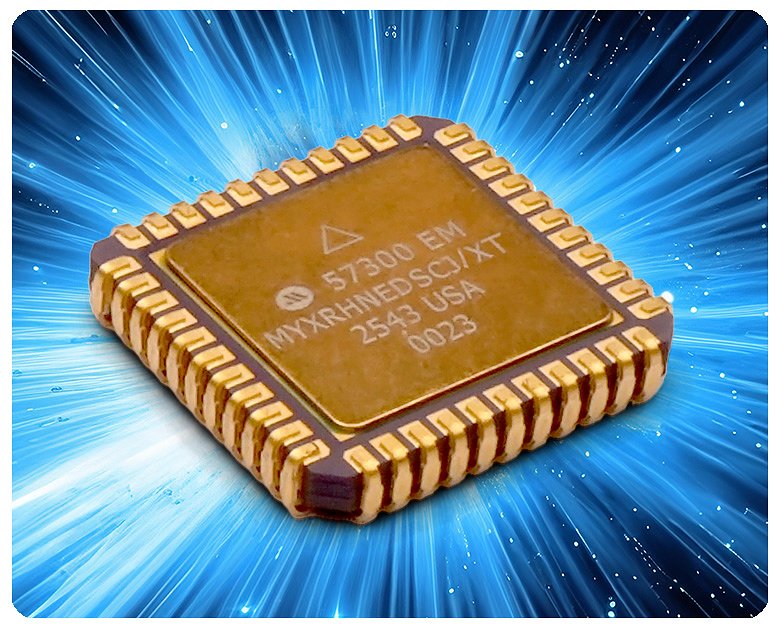
MELVILLE, NY – February 04, 2026 – Micross Components, a key supplier for high-reliability electronics, has launched a next-generation device designed to protect America's most critical military and aerospace systems from nuclear events. The company's new Standard-Performance Nuclear Event Detector (NED) marks a significant leap forward in radiation-hardening technology, promising to safeguard everything from satellites to unmanned drones with unprecedented speed and efficiency.
The commercial launch introduces a solution that replaces decades-old technology with a modern, compact, and domestically manufactured component, directly addressing urgent national security concerns about both technological superiority and supply chain integrity.
A New Benchmark in System Protection
At the heart of the announcement is the MYXRHNEDSCJ series, a device engineered to outperform legacy systems that have been the standard for nearly 40 years. According to Micross, the new NED establishes a new performance benchmark, delivering twice the radiation dose-rate sensitivity while slashing response times by more than 50%. In high-intensity scenarios, its response can be as fast as 3-5 nanoseconds, a critical time frame when protecting sensitive microelectronics from the catastrophic effects of prompt-dose radiation.
"Micross' next-generation NED delivers faster, more compact, and more reliable nuclear event detection," said John Santini, Chief Technology Officer at Micross Components. "By applying modern design techniques to proven building blocks, this device significantly outperforms decades-old legacy solutions and provides greater protection for critical electronics."
This performance jump is achieved through a redesigned architecture. Unlike older designs that required multiple external components, Micross’s NED integrates differential line drivers and receivers directly onto the chip. This innovation drastically reduces the overall footprint, a key benefit for Size, Weight, and Power (SWaP)-constrained platforms like unmanned aerial systems and modern satellites. The integration also shortens signal paths, which helps eliminate the kind of latency that could double the response time in legacy architectures, potentially rendering their protection ineffective.
The device is built to survive and function through extreme radiation environments, boasting a total dose survivability of 1 million rads (Si) and the ability to operate through neutron fluence up to 5 x 10¹³ neutrons/cm².
The Trusted Supply Chain Advantage
Perhaps as significant as the technological leap is the device's strategic manufacturing pedigree. The Standard-Performance NED is manufactured entirely in the United States. Its core Application-Specific Integrated Circuit (ASIC) is produced by the US-based Jazz Semiconductor Trusted Foundry, Inc. (JSTF), a subsidiary of Tower Semiconductor.
JSTF holds a critical designation as a U.S. Department of Defense DMEA Category 1B Trusted Supplier. This accreditation is the gold standard for microelectronics manufacturing, ensuring the components are produced in a secure environment free from the risk of tampering, counterfeiting, or supply chain disruptions—vulnerabilities that have become top-tier national security concerns.
"Jazz Semiconductor Trusted Foundry is pleased to support the commercial launch of Micross' critically important Standard-Performance NED," stated Scott Jordan, President of JSTF. "This program reflects our commitment to providing trusted ASIC manufacturing for advanced defense and aerospace technologies."
By leveraging a DoD-trusted domestic foundry, Micross not only enhances the security of its product but also offers defense contractors and government agencies a reliable and verifiable supply chain. This is a crucial selling point in an era where the Pentagon is actively working to onshore the production of critical microelectronics and reduce dependence on foreign suppliers.
Technological Leap and Market Impact
The radiation-hardened electronics market, valued at over $1.7 billion in 2023, is projected to grow to nearly $2.5 billion by 2030. This growth is fueled by renewed space exploration, increased defense spending, and the proliferation of sophisticated electronic warfare and surveillance systems. Within this competitive landscape, Micross's innovation in its internally designed PIN diode and integrated circuit architecture positions it as a leader.
The PIN diode acts as the primary sensor, and advances in its design enable the rapid detection of gamma radiation. The integrated architecture then processes this detection with industry-leading speed. This combination allows the NED to trigger protective "circumvention" functions in a system, such as shutting down power supplies or isolating data networks, just before the damaging pulse of radiation arrives.
While competitors like APITech and Power Device Corporation (PDC) also offer robust NED solutions, Micross is betting that its combination of integrated SWaP optimization, superior response time, and a fully trusted, US-based supply chain will be a powerful differentiator. The move away from external components not only saves space but also improves noise immunity, a critical factor for ensuring reliable performance in the complex electronic environments of modern military hardware.
Fortifying National Security Assets
The real-world implications of this technology are vast. The NED is designed for seamless integration into a wide array of mission-critical systems, including:
- Satellites: Protecting communication and surveillance satellites in orbit from natural space radiation and potential man-made threats.
- Defense Weapons Platforms: Ensuring the functionality of guidance and control systems in missiles and other strategic assets.
- Aircraft and Unmanned Systems: Hardening the avionics and data links of fighter jets, bombers, and drones against nuclear effects.
- Military Ground Vehicles: Safeguarding communication and electronic warfare systems on the battlefield.
By providing a faster, more reliable shield, the NED enhances the operational resilience of these vital assets. It ensures that critical systems can not only survive a nuclear event but potentially continue to operate through it, maintaining a strategic advantage.
Micross is currently offering the Standard-Performance NED for evaluation in limited quantities, allowing defense and aerospace partners to begin design-in and testing. The company has also announced that full production of Extended Temperature Range (XT) and MIL-PRF-38534 Class H compliant versions are planned for later this year. Achieving MIL-PRF-38534 Class H compliance will certify the device to the military's stringent standards for reliability and performance, further solidifying its role as a foundational component for the next generation of American defense technology.