
- 35% less drag and 60% lower fuel burn for the Phantom 3500 compared to contemporaries
- $5 billion launch order from Flexjet for 300 aircraft
- 2030 entry into service for the Phantom 3500, aiming to meet 2050 net-zero targets two decades early
Experts would likely conclude that Otto Aerospace's appointment of Scott Drennan as CEO marks a critical shift toward execution, positioning the company to revolutionize aviation with its laminar flow technology and transformative Phantom 3500 jet.
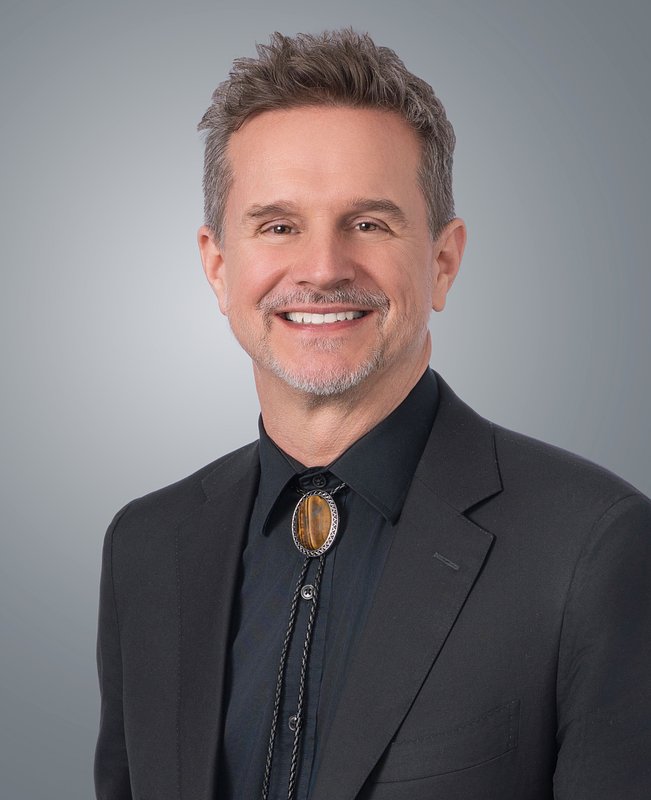
Otto Aerospace Taps New CEO to Execute Revolutionary Jet's Flight Plan
FORT WORTH, TX – May 04, 2026 – By Tyler Nguyen
Otto Aerospace announced a pivotal leadership transition today, appointing aerospace veteran Scott Drennan as its new President and Chief Executive Officer. The move signals a strategic shift for the company, moving from a period of vision and formation into a high-stakes phase of focused execution on its groundbreaking Phantom 3500 aircraft.
Drennan, who previously served as the company's president and chief operating officer, succeeds Paul Touw. Touw is credited with revitalizing the company, building a world-class team, and championing the transformative laminar flow technology pioneered by founder Bill Otto, Sr. The transition is described by the company as an intentional evolution, designed to leverage Drennan's extensive experience in bringing complex aerospace programs from design to certified reality.
“Great companies are built in chapters, and Paul was exactly the leader we needed to guide Otto through its formative years," said Otto Aerospace Board Chair Dennis Muilenburg in a statement. "Now, as our company transitions from conceptual design to building and flying aircraft, Scott is exactly the right leader for our next chapter."
A New Mandate: Pure Execution
Scott Drennan's appointment is a clear statement of intent from Otto Aerospace's board. The company's mission is no longer just about dreaming of the future of aviation; it's about building it. Drennan brings a formidable track record to this task, with deep experience in program execution, certification, and innovation from his time at industry giants like Bell Textron, where he was integral to a dozen aircraft certification programs, and as a founding member of Supernal, Hyundai’s aerospace division.
His mandate is clear: deliver the Phantom 3500 on its committed timeline. As COO, Drennan already demonstrated his capability, leading the successful completion of the aircraft's Preliminary Design Review (PDR) in February and overseeing recent test flights of an advanced laminar flow drone developed with the Defense Advanced Research Projects Agency (DARPA).
"Scott brings the technical depth, operational discipline, and certification experience needed to carry Otto from breakthrough design to a certified, revolutionary production aircraft,” said outgoing CEO Paul Touw. Drennan himself echoed this focus on disciplined action.
"We have in our hands a technology that the aviation world has dreamed of for years," Drennan stated. "Our mission now is pure execution. We are focused on building this aircraft on time, without compromising quality, and with the discipline and intensity that a program of this consequence deserves.”
The Promise of Laminar Flow
The technology at the heart of Otto's ambitious plans is transonic natural laminar flow (TNLF). For decades, aerospace engineers have understood that making air flow smoothly, or 'laminarly,' over a wing dramatically reduces drag. However, maintaining that delicate flow at the high speeds and varying conditions of commercial flight has been an elusive holy grail. Otto Aerospace claims to have cracked the code.
The company's Phantom 3500, a clean-sheet midsize business jet, is built entirely around this principle. The result, according to Otto, is a staggering leap in efficiency: 35% less drag, leading to 60% lower fuel burn compared to its contemporaries. When using Sustainable Aviation Fuels (SAF), the company projects 90% fewer emissions, enabling the aircraft to meet the industry's 2050 net-zero targets by 2030, two decades ahead of schedule. This breakthrough is supported by government confidence, evidenced by a $7 million grant from the FAA's FAST-Tech program to advance the technology in collaboration with Pennsylvania State University.
“The laminar flow technology we have developed is a fundamental rethink of what aviation can be," Drennan said. "The Phantom is going to change what the world believes is possible.”
From Blueprint to Production Line
Beyond the technology, Otto Aerospace is making concrete moves to turn its vision into a manufacturing reality. The company is currently seeking to close a $200 million Series B funding round, which is earmarked specifically for achieving FAR Part 23 certification for the Phantom 3500 within the next three years.
This follows a successful $92 million Series A round in March 2025. The financial and logistical groundwork is being laid with significant momentum. In a major coup, Otto secured a nearly $500 million incentive package from the state of Florida to relocate its headquarters from Fort Worth, Texas, and establish a new manufacturing plant and headquarters in Jacksonville. Construction on the state-of-the-art facility at Cecil Airport is slated to begin in 2027.
This plant will be the birthplace of the Phantom 3500. With the aircraft's design largely locked down, the company plans to begin assembling the first flight-test vehicle in 2026, targeting a first flight in 2027 and entry into service in 2030. The scale of the ambition is immense, with projections to build up to 1,600 aircraft between 2030 and 2040.
A Validated Vision and Crowded Sky
Otto Aerospace's bold claims are not just theoretical; they are backed by significant market validation. In a landmark deal, fractional ownership giant Flexjet was announced as the launch customer for the Phantom 3500, placing a firm fleet order for 300 aircraft with additional options. The order, estimated to be worth approximately $5 billion, provides a powerful endorsement of Otto's technology and business case, and a massive production backlog before the first metal is even cut.
The Phantom 3500 enters a competitive market dominated by established players like Gulfstream, Bombardier, and Embraer. However, Otto aims not to compete directly but to create a new category defined by unparalleled efficiency and sustainability. By radically lowering operating costs and environmental impact, the company hopes to make private air transportation more accessible and responsible.
Under Drennan's leadership, the company will also continue to explore opportunities beyond civil aviation, leveraging its DARPA collaboration to pursue the defense unmanned aerial systems (UAS) market. With its applied laminar flow technology, a massive order book, and a new execution-focused leader at the controls, Otto Aerospace is positioning itself not just to join the aviation industry, but to fundamentally transform it.