
- 600,000+ students reached directly over 10 years
- 200,000 volunteer hours logged by Merck employees
- 9.47 million students engaged indirectly through nonprofit partnerships
Experts would likely conclude that Merck's SPARK™ program has successfully bridged the STEM education gap by leveraging employee expertise, demonstrating how corporate initiatives can effectively inspire and prepare the next generation of innovators.
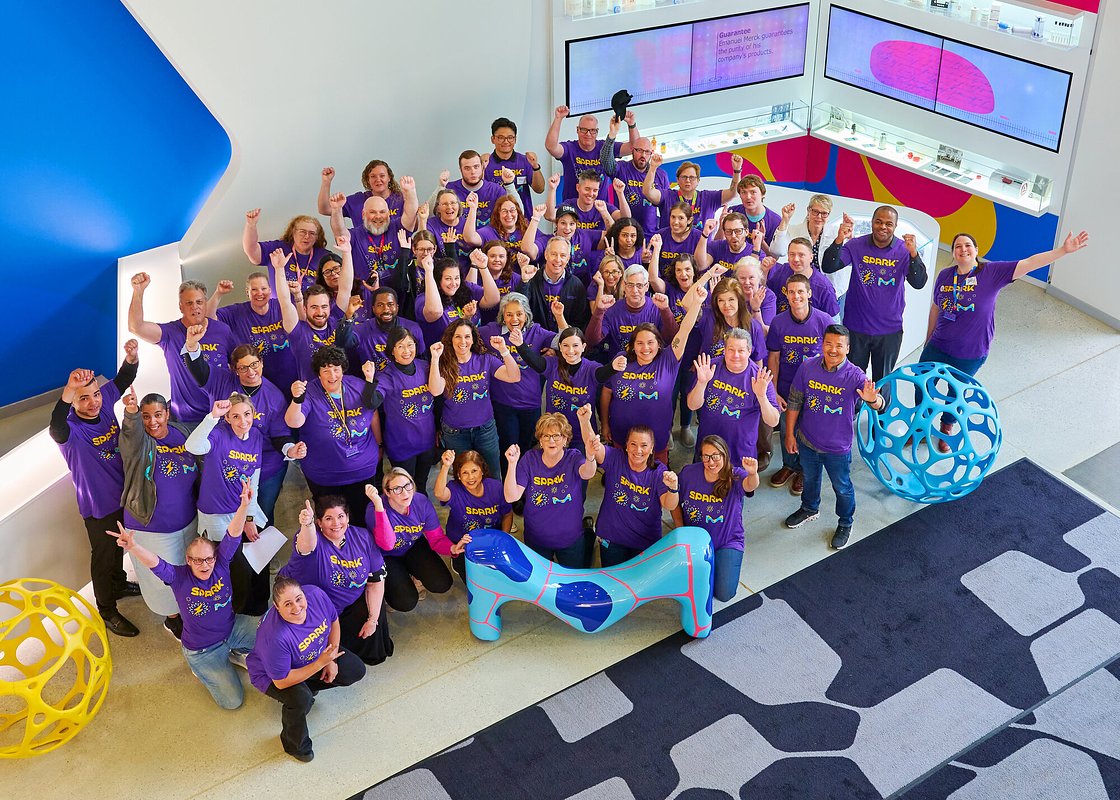
Merck's SPARK: A Decade Igniting STEM Passion and Corporate Purpose
DARMSTADT, Germany – March 18, 2026 – As the global economy increasingly leans on scientific and technological innovation, Merck, a leading science and technology company, is marking a significant milestone in its commitment to fostering the next generation of innovators. The company is celebrating the 10th anniversary of SPARK™, its global employee volunteer program designed to bring hands-on science education to communities worldwide. Over the past decade, the initiative has mobilized Merck's own scientists and engineers, reaching more than 600,000 students directly and logging nearly 200,000 volunteer hours.
Launched in 2016, SPARK™ was conceived as a bridge between the company's highly skilled workforce and the pressing need for accessible STEM (Science, Technology, Engineering, and Mathematics) education. The program’s success is not just measured in participation but in its expansive reach, which includes an additional 9.47 million students engaged indirectly through strategic nonprofit partnerships. Now, as it enters its second decade, Merck has set its sights on a dramatic expansion, underscoring the program's evolution from a corporate initiative into a cornerstone of its long-term social and business strategy.
A Strategic Response to a Global Need
SPARK™ operates against the backdrop of a widening global STEM skills gap. With an estimated 80% of future jobs projected to require STEM-related skills, educational systems worldwide are struggling to keep pace. Recent PISA results have shown a concerning decline in basic math and science proficiency in developed regions like the EU, while a projected shortfall of 1.4 million STEM workers looms in the United States alone by 2030. These statistics highlight a critical need for private sector intervention to supplement traditional education and inspire student interest from an early age.
Merck's program is a direct answer to this challenge. By deploying its most valuable asset—its people—the company provides an experience that textbooks often cannot. “SPARK™ reflects who we are - scientists, engineers and problem-solvers who believe science should be accessible to everyone,” said Karen Madden, Chief Technology Officer of the Life Science business of Merck. “Over the past decade, our employees have helped students experience science in ways that make it real.”
This approach aligns with recognized best practices for effective STEM outreach, which emphasize hands-on, inquiry-based learning. Rather than simply funding initiatives, Merck actively involves its employees, who are given up to 16 hours of paid volunteer time annually. This model ensures that students are not just learning about science but are interacting with the very professionals who are shaping the industry, helping to demystify complex subjects and illuminate clear career pathways.
Bringing Science to Life, One Student at a Time
The core of SPARK™'s impact lies in its signature Curiosity Programs. The Curiosity Cube™, a retrofitted shipping container transformed into a mobile science lab, has become a traveling emblem of the program, delivering interactive experiments to students across three continents. Inside, students can engage with everything from digital microscopes to 3D printers, making abstract scientific concepts tangible and exciting. Complementing this is Curiosity Labs™, a series of lessons developed by Merck employees that can be delivered in classrooms, providing educators with robust, ready-to-use materials.
The program’s structure is intentionally decentralized. While SPARK™ is a global framework, events are organized by local, employee-led teams in 48 countries. This ensures that activities are tailored to the specific needs and cultural contexts of each community, whether through classroom visits, large-scale civic science events, or site tours of Merck facilities. This localized approach has been crucial to the program's sustained success and relevance.
Beyond STEM, the initiative also encourages broader community service, including the company's annual Global Food Drive, demonstrating a holistic commitment to the well-being of the communities where its employees live and work. The combination of global scale and local action allows the program to create a powerful, personal impact that resonates with students, educators, and the volunteers themselves.
A Catalyst for Culture and Competitive Advantage
In today's competitive landscape, a strong corporate social responsibility platform is no longer a peripheral activity but a central element of corporate identity and a key differentiator in the war for talent. Merck's decade-long investment in SPARK™ positions it alongside other industry giants like IBM, with its P-TECH schools, and Bayer, with its long-running Making Science Make Sense® program, all of whom recognize that investing in future talent is also an investment in their own sustainability.
Internally, programs like SPARK™ serve as a powerful engine for employee engagement and retention. By providing paid time for volunteering and empowering employees to use their professional skills for social good, companies can foster a profound sense of purpose. For a company built on scientific exploration, enabling employees to share that passion directly addresses the growing demand among professionals for purpose-driven work. This commitment helps build a robust corporate culture, strengthens team cohesion, and enhances the company's value proposition to both current and prospective employees.
The involvement of employees in 46% of Merck's community projects in 2025 speaks to a deeply embedded culture of engagement. SPARK™ is not merely an outreach program; it is an expression of the company's core identity and a strategic tool for building a motivated, fulfilled, and socially conscious workforce.
Doubling Down: Ambitious Goals for the Next Decade
Looking ahead, Merck is not resting on its laurels. The company has announced ambitious goals for SPARK™ to be achieved by 2035, signaling a significant escalation of its commitment. The new targets include directly reaching two million students—more than triple its current achievement—and expanding its indirect reach to 75 million students globally through nonprofit partners. The company also aims to log 650,000 employee volunteer hours, expand its volunteer base to 66 countries, and deliver 12,000 Curiosity Labs™ lessons.
Furthermore, the highly successful Curiosity Cube™ is slated for expansion to three additional continents, bringing its unique brand of interactive science to even more remote and underserved communities. These goals represent a clear understanding that while the first decade built a successful foundation, the scale of the global STEM challenge requires an even greater and more sustained effort. This forward-looking vision solidifies SPARK™ as a long-term strategic priority for Merck, aimed at making a measurable and lasting impact on the global talent pipeline and strengthening communities for decades to come.