
- 3.73GHz: The Dimensity 9500s features a Cortex-X925 ultra core clocked at up to 3.73GHz.
- 7Gbps: The 5G Release-17 modem supports downlink speeds of up to 7Gbps.
- 25% Performance Boost: The Dimensity 8500's Mali-G720 GPU offers a 25% peak performance improvement over the previous generation.
Experts would likely conclude that MediaTek's Dimensity 9500s and 8500 chips represent a significant leap in mobile AI and performance, challenging Qualcomm's dominance in the premium smartphone segment with competitive pricing and advanced on-device intelligence.
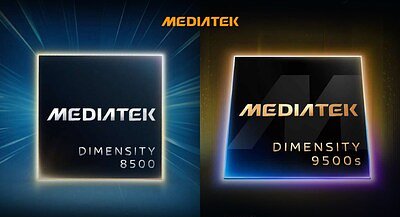
MediaTek Ups the Ante with AI-Powered Dimensity 9500s and 8500 Chips
HSINCHU, TAIWAN – January 22, 2026 – MediaTek has fired its latest salvo in the relentless mobile chip wars, unveiling the Dimensity 9500s and Dimensity 8500 system-on-chips (SoCs). The announcement signals a strategic and aggressive push to not only solidify its leadership in shipment volume but also to conquer the lucrative flagship and premium smartphone segments, areas traditionally dominated by rivals Qualcomm and Apple. The new chips are engineered to deliver significant leaps in performance, gaming prowess, and, most notably, on-device artificial intelligence.
In a statement accompanying the launch, JC Hsu, corporate senior vice president at MediaTek, emphasized the company's goal of democratizing high-end technology. "We are committed to increasing our investment in advanced technologies and striving to make bleeding-edge products available to more people," he said. "This mission is evident in this pair of Dimensity chipsets, which are intended to provide more flagship and premium smartphone experiences while upholding our vision in bringing the best possible performance and power efficiency to more people."
This launch is more than a simple product refresh; it's a declaration of intent. By packing next-generation features into chips poised for a wider range of devices, MediaTek is challenging the very definition of what consumers should expect from non-Apple flagship and premium-tier phones.
The Flagship Challenger: Unpacking the Dimensity 9500s
The star of the show is the Dimensity 9500s, a powerhouse built on TSMC's cutting-edge 3nm process. This flagship SoC adopts an "All Big Core" architecture, a design philosophy that eschews smaller efficiency cores in favor of raw power across all its CPUs. The octa-core configuration is led by a formidable Cortex-X925 ultra core clocked at up to 3.73GHz, supported by three Cortex-X4 premium cores and four Cortex-A720 performance cores. A key, but less-publicized, feature is its substantial 19MB CPU cache, a design choice aimed at boosting sustained performance and efficiency during demanding tasks.
For gamers and power users, the Dimensity 9500s integrates ARM's latest Immortalis-G925 GPU. This graphics unit promises a full-frame, immersive experience in heavy-duty mobile games, complete with support for advanced hardware-accelerated ray tracing for more realistic lighting and reflections. MediaTek is also touting its proprietary gaming technologies, MAGT 3.0 (MediaTek Adaptive Game Technology) and MFRC 3.0 (MediaTek Frame Rate Control), which are designed to optimize energy efficiency and prolong battery life during intense gaming sessions, with some projections suggesting frame rates of up to 165 FPS in certain titles.
Beyond raw processing, the chip is a content creation workhorse. Its advanced MediaTek Imagiq image processor supports real-time 30fps motion tracking and, impressively, 8K full-focus Dolby Vision HDR video recording. Connectivity is also top-tier, featuring a 5G Release-17 modem capable of 7Gbps downlink speeds, Wi-Fi 7 support, and a novel phone-to-phone Bluetooth direct connection that can reportedly reach up to 5 kilometers.
Redefining On-Device Intelligence
Perhaps the most significant advancement in both new chips lies in their neural processing units (NPUs) and their focus on generative AI. The Dimensity 9500s features a flagship NPU explicitly optimized for "generative reasoning" and "multi-modal models." This isn't just marketing jargon; it translates to powerful, on-device AI capabilities that operate without needing a constant cloud connection, enhancing both speed and user privacy.
Practical applications are extensive. The chip can handle sophisticated AI photo editing, including complex tasks like image outpainting (extending a photo's borders with AI-generated content), subject matting, and object elimination. It's also designed to power "agentic AI," enabling devices to perform tasks like summarizing calls, meetings, and documents in real-time, directly on the hardware. This push into on-device generative AI positions MediaTek to compete directly with Google's Tensor and Qualcomm's AI Engine, making advanced AI a standard feature rather than a niche luxury.
The Dimensity 8500 is not left behind. It incorporates MediaTek's 8th-generation NPU, which brings support for mainstream large language models (LLMs) and multi-modal language models (MLLMs) to the premium tier. This enables features like real-time translation and on-device image generation. For photographers, its AI ultra-clear telephoto algorithm and a new Dimensity AI semantic engine promise to intelligently optimize image frames for superior quality, even at a distance.
The Premium Powerhouse: Dimensity 8500
While the 9500s targets the high end, the Dimensity 8500 is arguably just as important for MediaTek's market strategy. Built on an energy-efficient 4nm process, it also uses an All Big Core architecture, but with eight Cortex-A725 cores running up to 3.4GHz. It is designed to power the "premium" segment—devices that bridge the gap between the mid-range and true flagships.
The integrated Mali-G720 GPU represents a massive leap, with MediaTek claiming a 25% peak performance improvement over the previous generation while simultaneously reducing power consumption by 20%. Early, unconfirmed benchmark leaks have been particularly startling, with some reports suggesting an AnTuTu v10 score that could exceed that of last year's flagship champion, the Snapdragon 8 Gen 3. The chip supports ultra-fast LPDDR5X memory at 9600Mbps, ensuring smooth performance in daily use, multitasking, and gaming.
This chip is expected to be the heart of the next wave of "flagship killer" devices from brands like Poco, Realme, and Honor. By delivering near-flagship power at a more accessible price point, the Dimensity 8500 could dramatically elevate the user experience in the sub-$800 smartphone category.
Shifting Tides in the Mobile Chip Wars
With the Dimensity 9500s and 8500, MediaTek is not just competing; it's actively shaping the market. The company has methodically shed its former reputation as a budget-chip maker, and these SoCs are its boldest move yet. The Dimensity 9500s is set to go head-to-head with Qualcomm's rumored Snapdragon 8 Gen 5, Apple's A18 Bionic, and Samsung's Exynos 2500, but likely with a significant price advantage.
This pricing strategy is MediaTek's trump card. The company's previous-generation Dimensity 9400 was reportedly over 20% cheaper for manufacturers than its direct Snapdragon competitor. If this trend continues, smartphone makers will be able to launch devices with 3nm processors, advanced AI, and high-end gaming features at highly competitive prices, putting immense pressure on Qualcomm's dominance in the premium Android space.
While Qualcomm still leads in revenue, MediaTek has already captured the lead in unit shipments. This dual-chip launch is a clear strategy to convert that volume into value, capturing more of the profitable high-end market. For consumers, the intensified competition is an unequivocal win, promising a future where cutting-edge performance and intelligent features are no longer confined to the most expensive devices on the shelf.