
- 13,000+ students trained in digital skills through the CendekiAwan Malaysia program
- 227 AI applications developed by students, addressing real-world challenges
- RM20 billion invested in Malaysia's AI strategy to train 50,000 experts
Experts view Malaysia's CendekiAwan program as a pivotal step in building a future-ready workforce, aligning with national AI goals and bridging the gap between academia and industry demand.
Malaysia's Gen AI Push: Forging a Digital Workforce of 13,000 Strong
PUTRAJAYA, Malaysia – April 21, 2026 – A landmark initiative aimed at positioning Malaysia at the forefront of the generative AI revolution has successfully equipped over 13,000 university students with critical digital skills, marking a significant step in the nation's journey to build a future-ready workforce. The CendekiAwan Malaysia program, a collaboration between AWS edtech partner Elitery Malaysia and six local universities, celebrated its milestone achievements this week, showcasing a new generation of innovators poised to drive the country's digital economy.
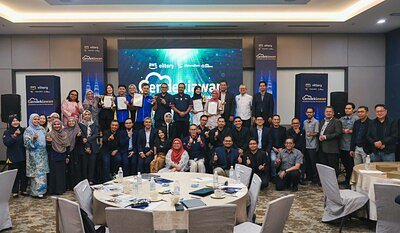
Since its inception in November 2025, the program has rapidly expanded, bridging the often-cited gap between academic theory and industry demand. The initiative culminated in a high-energy closing event on April 20, where the focus was not just on participation numbers but on tangible outcomes: 227 functional AI applications built by students, tackling real-world problems in sectors from digital health to sustainable finance.
Powering a National Digital Agenda
The CendekiAwan program does not operate in a vacuum. It serves as a powerful engine for Malaysia's ambitious national strategy to become a "high-tech nation by 2030." This initiative directly aligns with the country's MyDIGITAL Blueprint and the National AI Roadmap (AI-Rmap 2021-2025), which together outline a vision for Malaysia to rank among the top 20 countries globally in AI. With a staggering RM20 billion investment backing its AI strategy, the government aims to train 50,000 AI experts and foster a vibrant ecosystem of innovation.
Government bodies like the National AI Office (NAIO), established in 2024, and the MyMahir National AI Council for Industry (MyMahir-NAICI) are working to coordinate talent development and drive AI adoption across multiple sectors. Initiatives like the AI Sandbox Pilot Programme, which aims to cultivate 900 AI startups and develop 13,000 new AI talents by 2026, underscore the national urgency. The CendekiAwan program, with its impressive scale and practical focus, is a prime example of the public-private partnership model that Malaysia is leveraging to achieve these goals, transforming policy into a skilled and active workforce.
"Building a culture of experimentation starts at the earliest ages," said Hussein Mohd Ali, Country Manager for AWS Malaysia. "When we empower students with tools like PartyRock and AWS generative AI technologies, we're not just teaching them skills — we're enabling them to curate the future they want to see. This is how we strengthen Malaysia's digital talent pipeline — by nurturing curiosity and creativity from the ground up."
Bridging the Gap Between Classroom and Cloud
A core component of the program's success is its innovative educational model, which pairs industry expertise with academic institutions. Elitery, an AWS partner specializing in cloud solutions, has facilitated a "Train-the-Trainer" system where AWS experts first train Elitery professionals, who then equip faculty members at the partner universities: Universiti Malaysia Perlis (UniMAP), Universiti Tun Hussein Onn Malaysia (UTHM), Universiti Teknologi Mara (UiTM), Universiti Tenaga Nasional (UNITEN), Universiti Malaya (UM), and Universiti Malaysia Terengganu (UMT).
This cascade of knowledge is supercharged by the use of AWS PartyRock, a no-code, browser-based generative AI service. By removing the barrier of complex programming, the platform democratizes AI, allowing students from all academic backgrounds—not just computer science—to experiment, build, and innovate. While no-code tools are seen by experts as powerful introductory and prototyping platforms, they are instrumental in fostering broad AI literacy and a "learn by doing" mindset. They provide a crucial first step, sparking interest that can lead students to pursue deeper, more specialized technical skills required for advanced AI roles.
Kresna Adiprawira, President Director of Elitery, highlighted the collaborative spirit. "We are honored to facilitate this bridge between industry and academia. The success of CendekiAwan Malaysia is more than just statistics; it represents the immense potential of Malaysia's next generation of digital leaders," he stated. "The 227 innovative applications developed through this program are a powerful reminder that when student creativity is matched with industry-leading tools, it translates directly into real-world solutions."
From Prompts to Prototypes: A New Generation of Innovators
The true impact of the CendekiAwan program is best seen through the work of its participants. The 227 applications submitted demonstrate a remarkable capacity for creative problem-solving. At the closing ceremony, five students were recognized for their exceptional projects across critical sectors.
Among the standout innovations was Isihat+, developed by Muhammad Fadlan Bin Mairuzsazali of UniMAP. This digital health application empowers users to optimize their daily routines through precise physiological tracking and health metric analytics. Another top project, CashSmart Campus by Nik Hannan Qistina Binti Zulkifli from UiTM, addresses financial literacy by providing students a streamlined tool to track expenses and gain actionable insights for better financial management.
Other award-winning projects included CareerAdvisor by Siti Aisyah Binti Abdul Azis (UiTM) for GovTech & Social Impact; ThinkPath by Amir Fahmi Bin Jasni (UniMAP) for Smart Education; and KitarSemula AI by Ang Ke Sin (UTHM), which tackles challenges in sustainable environment and climate. These projects are not mere academic exercises; they are functional prototypes that showcase how generative AI can be applied to solve pressing community and national challenges.
Meeting a Burgeoning Market Demand
The skills cultivated through the CendekiAwan program are directly aligned with a rapidly growing demand for AI talent in Malaysia. As the nation pushes its digital transformation agenda, industries such as healthcare, finance, manufacturing, and agriculture are actively seeking professionals with AI expertise. Job market data reveals a clear need for roles like "Artificial Intelligence Engineer," "Data Scientist," and even senior positions like "Director of Generative AI."
Salaries reflect this demand, with an AI Engineer in Malaysia earning an average of RM 150,935 annually, and senior roles commanding significantly higher compensation. By providing industry-validated skills and hands-on experience with cutting-edge tools, the program ensures its more than 13,000 participants are not just educated but career-ready. They enter a competitive digital economy armed with the practical knowledge and confidence to contribute from day one.
As the CendekiAwan Malaysia initiative continues its work through the end of 2026, it is set to expand its reach even further. The program stands as a testament to what is possible when government ambition, academic dedication, and industry leadership converge, nurturing a pipeline of talent that will not only fill jobs but will actively shape Malaysia's digital destiny.