
- $2.8 million funding round led by Tawuniya, Saudi Arabia’s largest insurance company.
- 4,000+ smart contracts executed with a 70% repeat customer rate over three years.
- Tokenization of agricultural commodities via MAATEX for near-instant settlement on the Avalanche blockchain.
Experts would likely conclude that Maalexi's innovative approach to digitizing and de-risking agricultural trade represents a significant step toward modernizing a historically fragmented industry, with strong institutional backing signaling growing confidence in its model.
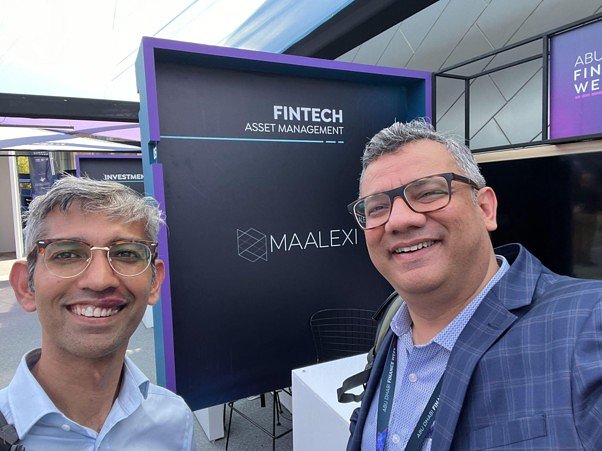
Maalexi's Digital Harvest: Why Big Money is Seeding Agri-Trade's Future
RIYADH, Saudi Arabia – June 26, 2026
The global agricultural trade, a multi-trillion-dollar market foundational to our very survival, has long been a paradox: essential, yet notoriously opaque, fragmented, and inefficient. This week, a significant signal emerged that this old-world market is on the cusp of a radical transformation. Maalexi, a company developing what it calls the world's first regulated agricultural exchange for real-world assets (RWAs), announced a $2.8 million funding round. What makes this more than just another venture capital headline is the lead investor: Tawuniya, Saudi Arabia’s largest insurance company.
This oversubscribed round, which also saw returning support from UAE-based Global Ventures, is a powerful vote of confidence. It’s not just about the capital; it’s about the strategic alignment. When a titan of risk management like Tawuniya places a bet on a platform designed to de-risk agricultural trade, it’s a clear indicator of where the market is headed. The move signals a growing institutional appetite for solutions that bring discipline and transparency to one of the world's most complex supply chains.
De-Risking a Fragmented Market
For decades, cross-border agricultural trade, particularly for small and medium-sized enterprises (SMEs), has been a high-stakes gamble. Deals are fraught with counterparty, payment, quality, and logistical risks. Verification is difficult, standardization is rare, and settlement can be painfully slow. Maalexi’s core thesis is that this status quo is no longer acceptable. The company has spent the last three years building a “risk-native” operational layer to prove it.
Over 36 months of live operations across the UAE, Saudi Arabia, India, and the United States, the platform has executed over 4,000 smart contracts with an impressive 70% repeat customer rate. These aren't just vanity metrics; they are evidence of product-market fit in a notoriously tough sector.
“Over the past three years, we have shown that physical agricultural trade can be verified, standardized and executed with lower risk,” said Dr. Azam Pasha, co-founder and CEO of Maalexi, in the company’s announcement. “We are now building the exchange layer on top of that foundation.”
This foundation is a sophisticated blend of technologies. The platform uses AI-driven intelligence to score risk and vet counterparties, IoT sensors to monitor commodities in transit and storage, and legally binding digital contracts to formalize agreements. This intricate system tackles the root cause of market friction: a fundamental lack of trust and verifiable data.
A Strategic Bet from the Middle East
The leadership of Tawuniya in this funding round is perhaps the most compelling part of the story. For the Saudi insurance giant, this is more than a financial play; it’s a strategic move into the future of financial infrastructure. “At Tawuniya, we back businesses that strengthen financial infrastructure and improve market resilience,” noted Fahad Bin Muammar, the insurer’s chief investment officer. His statement underscores a belief that Maalexi’s regulated model can fundamentally improve the agricultural trade ecosystem.
This investment aligns perfectly with the broader economic ambitions of the GCC. As nations like Saudi Arabia and the UAE aggressively pursue economic diversification under frameworks like Vision 2030, they are cultivating vibrant FinTech hubs. Maalexi, with its significant operational base in Abu Dhabi, is a prime example of the innovative companies flourishing in this environment. The region’s focus on food security—a critical concern for import-dependent nations—adds another layer of strategic urgency. A platform that can make food supply chains more resilient, transparent, and efficient is not just a commercial asset; it is a matter of national interest.
Global Ventures’ continued participation further solidifies this regional backing. Having led Maalexi’s pre-Series A round, their follow-on investment signals deep conviction in the company's trajectory and its potential to disrupt agricultural trade not just in the Middle East, but across emerging markets.
From Physical Silos to Digital Assets
The ultimate vision for Maalexi is MAATEX, the Maalexi Agricultural Assets Token Exchange. This is where the company’s operational groundwork converges with the cutting edge of digital finance. The goal is to tokenize verified physical agricultural commodities—a silo of wheat, a container of lentils—into tradable digital assets.
Using the Avalanche blockchain, these tokenized commodities, or Real-World Assets (RWAs), can be traded on a regulated exchange with near-instant settlement. Each token represents a legally-owned, insured, and audited physical asset, solving the age-old problem of liquidity and ownership transfer in commodity markets. This process of tokenization promises to bring Wall Street-level efficiency to the farm-to-fork journey.
By building on an established blockchain like Avalanche and adhering to token standards designed for securities, Maalexi is positioning itself to operate within regulatory frameworks, a crucial step for gaining the trust of institutional players. The company’s focus on its intellectual property, with three patents already published by the USPTO and three more under review, shows a deep commitment to building a defensible and innovative technological moat.
Cultivating a More Secure Food Future
While the technology is sophisticated and the financial implications are significant, the ultimate impact of Maalexi’s vision could be measured in a more fundamental currency: food security. By reducing friction and risk, the platform empowers SMEs, the backbone of the agricultural economy in many nations. It lowers the barrier to entry for global trade, creating more resilient and diversified supply networks.
With partnerships that include warehousing with DP World and significant credit facilities from institutions like Citi, Maalexi is building an ecosystem, not just a piece of software. The new funding will accelerate this build-out, enabling the company to scale its technology and expand its market reach. As Maalexi moves from verifying physical trade to launching a full-fledged digital exchange, it is not just building a business; it is architecting a new, more trustworthy infrastructure for the global food supply chain.