
- 1,324% increase in AI-related traffic to retail sites since late 2024
- 45% of marketing leaders admit they cannot accurately measure brand visibility in AI-generated answers
- 81% success rate for organizations integrating SEO and AI visibility efforts
Experts would likely conclude that the rise of AI-driven search has fundamentally altered digital visibility, requiring brands to adapt their strategies beyond traditional SEO to maintain control over their narrative.
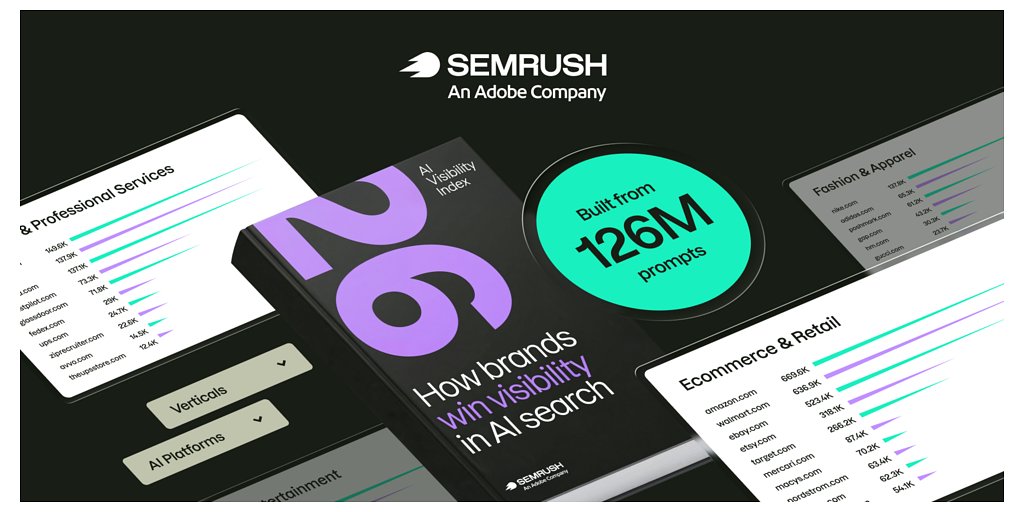
Beyond the Search Bar: Semrush Index Reveals the New AI Visibility Rules
BOSTON, MA – June 26, 2026 – For decades, businesses have battled for visibility on a well-defined field: the search engine results page. This week, a landmark study signals that the field has been irrevocably transformed. The 2026 AI Visibility Index, a massive analysis of 126 million AI search prompts released by Semrush, now an Adobe company, serves as a critical dispatch from a new front line where brands are increasingly invisible and losing control of their own narrative.
The report is far more than a data dump; it's a map of a disorienting new landscape. As consumers flock to AI chatbots and integrated search experiences—driving AI-related traffic to retail sites up a staggering 1,324% since late 2024—a chilling measurement gap has emerged. The index reveals that nearly half (45%) of marketing leaders admit they cannot accurately measure their brand's visibility in AI-generated answers. It's a clear signal: the old rules of digital discovery are broken, and most businesses are flying blind.
The New Gatekeepers: Navigating an AI Identity Crisis
The most potent signal from the Semrush report is that brands no longer fully own their identity. In the age of AI, a brand is what a dozen different algorithms, pulling from a thousand different sources, say it is. This creates a phenomenon of 'brand drift,' where a company’s carefully crafted message is reinterpreted, summarized, and often distorted.
The study’s analysis of platforms like ChatGPT, Gemini, and Google’s AI Overviews shows they are not a monolith. Each AI has its own personality and research methodology. ChatGPT, for instance, consults an average of 15 sources for a response, frequently leaning on community forums like Reddit and reference platforms like Wikipedia. Gemini, in contrast, is more reserved, citing an average of just three sources. This divergence explains why a brand can be a celebrity on one platform and a ghost on another.
This reliance on a scattered web of information is a critical vulnerability. The report highlights that the overlap between a brand being mentioned in an AI answer and its own website being cited as the source can be as low as 30%. Your brand is being discussed, but the AI is pointing to other sources—retailers, publishers, and community discussions—as the authority. This is underscored by broader market analysis revealing that Reddit has become the single most-cited domain across major AI platforms, signifying a massive transfer of authority from corporate websites to community consensus. Brands like Patagonia, which maintain strong visibility, do so because of a consistent narrative echoed across a chorus of third-party sources, from OutdoorGearLab to GearJunkie.
From SEO to GEO: A Fundamental Shift in Digital Strategy
The era of simply optimizing for search engines (SEO) is over. The new imperative is Generative Engine Optimization (GEO), a strategic approach focused on influencing AI models. This is not a semantic change; it's a fundamental rewiring of marketing. The Semrush index provides hard data to back this up: organizations that fully integrate their SEO and AI visibility efforts report a staggering 81% success rate in increasing traffic or leads from AI platforms. Those who manage them in separate silos see a paltry 36% success rate.
As Andrew Warden, Vice President of Marketing at Adobe and former CMO of Semrush, stated in the report, “The foundations of SEO are critically important in creating trust signals for AI, but visibility now depends on how consistently a brand reinforces its narrative across digital channels.”
This strategic shift is the clear logic behind Adobe’s recent $1.9 billion acquisition of Semrush. The move, finalized in April, wasn’t just about acquiring a popular toolkit; it was a decisive bet that winning the next decade of digital marketing means winning within AI. By integrating Semrush, Adobe is positioning itself to provide the essential infrastructure for this new discipline, helping enterprises manage their visibility not just on Google, but within the black box of the AI agents that are becoming the primary gateway to the customer.
The Visibility Divide: Where Brands Win and Lose in the AI Economy
The Index doesn't just diagnose the problem; it quantifies the competitive landscape, revealing a stark divide. In industries like News and Media, visibility is highly concentrated, with the top three brands capturing 82.9% of the conversation. In contrast, categories like Finance (41.4%) and Industrial (42.2%) are far more fragmented, signaling a significant opportunity for challenger brands to establish a foothold.
Amidst this platform-specific chaos, a small cohort of companies has achieved near-universal presence. The report identifies 36 global brands—the “Universal 36,” including YouTube, Amazon, Facebook, and Apple—that maintained top-100 visibility across all four major AI platforms every month during the study. Their success isn't accidental. These brands combine massive consumer reach with a clear, functional role in a user's journey, whether for discovery, comparison, or transaction. They have built such a deep and wide digital footprint that AI models cannot ignore them.
For everyone else, the race is on. The emergence of dedicated AI visibility solutions from competitors like Ahrefs and BrightEdge confirms that a new marketing technology category is taking shape around this challenge. The core task is to build and project trust at scale. This requires a new level of discipline, moving beyond campaign-based thinking to holistic brand governance.
“Your AI narrative is becoming the decisive entry point to your customer experience,” noted Rachel Thornton, CMO of Adobe Enterprise. “But the new reality is, your customers are both people and AI agents. Minimizing brand drift to ensure accuracy and consistency across every digital touchpoint is now the starting point for securing visibility. This requires new content strategies, stronger data foundations, and organization-wide governance.”