
- 1 million daily active users engaged as content co-creators in Lingokids' Billy's Lab
- 20-30% success rate for prototypes advancing to full production based on real-time child behavior data
- 20 million children using Lingokids' platform monthly
Experts likely conclude that Lingokids' AI-driven, data-validated development model represents a significant innovation in children's edutainment, though it raises ethical concerns about data privacy and the potential for over-optimization of engagement at the expense of creative diversity and developmental benefits.
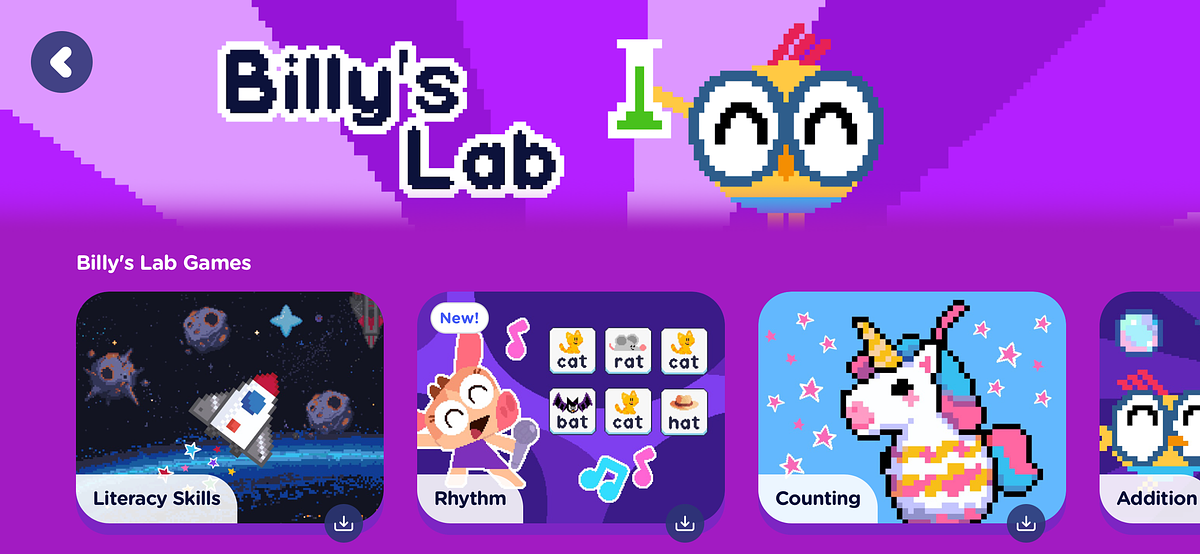
Lingokids' AI Lab Turns a Million Kids into Content Co-Creators
LOS ANGELES, CA – February 27, 2026 – In the competitive world of children's digital entertainment, speed and engagement are king. Lingokids, a major player in the edutainment space, has unveiled a new strategy that combines artificial intelligence with the raw, unfiltered feedback of its massive user base. The company has launched 'Billy's Lab,' an in-app feature that functions as a live testing ground for new games and interactive experiences, effectively turning its one million daily active users into the world's largest focus group of toddlers and young children.
This new AI-powered content studio allows Lingokids to shrink its development pipeline dramatically, moving from a new concept to a playable prototype in under two weeks. These prototypes are then released into the wild within the app, where the ultimate arbiters of success - children aged 2 to 8 - decide their fate not with words, but with actions. This move signals a significant shift in content creation, leveraging real-time behavioral data at a scale previously unseen in the industry.
The AI-Powered Creative Engine
At the heart of Billy's Lab is a fusion of AI-accelerated production and large-scale data analysis. Traditionally, creating high-quality, intuitive content for pre-literate children is a slow, methodical process fraught with guesswork. Designers must anticipate how a child who cannot read instructions will interact with a new game mechanic. Lingokids' new model aims to remove that guesswork.
"We can go from an idea to a prototype played by thousands of kids in under two weeks," said Cristobal Viedma, CEO and founder of Lingokids, in the announcement. "AI accelerated the build, but it's our community of over a million daily users who decide what ships. No focus group can replicate that."
The studio's system tracks key behavioral metrics to determine a prototype's viability. It measures whether children can intuitively understand the objective without text or verbal cues, if the required gestures are natural for small hands, and, most importantly, if the experience is engaging enough to hold their attention and bring them back for more. Users can also 'heart' their favorite experiences, providing another direct data point for the development team.
The results are decisive. According to the company, only 20-30% of prototypes that enter Billy's Lab prove successful enough to advance into full production. The rest are cut based on how children actually behave, not how adults predict they will. This ruthless, data-driven culling process allows the studio to fail fast and invest resources only in content that is proven to resonate.
"Prototypes help us answer one critical question early: 'Is this fun and intuitive at the same time?'" noted Vladimir Klimov, Lingokids Studios Director. He added that the combination of AI-assisted production and real-time testing enables the studio to "produce more interactive kids content in a month than most studios ship in a year."
The Ethics of Data-Driven Play
The model of using a vast audience of children as a real-time feedback engine, while innovative, steps into a sensitive ethical arena. The practice of collecting behavioral data from millions of young users has drawn scrutiny from privacy advocates and child development experts, who raise concerns about the implications of such large-scale data collection, even when anonymized.
Regulations like the Children's Online Privacy Protection Act (COPPA) in the United States and GDPR-K in Europe impose strict rules on how companies can handle data from users under 13. These laws typically require verifiable parental consent and clear disclosures about what data is collected and for what purpose. Lingokids' privacy policy states it operates within these frameworks, requiring parental accounts to manage child profiles and clarifying it does not "sell" personal information for third-party advertising.
However, the broader edtech industry has faced criticism for what some experts describe as a culture of surveillance. The concern is that optimizing content purely for engagement could lead to the creation of 'dopamine loops' that prioritize keeping children on the app over genuine educational or developmental benefits. One child psychologist, speaking on the condition of anonymity, noted that while personalized learning is a benefit of AI, "we must be cautious that data-driven optimization doesn't inadvertently create dependencies or narrow a child's exploratory instincts to only what the algorithm has deemed 'engaging.'"
Lingokids maintains that its data collection within Billy's Lab is focused on improving the user experience, measuring interaction patterns like tap accuracy, drag-and-drop success, and replay rates to build better, more intuitive products. The feedback loop, as the company describes it, is between the studio and its audience, making the community "essentially co-creators of the content library."
An Edge in the Edutainment Arms Race
Lingokids' strategic move with Billy's Lab is best understood within the context of the fiercely competitive digital edutainment market. The company, which reports over 20 million children using its platform monthly, vies for screen time against heavyweights like ABCmouse, the curriculum-focused Homer, and the widely praised, non-profit Khan Academy Kids.
In this crowded field, the ability to innovate rapidly and produce a continuous stream of high-quality, engaging content is a critical competitive advantage. By leveraging its massive user base as a validation engine, Lingokids can de-risk its content investments and accelerate its production schedule far beyond what many competitors can achieve. This data-driven edge not only applies to its own beloved characters like Billy and Eliot but also enhances its value proposition for major content partners, which include recognizable brands like Disney, Blippi and Pocoyo.
This model could set a new industry standard, pressuring other edutainment companies to adopt similar AI-driven, data-validated development cycles to keep pace. The long-term implication is a potential acceleration of innovation across the entire sector, where content becomes more responsive to children's immediate interests and interaction styles. The question that remains is whether this speed will come at the cost of creative risk-taking, potentially leading to a market filled with highly optimized but homogenous experiences.