
- 99% reduction in time for creating intelligence summaries with Legion's platform
- 15x acceleration in target analysis compared to traditional methods
- FedRAMP® High Authorization achieved for handling sensitive government data
Experts would likely conclude that Centurion represents a significant advancement in edge AI, particularly for defense and government applications, by providing a secure, autonomous, and resilient solution for environments with degraded or no network connectivity.
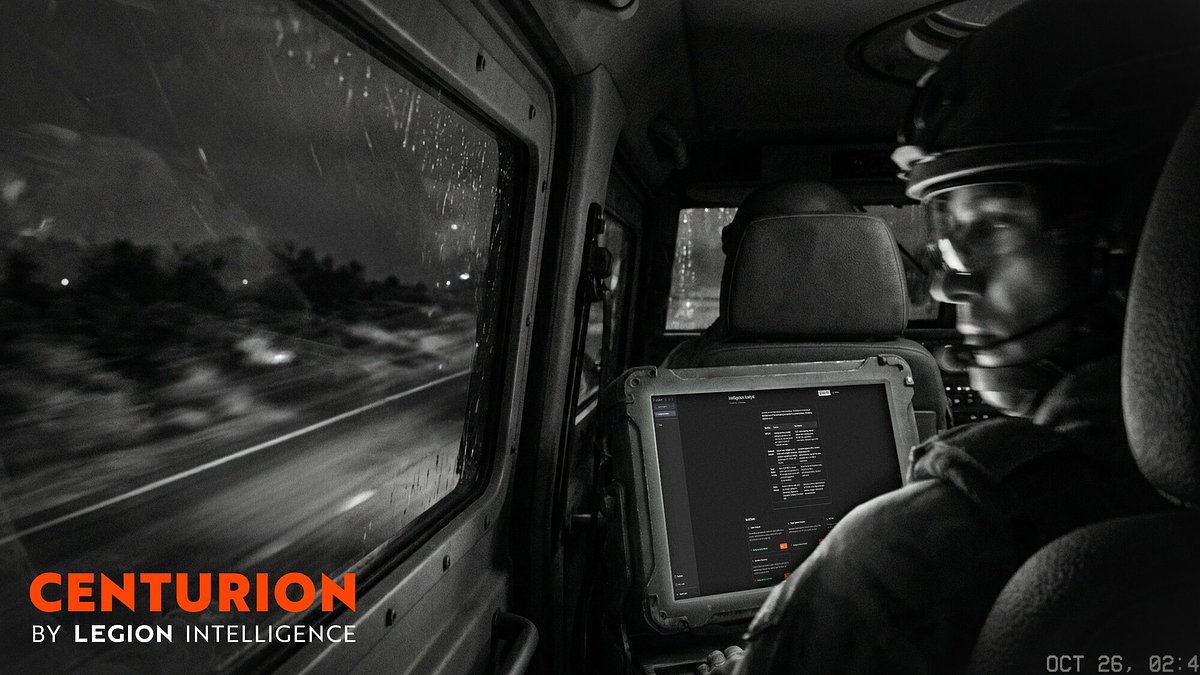
Legion Unveils Centurion: AI for When the Network Goes Dark
SAN FRANCISCO, CA – January 28, 2026 – Legion Intelligence today announced Centurion, a deployable edge AI system designed to operate where modern technology often fails: in environments where network connectivity is denied, degraded, intermittent, or limited (DDIL). The system integrates hardware, software, and support services to run sophisticated agentic AI workflows, ensuring that critical capabilities remain online even when the cloud is out of reach.
Centurion marks a significant step for Legion Intelligence, a company that rebranded from Yurts AI in 2025 to focus on orchestrating intelligent agents for mission-critical tasks. This new offering extends the company’s software expertise into a complete, field-ready system aimed at defense, government, and national security clients who cannot afford for their AI tools to vanish at the first sign of network trouble.
“AI doesn’t help if it disappears the moment the network degrades or if connecting creates risk,” said Ben Van Roo, CEO and Co-Founder of Legion Intelligence, in the company's announcement. “Centurion is designed for the environments that actually define operations: DDIL conditions, constrained resources, and high accountability.”
AI That Works When Nothing Else Does
The core challenge Centurion addresses is the fragility of cloud-dependent AI. In military operations, disaster zones, or remote industrial sites, reliable connectivity is a luxury, not a guarantee. These DDIL environments can be caused by everything from jamming and cyberattacks to simple infrastructure failure. For artificial intelligence models that rely on constant communication with massive data centers, a lost connection means a loss of capability.
Centurion is engineered with an “offline-first” philosophy. Its nodes are designed to function fully autonomously when disconnected, processing data and executing complex AI tasks locally. When multiple nodes are in proximity, they can form a self-healing mesh network, distributing tasks, sharing context, and coordinating actions without a central server. When connectivity is restored, the system can synchronize with cloud environments, ensuring data and model consistency across the entire operational landscape.
This architecture directly competes with a growing market of edge solutions from giants like Google, whose Distributed Cloud offers air-gapped processing, and defense-tech leaders like Anduril Industries. However, Legion aims to differentiate Centurion by providing a fully integrated system—hardware, software, and sustainment—specifically tuned for orchestrating “swarms” of autonomous AI agents that can handle workloads in parallel, from intelligence analysis to logistics execution.
Forged in the Field: From Army Bases to National Labs
Legion Intelligence asserts that Centurion is not a theoretical concept but a system hardened by real-world use. The press release highlights two significant early deployments that demonstrate its versatility.
Within the U.S. Army’s 18th Airborne Corps—known as “America’s Contingency Corps” and a frequent testbed for battlefield innovation—Centurion has been used to support planning and execution in communications-degraded environments. This allows tactical units to sustain AI-enabled workflows for intelligence and operations without relying on a stable connection to a command post. While specific metrics for Centurion are new, Legion's underlying platform has demonstrated its value in military evaluations, reducing the time for creating intelligence summaries by up to 99% and accelerating target analysis by a factor of 15.
In a starkly different setting, the SLAC National Accelerator Laboratory has deployed Centurion in a compact, on-premise configuration for over 100 active users. This use case underscores the system's value beyond the tactical edge. For SLAC, Centurion enables secure AI workflows over highly sensitive internal knowledge systems, where data locality, strict governance, and operational control are non-negotiable. It proves the system’s utility in any environment where data cannot or should not leave the premises.
“These early deployments matter because they’re shaping the system itself,” noted Chris Hume, Chief Business Officer of Legion Intelligence. “Centurion isn’t being built in the abstract. It’s being hardened through real use, across very different mission profiles.” These deployments often run on trusted enterprise-grade hardware from partners like Hewlett Packard Enterprise (HPE), Dell, and NVIDIA, ensuring reliability.
A New Standard for Secure and Accountable AI
For its target audience in defense and government, capability is meaningless without security and accountability. Legion Intelligence has built Centurion on a foundation of trust, inheriting the robust security posture of its core software platform, which is already used by over 70,000 personnel across U.S. Special Operations Command (USSOCOM).
The company recently achieved FedRAMP® High Authorization, a critical security benchmark that allows it to handle sensitive government data. This is in addition to existing compliance with Impact Levels 2 through 6 (IL2-IL6) for Department of Defense data, NIST 800-53 standards, and a SOC 2 Type II certification.
This security-first approach is coupled with a design philosophy centered on preserving human authority. The system is built around three pillars: Velocity (rapid fielding), Resilience (offline-first execution), and Control. This third pillar is crucial, as Centurion is designed to empower, not replace, human decision-makers. Through modular design, role-based permissions, and fully auditable actions, the system ensures that operators remain firmly in the loop, directing and supervising the AI agents' work. This approach to human-AI collaboration is essential for maintaining ethical standards and accountability in high-stakes scenarios.
By providing a single, consistent system for managing AI from the cloud to the disconnected edge, Legion aims to solve the fragmentation that forces organizations to juggle separate tools for different environments. With Centurion available now for evaluation and field trials, Legion Intelligence is betting that its integrated, resilient, and human-centric approach will become the new standard for deploying AI where it matters most.