
- 7-9 business days: Time to manufacture and ship most custom orders
- 85% customer repurchase rate: High satisfaction and loyalty among clients
- 20,000-square-meter facility: Large-scale production capacity for global operations
Experts would likely conclude that LC Sign's MaaS model represents a significant advancement in the custom signage industry, offering brands a streamlined, compliant, and rapid solution for global visual identity deployment.
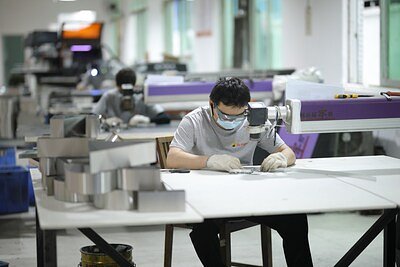
LC Sign's MaaS Model Aims to Remake Global Custom Signage
GUANGZHOU, China – January 26, 2026 – In a move that challenges the traditional manufacturing landscape, Guangzhou-based LC Sign has announced a significant upgrade to its core operating model, doubling down on a "Manufacturing-as-a-Service" (MaaS) approach. The company aims to solve a persistent headache for global brands: how to deploy a consistent and high-quality visual identity across diverse international markets without being bogged down by logistical nightmares, regulatory hurdles, and long lead times. By integrating design, production, and global logistics into a single, streamlined service, LC Sign is positioning itself not just as a supplier, but as a critical technology partner for brands expanding their physical footprint.
From Product Supplier to Service Partner
The custom signage industry has long been fragmented, often forcing brands to juggle multiple local vendors, leading to inconsistencies in quality, color, and execution. LC Sign’s enhanced MaaS model seeks to dismantle this inefficient system. It transforms the conventional "one-off manufacturing" transaction into an end-to-end service that covers everything from initial design collaboration and lean manufacturing to multi-stage verification and global delivery.
While other large manufacturers may offer integrated services, LC Sign's explicit branding of its MaaS framework is a strategic move to differentiate itself. The model is built on a foundation of Industry 4.0 capabilities, utilizing advanced machinery like CNC benders and 3D printers to create a wide array of products, from ultra-thin light boxes to intricate Seiko metal lettering and visually complex Infinity Mirror signage.
"Our goal is to make brand ideas no longer limited by manufacturing capabilities," said LC Sign CEO Anne L. in the company's official announcement. "With the MaaS model, we are not just a supplier, but a technology partner to the brand." This sentiment reflects a fundamental shift in the value proposition—moving from selling a physical object to delivering a comprehensive branding solution.
The Engine of Global Brand Consistency
For marketing executives and brand managers, maintaining a cohesive visual identity during international expansion is a paramount concern. A brand's sign is its physical handshake with the customer, and inconsistencies can dilute its message. LC Sign's model directly addresses this by centralizing production, ensuring that a sign destined for a flagship store in New York is identical in quality and specification to one installed in a new location in Seoul or Paris.
A critical component of this global promise is navigating the complex web of international regulations. The company asserts that all its products can be manufactured to meet specific market certifications, including UL for North America, TUV and CE for Europe, and KC and PSE for South Korea and Japan, respectively. The ability to provide pre-certified products is a significant advantage, saving clients months of compliance testing and potential redesigns. A notable case study involved providing a full set of UL-compliant outdoor signage for TRYP by Wyndham hotels in the United States, showcasing the model's effectiveness in a highly regulated market.
This focus on compliance is managed by an international coordination team that ensures brand design intentions are perfectly aligned with local installation environments and technical specifications, overcoming language and technical barriers that often plague cross-border projects.
Speed, Precision, and Trust in a Box
In today's fast-paced retail environment, speed is currency. Whether for a global product launch or a temporary pop-up shop, brands cannot afford long delays. LC Sign's MaaS model stakes its reputation on industry-leading speed, claiming that most custom orders can be manufactured and ready for shipment in just 7 to 9 business days. Paired with an established logistics network that promises delivery to major global cities in approximately 5 business days, a brand can theoretically go from a final design drawing to a fully installed sign in under three weeks.
These ambitious timelines are backed by a transparent production process designed to build client trust. Customers are provided with photo and video updates from the factory floor, allowing them to monitor progress in near real-time. Before any product leaves the 20,000-square-meter facility, it undergoes rigorous quality verification and lighting tests, ensuring it is "ready to use right out of the box."
Customer testimonials and online reviews appear to validate these claims. Feedback frequently highlights the company's responsiveness, on-time delivery, and the quality of the final product. While some online discussions reveal initial skepticism about the rapid turnaround times, they often conclude with satisfied customers confirming their orders arrived on schedule and in good condition, a testament to the model's efficacy.
Empowering a Diverse Partner Ecosystem
The benefits of the MaaS model extend beyond multinational corporations. LC Sign serves a broad ecosystem of partners, including signage distributors, construction contractors, design agencies, and even startups. By internalizing the immense complexity of custom, high-spec manufacturing and global logistics, the company enables these partners to focus on their own core competencies, such as creative design and market expansion.
With a reported 85% customer repurchase rate and overwhelmingly positive ratings on B2B platforms like Alibaba, the strategy appears to be fostering strong, long-term relationships. Partners can confidently pitch complex, multi-location projects to their own clients, knowing they have a reliable manufacturing backbone that can deliver on speed, quality, and compliance. This allows smaller design firms, for example, to compete for projects that would have previously been out of reach due to the logistical burdens involved. By shouldering the manufacturing load, LC Sign is effectively democratizing access to high-end, globally-deployable visual branding.