
- $60 million investment in a 60-acre global headquarters campus in South Carolina.
- 215 new jobs created, with full-scale manufacturing starting in Q1 2027.
- 90% of new data centers expected to use liquid cooling by 2030, up from less than 25% today.
Experts agree that advanced cooling solutions are critical to sustaining AI and high-performance computing growth, with liquid cooling becoming the industry standard.
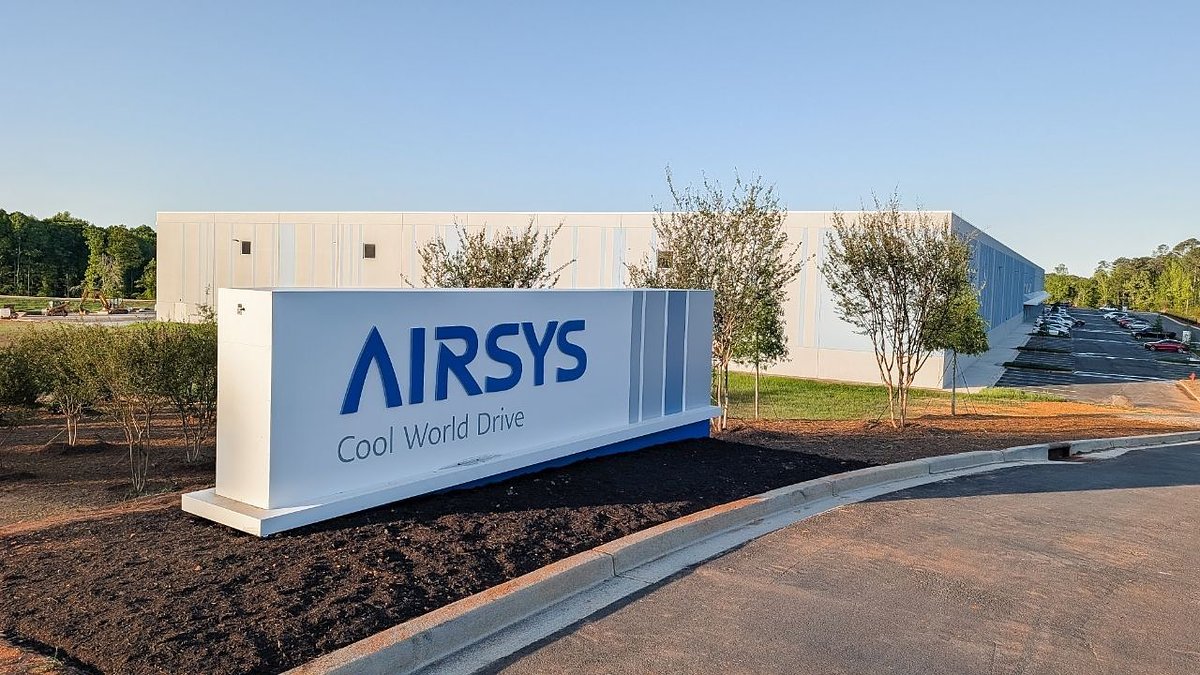
Airsys Opens SC Hub to Cool the AI Revolution's Heat Problem
WOODRUFF, SC – May 13, 2026 – In a move signaling the immense infrastructure demands of the artificial intelligence boom, mission-critical cooling specialist Airsys officially opened its new 60-acre global headquarters campus today in Woodruff, South Carolina. The $60 million facility is poised to become a central hub for developing and manufacturing the advanced thermal management systems required to power the next generation of data centers and high-performance computing.
The campus opening, which will create an estimated 215 new jobs, underscores a critical reality of the digital age: progress in AI is fundamentally tied to the ability to manage the intense heat it generates. As corporate teams begin operations on-site, with full-scale manufacturing slated for the first quarter of 2027, Airsys is positioning itself at the heart of solving one of the tech industry’s most pressing challenges.
“Today marks a major milestone for Airsys as we establish our global headquarters here in Woodruff, South Carolina," said Yunshui Chen, Founder and CEO of Airsys. "This investment reflects our commitment to advancing cooling innovation across the entire spectrum of mission-critical infrastructure. We have built a foundation on this 60-acre site that is designed to support our domestic and international customers and partners, Airsys’ rapidly expanding team, and the local community for decades to come.”
The Soaring Demand for Advanced Cooling
The new Woodruff campus is a direct response to the explosive growth in AI and high-performance computing (HPC), which has pushed traditional data center cooling technologies to their limits. The global data center cooling market, valued at over $19 billion in 2026, is projected by some analysts to surge to nearly $128 billion by 2033, a testament to the scale of the challenge.
At the core of this demand are the powerful graphics processing units (GPUs) that fuel AI models. These chips can generate 20 to 50 times more heat than traditional CPUs, driving rack power densities from a standard 10-15kW to well over 50-100kW. Conventional air-cooling methods are often insufficient and inefficient at these levels, creating a bottleneck that can throttle performance and hinder AI development.
This thermal barrier is forcing a rapid industry-wide pivot to more advanced solutions, primarily liquid cooling. Technologies like direct-to-chip cooling, which uses cold plates to draw heat directly from processors, and immersion cooling, where entire servers are submerged in a non-conductive fluid, are moving from niche applications to mainstream requirements. Industry analysts predict that by 2030, a staggering 90% of new data centers will deploy some form of liquid cooling, a sharp increase from less than 25% today. Airsys’s new facility is designed to scale its portfolio across this entire spectrum, offering air, liquid, and hybrid technologies to bridge the gap between legacy infrastructure and the extreme demands of future AI workloads.
A Strategic Bet on U.S. Manufacturing and Sustainability
Airsys’s decision to anchor its global operations in South Carolina is a multifaceted strategy that intertwines economic development, supply chain resilience, and a deep commitment to sustainability. The $60 million investment and creation of 215 jobs represent a significant economic boon for the Upstate region, reinforcing its reputation as a high-tech manufacturing corridor.
South Carolina Gov. Henry McMaster lauded the move, stating, “South Carolina has a long history of manufacturing excellence, and Airsys’ decision to anchor its global headquarters right here in the Upstate is a testament to our state’s world-class workforce and pro-business environment.”
This sentiment was echoed at the local level. “We are beyond excited to officially welcome the Airsys Global Headquarters into the Woodruff family,” said Woodruff Mayor Kenneth E. Gist. “They are a world-class company, and we look forward to seeing prosperity and innovation continue to shine on them as they grow right here with us.”
Beyond the immediate economic impact, the facility represents a strategic shift towards domestic manufacturing. In an era defined by global supply chain disruptions and geopolitical uncertainty, localizing the production of critical infrastructure components provides a crucial layer of resilience. By bringing engineering and manufacturing closer to its large North American customer base, Airsys can reduce lead times, enhance quality control, and mitigate risks associated with international logistics.
This strategic localization is paired with a focus on environmental sustainability, particularly through the development of "zero-water cooling" technologies. Traditional data centers can be enormous consumers of water, with some evaporative cooling systems using over a million liters per day. As water scarcity becomes a growing global concern, the industry is under pressure to adopt more responsible practices. Airsys's focus on closed-loop systems that recirculate a fixed amount of coolant without requiring constant water replenishment directly addresses this issue, aiming to dramatically improve Water Usage Effectiveness (WUE) and reduce the environmental footprint of the digital economy.
Redefining Efficiency with Power Compute Effectiveness
While the industry has long used metrics like Power Usage Effectiveness (PUE) to measure energy overhead, Airsys is championing a framework it calls Power Compute Effectiveness (PCE). According to the company, PCE is designed to shift the focus from simply cooling efficiently to ensuring the maximum amount of a data center’s provisioned power is dedicated to its primary purpose: IT compute.
The concept addresses a fundamental inefficiency in many data centers. PUE measures the ratio of total facility power to the power delivered to IT equipment, but it doesn't account for how effectively that IT equipment is being used. PCE, by contrast, seeks to maximize the computational output for every watt drawn from the grid. An effective cooling system, in the PCE framework, is one that not only uses minimal energy itself but also enables the servers to run at their peak, unthrottled performance.
By optimizing the thermal environment, Airsys solutions aim to increase the proportion of power available for computation, effectively allowing data center operators to get more performance out of their existing power envelope. This is particularly crucial as power scarcity and grid limitations become binding constraints on data center expansion in many regions. As digital infrastructure continues to grow in scale and importance, this holistic approach to efficiency could prove vital for sustainably powering the data-intensive future. The new South Carolina campus will serve as the engine for this vision, driving the development of technologies that convert more power into performance.