
- 110% year-on-year growth for the past two years
- 18,000+ enterprise clients, including Microsoft, OpenAI, and NVIDIA
- 2.8 million developers and testers served by the platform
Experts would likely conclude that TestMu AI's rebranding and shift to autonomous testing agents represent a strategic response to the accelerating pace of AI-driven software development, positioning the company as a leader in the next generation of quality engineering.
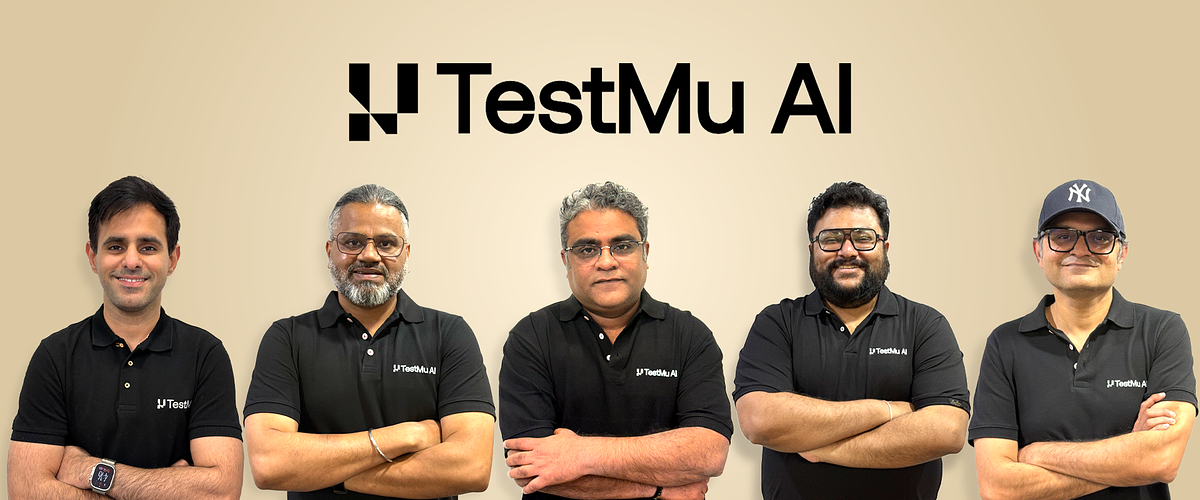
LambdaTest Rebrands to TestMu AI, Unveils Autonomous Testing Agents
SAN FRANCISCO, CA – January 12, 2026 – LambdaTest, a dominant force in cloud-based software testing, today announced a significant strategic pivot and rebranding to TestMu AI. The move signals a transition from a test execution platform to what the company is billing as the world's first full-stack Agentic AI Quality Engineering platform, designed to autonomously manage software quality in an era increasingly defined by AI-generated code.
The transformation comes as the software development industry grapples with a critical new bottleneck. As artificial intelligence begins to write code at a velocity that far outpaces human developers, traditional quality assurance (QA) and testing methodologies are struggling to keep up. TestMu AI aims to solve this by deploying autonomous AI agents capable of reasoning, planning, and executing tests with minimal human oversight.
This shift is backed by a period of formidable growth for the company, which has seen an average of 110% year-on-year growth for the past two years. The platform, which has already executed billions of tests for an impressive roster of over 18,000 enterprise clients including Microsoft, OpenAI, and NVIDIA, is now positioning itself to lead the next paradigm of software quality.
From Cloud Infrastructure to Intelligent Autonomy
Founded in 2018, LambdaTest quickly established itself as a leader by building a high-performance, scalable cloud for test orchestration. It solved critical pain points for developers, such as flaky tests and slow feedback loops, becoming a trusted name for accelerating release cycles. However, the company began a deep transformation in 2022, investing heavily in agentic AI to address the future of software creation.
"AI is fundamentally changing how software is built and shipped," said Asad Khan, CEO and Co-Founder of TestMu AI. "Development cycles that once took weeks now take hours. But speed without quality is chaos. We recognized that testing needed to evolve from brittle, high-maintenance automations to intelligent context-driven agents that understand change and act on it autonomously."
This evolution is more than a feature update; it represents a complete rearchitecture of the platform to be AI-native. Unlike earlier AI-augmented tools that assist human testers, TestMu AI's agentic approach aims for a higher degree of self-governance. These AI agents are designed to understand project context, plan comprehensive test strategies, author the necessary test scripts from natural language prompts, execute them across a vast cloud infrastructure, and analyze the results to identify root causes of failure. The goal is to create a quality engineering layer that is as dynamic and intelligent as the AI-driven development processes it supports.
"We have evolved from an execution cloud into an active, intelligent partner in the software testing lifecycle," Khan added. "With billions of tests running on our platform, we are now delivering experiences where human ingenuity and machine intelligence combine to make quality engineering effortlessly powerful."
'Vibe Testing' and the New Developer Experience
A core part of the new platform is the introduction of 'Vibe Testing,' a concept coined by the company to address the unique challenges of modern, rapid-fire development. As development accelerates, particularly with 'vibe coders' who prioritize speed and iteration, there's a need for a more holistic quality assessment that goes beyond simple pass/fail checks. 'Vibe Testing' empowers the platform's AI agents to evaluate the overall functional integrity and user experience of an application.
This is particularly crucial for software with AI-generated components, where subtle flaws in user interface logic, performance, or contextual appropriateness can degrade the user experience without triggering a traditional bug. The agents are designed to ensure that applications not only work but also feel reliable, intuitive, and polished when they reach the customer.
The rebranding to TestMu AI itself is a nod to this forward-looking, community-centric vision. The name is adopted from the company's 'TestMu Conference,' which since 2022 has been a key industry forum for discussing advancements in AI and quality engineering.
"Our journey has mirrored the evolution of software testing itself," noted Mudit Singh, Co-Founder and Head of Marketing at TestMu AI. "We began by building the 'Perfect Cloud for the Cloud Era,'... Today, we are entering a new phase, where agentic AI enables autonomous, end-to-end quality engineering. TestMu AI represents this shift: a forward-looking identity built for an AI-native future, while staying deeply rooted in our ecosystem, our community, and our relentless commitment to quality."
Disrupting the Market and Defining the Future
TestMu AI's claim to be the 'world's first' full-stack agentic platform is a bold move to define a new market category. While competitors like Tricentis and SmartBear have integrated sophisticated AI features for test automation and self-healing, TestMu AI's focus is on a fully integrated, end-to-end autonomous system. This positioning is reinforced by recent industry recognition, including mentions in the 2025 Gartner® Magic Quadrant™ for AI-Augmented Software Testing Tools and The Forrester Wave™ for Autonomous Testing Platforms 2025.
The company's established credibility and significant funding—having raised over $60 million in capital, including a $45 million Series C round in 2022 led by Premji Invest with participation from Sequoia Capital India—provide a solid foundation for this ambitious pivot. With a platform that serves 2.8 million developers and testers, the potential for rapid adoption of these new agentic capabilities is substantial.
Looking ahead, the company's roadmap is even more ambitious. It includes plans for fully autonomous AI agents that can test other AI systems, agent-to-agent testing protocols, and deeper integrations with codebases to create a continuously learning, self-governing quality layer within the software development lifecycle. This vision positions quality not as a final step, but as an intelligent, pervasive force that operates in lockstep with the speed of modern, AI-powered development.