
- $1.5 billion funding round boosts Lambda's valuation to over $4 billion.
- 300 billion annual credit card transactions processed by Clover, co-founded by new Lambda COO Leonard Speiser.
- Goal to deploy 1 million NVIDIA GPUs and 3GW of liquid-cooled data center capacity.
Experts would likely conclude that Lambda's appointment of Leonard Speiser as COO is a strategic move to navigate the complex operational challenges of scaling AI infrastructure, leveraging his proven track record in high-growth, capital-intensive tech ventures.
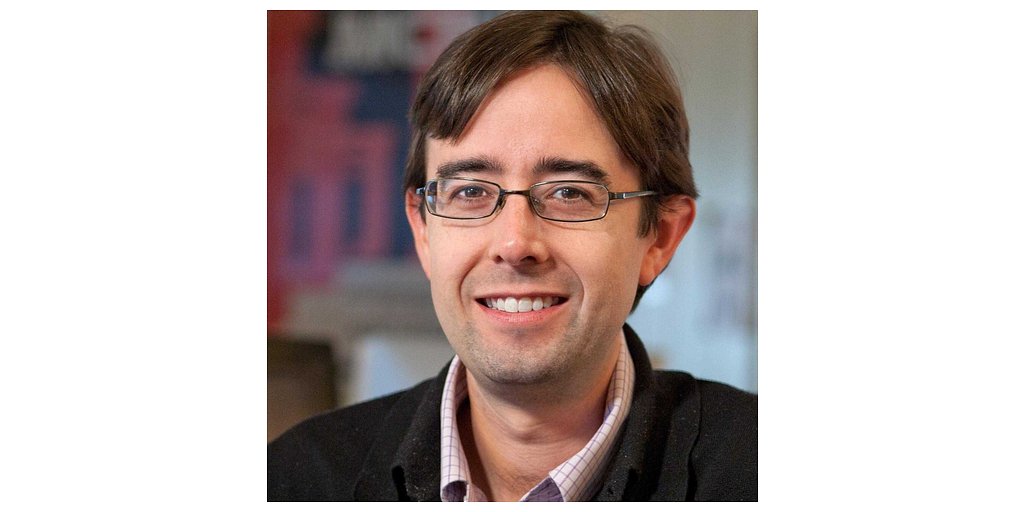
Lambda Taps Clover Co-Founder to Scale Superintelligence Cloud
SAN FRANCISCO, CA – January 08, 2026 – Lambda, a key player in the race to build the world's AI infrastructure, has appointed Leonard Speiser as its new Chief Operating Officer. The move signals a strategic shift for the company, bringing in a seasoned veteran of scaling complex, capital-intensive technology businesses to navigate a period of explosive growth fueled by a recent $1.5 billion funding round.
Speiser will take the operational helm, responsible for executing Lambda's ambitious strategy to deploy, own, and operate a global network of supercomputers. His appointment comes at a critical juncture for the AI industry, where the demand for specialized computing power has created an intense arms race among cloud providers.
A Veteran Operator for an Exponential Growth Phase
Lambda's choice of Speiser is a clear bet on operational expertise. With over a decade of experience founding and scaling mission-critical tech ventures, his track record aligns directly with the challenges of building out massive physical infrastructure. His most notable success is co-founding Clover, a point-of-sale platform he helped scale as CEO into a fintech giant that now processes over $300 billion in annual credit card transactions.
This experience in a high-volume, capital-intensive environment is precisely what Lambda needs as it transitions from a specialized hardware provider to an owner and operator of "gigawatt-scale AI factories." Before his entrepreneurial ventures, which include founding six technology companies, Speiser held roles at tech titans like Intuit, eBay, and Yahoo, and honed his financial acumen in technology M&A at Credit Suisse First Boston.
"Leonard joining Lambda is an amazing opportunity to work with a fellow founder who has built a company from the ground up," said Stephen Balaban, co-founder and CEO of Lambda. "Leonard is a keen and thoughtful operator who has built technology used by millions of people. It's an honor to welcome him to the team." Speiser's background as an MIT graduate and a long-time investor in AI companies further cements his fit for a company at the heart of the artificial intelligence revolution.
Fueling the 'Superintelligence Cloud'
Lambda has branded itself "The Superintelligence Cloud," a concept built on the philosophy that traditional, general-purpose cloud platforms are ill-suited for the unique demands of large-scale AI workloads. Instead of retrofitting existing infrastructure, the company builds its systems from the ground up, exclusively for AI training and inference.
This purpose-built approach involves a modular datacenter architecture featuring high-bandwidth, non-blocking InfiniBand networking and GPUDirect RDMA technology, which allows GPUs to communicate directly and efficiently—a critical factor for training massive neural networks. This specialized design is what Lambda believes gives it an edge in performance and cost-effectiveness over hyperscale competitors.
The company's ambitions are backed by substantial capital. A recent Series E funding round brought in over $1.5 billion, rocketing Lambda's valuation past $4 billion. This infusion is being deployed to accelerate the development of its AI factories, with a goal of deploying more than one million NVIDIA GPUs and 3GW of liquid-cooled data center capacity. This supports a strategic pivot towards vertical integration, where Lambda will increasingly own and operate its facilities rather than leasing space, giving it greater control over cost, performance, and deployment speed.
"Lambda's differentiated position as an AI pure-player, combined with their deep expertise and modular datacenter architecture, positions them to deliver the global-scale compute that has the potential to power humanity's AI future,” said Speiser. “I'm excited to help grow these critical operations."
Navigating the AI Infrastructure Arms Race
Lambda operates in one of the most competitive and strategically important sectors in technology today. It vies for market share not only with established hyperscalers like Amazon Web Services, Microsoft Azure, and Google Cloud, but also with other fast-growing, specialized GPU cloud providers such as CoreWeave and Paperspace.
However, Lambda has carved out a unique and powerful niche. Rather than competing head-on for every workload, it has become a crucial partner and specialized capacity provider to the very giants of the industry. Its customer list includes major AI labs like OpenAI, xAI, and Anthropic, and it even powers workloads for the large hyperscalers, who are struggling to meet the insatiable demand for AI compute on their own.
A cornerstone of this strategy is its deep partnership with NVIDIA. Lambda has achieved NVIDIA Exemplar Cloud Status, a validation of its infrastructure's performance for high-stakes AI training. More significantly, NVIDIA is not just a supplier but also an investor and a major customer. In a landmark deal, NVIDIA signed a $1.5 billion agreement to lease back 18,000 GPUs from Lambda, cementing Lambda's role as a critical deployment partner for NVIDIA's latest and most powerful hardware, including the forthcoming Blackwell architecture.
The Immense Challenges of Scaling Supercomputation
Despite its strong market position and fresh funding, Lambda's path forward is fraught with significant operational hurdles, the very challenges Speiser has been hired to overcome. The first is the global supply chain for AI hardware. Intense demand has created 8-12 month waiting periods for top-tier GPUs, a bottleneck that can severely hamper rapid expansion plans. Securing a consistent supply of chips is a constant battle, even for well-connected players.
The second, and perhaps most daunting, challenge is energy. AI is notoriously power-hungry. Global data center electricity consumption, which stood at 2% of the world's total in 2022, is projected to double by 2026, largely driven by AI. Building "gigawatt-scale" facilities means confronting strained local power grids, securing massive energy contracts, and managing the immense heat generated by densely packed GPUs, which necessitates complex and costly liquid cooling systems.
Finally, there is the human element. The industry faces a severe talent shortage of AI infrastructure engineers and operators with the specialized skills required to design, build, and maintain these sophisticated supercomputing environments.
Speiser's appointment is a direct acknowledgment of these complexities. His role will be to translate Lambda's ambitious vision and capital into tangible, operational reality, navigating the intricate web of supply chains, energy logistics, and talent acquisition. His leadership will be pivotal as the company works to deliver on its mission of making superintelligence compute as ubiquitous and reliable as electricity, effectively building the power grid for the next technological era.