
Kyoto's Past Meets Future Luxury in 'THE SILENCE' Residence
- 200-year-old teahouse transformed into a luxury residence
- 50% to 135% premium over non-branded luxury properties in Japan
- 1,400-year legacy of Kongō Gumi, the construction company involved
Experts would likely conclude that 'THE SILENCE' represents a groundbreaking fusion of historic preservation and modern luxury, setting a new standard for culturally significant real estate in Kyoto.
Kyoto's Past Meets Future Luxury in 'THE SILENCE' Residence
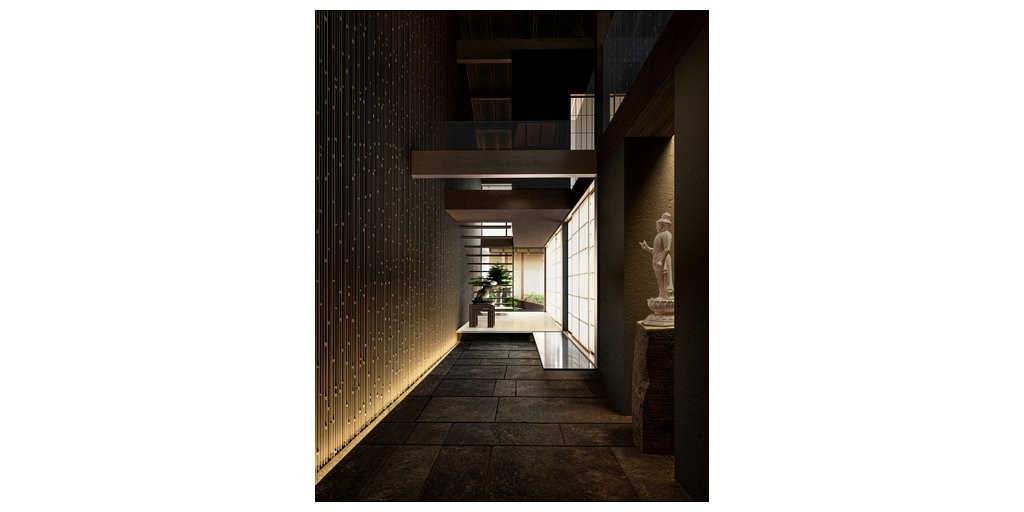
KYOTO, Japan – April 27, 2026 – In the heart of Kamishichiken, Kyoto’s oldest geisha district, a 200-year-old teahouse is being reborn. Developer FIDO Inc. has unveiled “THE SILENCE – Furnished by ARMANI/CASA,” an audacious project that transforms a historic ochaya into a singular private residence. The initiative unites a pantheon of Japanese master artisans with the global luxury of ARMANI/CASA, aiming to create not just a home, but a “residence as a cultural asset” designed to last for generations.
This project is the first under FIDO Inc.’s ambitious “THE TIMELESS CONDOMINIUM” banner, which seeks to translate Japan's intrinsic cultural values into architectural forms that will resonate 100 years from now. By bringing together world-renowned architect Kengo Kuma as design supervisor and Kongō Gumi, the world's oldest company, for construction, the project represents a profound dialogue between past, present, and future.
A New Benchmark in a Booming Market
The launch of “THE SILENCE” arrives as Japan’s market for luxury branded residences experiences unprecedented growth. Fueled by a rising population of high-net-worth individuals and favorable exchange rates attracting foreign investors, these properties command significant premiums, often fetching between 50% and 135% more than their non-branded luxury counterparts. While Tokyo and the resort region of Niseko have dominated this space with projects like Aman Residences Tokyo, this Kyoto development signals a new frontier for the market.
FIDO Inc., which positions itself as a “concept branding developer,” is aiming higher than simply attaching a luxury name to a building. The company’s strategy revolves around crafting “cultural assets” that offer deep experiential value. This project moves beyond the conventional model by embedding the residence within a rich historical context and integrating craftsmanship that is, itself, a national treasure. The goal is to attract an elite global clientele seeking not just a property, but a piece of living history, meticulously reinterpreted for the 21st century.
The Masters of Foundation
The credibility of this ambitious vision rests on the shoulders of its collaborators, a group referred to as the “Masters of Foundation.” Leading the design is Kengo Kuma, an architect celebrated for his philosophy of harmonizing buildings with their natural and cultural environments. Kuma proposed the project’s guiding theme: “Silence.” To achieve this, he has centered the design around bamboo, a material that embodies strength, flexibility, and the Japanese aesthetic concept of ma—the charged, meaningful space between things.
“To create something exceptional, your mindset must be relentlessly focused on the smallest detail,” Kengo Kuma stated, quoting Giorgio Armani and noting the sentiment strongly resonates with the spirit of traditional Japanese architecture.
Bringing Kuma’s vision to life is Kongō Gumi, a construction company with an unparalleled legacy. Founded in 578 AD to build Japan’s first state temple, the company has sustained its operations for over 1,400 years, specializing in the intricate techniques of temple and shrine carpentry. For “THE SILENCE,” Kongō Gumi has re-engineered the 200-year-old wooden structure, reducing a complex web of pillars to just two main supports. This feat of traditional engineering preserves the building’s historic beauty while creating the open, elegant living spaces demanded by modern luxury. The collaboration ensures that the building’s soul is not lost in its transformation.
The project’s commitment to authenticity extends to every detail. The tea room, a spiritual heart of the residence, is being constructed by Nakamura Sotoji Komuten, a workshop renowned for its mastery of the sukiya-zukuri style that has defined tea house architecture since the era of Sen no Rikyu. The surrounding garden, designed to reflect Japan’s four seasons, is crafted by Oniwa Ueji, a lineage of landscape artists descending from one of Japan’s most influential garden designers, Jihei Ogawa.
A Fusion of Eastern and Western Aesthetics
What sets “THE SILENCE” apart is its seamless fusion of ancient Japanese craftsmanship with contemporary global luxury, embodied by ARMANI/CASA. This is not a simple case of furnishing a traditional home with designer pieces. Instead, it represents a deep aesthetic alignment. The ARMANI/CASA design philosophy, with its focus on simple lines, muted palettes, and refined natural materials, finds a natural partner in the Japanese appreciation for understated elegance and tranquility.
Under the direct supervision of Giorgio Armani, whose own design sensibilities have long been influenced by Japanese minimalism, the interiors are designed to harmonize with the architecture. The living room’s large opening onto the garden dissolves the boundary between inside and out. Within a tranquil space of white and beige tones, ARMANI/CASA’s influence extends from bespoke furniture and fabrics to the ceilings themselves. The inclusion of rare furniture pieces, of which only a few exist worldwide, elevates the space, creating a dialogue where the quietude of Japanese architecture meets the sophistication of global design.
A Model for Heritage Preservation
The project also offers a potential answer to a pressing issue in Kyoto: the preservation of its historic architecture. The city’s strict building codes and the high cost of maintenance have led to the demolition of hundreds of traditional machiya townhouses each year. Rather than treating the former Hasegawa Residence as a static museum piece or allowing it to fall into disrepair, FIDO Inc.’s approach is one of dynamic revitalization.
By reinterpreting the 200-year-old structure through the highest level of craftsmanship and integrating a new layer of contemporary function and global appeal, the project transforms the building into a sustainable, high-value asset. This model of preservation through evolution could provide a new blueprint for other historic properties, ensuring that Kyoto's architectural heritage can continue to live and breathe within the modern city.
This residence is conceived as more than a physical space; it offers an immersive cultural experience. Its location in Kamishichiken allows owners to invite maiko and geiko for traditional entertainment, directly engaging with the living culture of the district. Through this synthesis of architecture, design, and experience, “THE SILENCE” endeavors to fulfill the vision articulated by its design supervisor. As Kengo Kuma expressed, “I wish for this highest-level architecture, created by contemporary master artisans representing Japanese architectural culture, to remain as a symbol of Japan and endure in the world 100 years, 200 years into the future.”