
- 22% surge in Vietnam's automotive sector growth in 2026.
- 36% year-over-year jump in electric and hybrid vehicle sales in Q1 2026.
- $1.2 billion projected smart mobility market in Vietnam by 2034.
Experts would likely conclude that KPIT's strategic expansion into Vietnam reflects a calculated bet on the country's emerging role as a global mobility tech hub, driven by rapid industry growth, government incentives, and a burgeoning talent pipeline.
KPIT's Vietnam Gambit: Seeding the Next Global Mobility Tech Hub
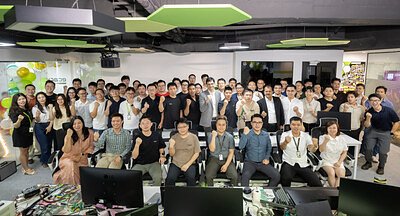
HANOI, Vietnam – June 18, 2026 – Mobility technology firm KPIT Technologies today inaugurated a new technology center in Hanoi, a move that on the surface appears to be a standard corporate expansion. However, looking beyond the press release, this is a calculated and strategic maneuver that signals Vietnam's arrival as a critical new frontier in the global race to build the software-defined vehicle (SDV). By partnering with top universities and committing to creating a new cadre of highly-skilled engineers, KPIT isn't just opening an office; it's planting a flag and betting on Vietnam to become a powerhouse in the future of mobility.
Vietnam's Ascent in the Global Mobility Value Chain
KPIT's decision is anchored in a clear-eyed assessment of Vietnam's potent and rapidly evolving landscape. The country is no longer just a manufacturing outpost; it is transforming into a sophisticated technology and innovation hub. Propelled by rapid urbanization and a government fiercely committed to modernization, Vietnam's automotive sector is one of the fastest-growing in Southeast Asia, projected to see a 22% surge in total industry volume this year. This growth is not confined to traditional cars. The smart mobility market, encompassing everything from intelligent traffic systems to shared mobility, is on a steep trajectory, expected to skyrocket from just under $400 million in 2025 to over $1.2 billion by 2034.
The electric vehicle (EV) is the vanguard of this transformation. With local champion VinFast leading a charge that has attracted global giants like BYD, EV sales are booming. In the first quarter of 2026 alone, electric and hybrid vehicle sales jumped 36% year-over-year. This surge is buttressed by a robust government policy framework designed to attract foreign investment. The extension of a zero percent registration fee for battery electric vehicles until 2030 and significant corporate tax incentives for high-tech manufacturing, including EV batteries, create a uniquely favorable environment for companies like KPIT that power the core technology inside these vehicles.
This strategic government backing, combined with a burgeoning domestic market, makes Vietnam an undeniable focal point for the future of mobility in Southeast Asia. KPIT's new Hanoi center is designed to be more than a satellite office; it is a strategic hub for engineering and innovation intended to serve the entire Asia-Pacific region.
A Strategic Play in the Software-Defined Vehicle Race
To understand the full significance of KPIT's move, one must zoom out to the global stage. The automotive industry is undergoing its most profound transformation in a century, shifting from mechanical engineering to software engineering. The future is the Software-Defined Vehicle, where a car's features, performance, and safety are increasingly controlled by code and powered by AI. In this new paradigm, the most valuable resource is not steel or horsepower, but elite software talent.
KPIT, with its 25 years of specialized expertise and software already running in over 20 million vehicles, is a key player in this global arena. Its expansion into Vietnam is a strategic move to secure a vital pipeline of this talent. The company works with automotive leaders in established hubs like Germany, Japan, and the USA, but it recognizes that the competition for engineers in these markets is intense and costly. By cultivating a new center of excellence in Vietnam, KPIT diversifies its talent base and gains a competitive advantage in a region poised for explosive growth.
This is not a move made in a vacuum. Global technology and automotive giants are all vying for a foothold in the region. Competitors like Bosch and Continental are expanding their software divisions, while AI behemoths like NVIDIA are forming partnerships in Vietnam to accelerate R&D in AI-first SDVs. KPIT's proactive investment in both infrastructure and human capital is a clear statement of its intent to lead, not follow, in this critical market.
Forging Talent: The University-Industry Nexus
Perhaps the most forward-looking aspect of KPIT's strategy is its deep integration with Vietnam's academic institutions. The signing of Memorandums of Understanding with Hanoi University of Science and Technology (HUST) and VinUniversity is a masterstroke in long-term ecosystem development. These are not superficial partnerships; they are foundational collaborations designed to build the next generation of mobility engineers from the ground up.
HUST stands as Vietnam's premier technical university, a venerable institution known for its rigorous engineering programs in mechatronics, IT, and electronics—all critical disciplines for SDV development. VinUniversity, while newer, is built on a model of international collaboration with world-class partners like Cornell University and the University of Pennsylvania, focusing on cutting-edge research and interdisciplinary studies. By partnering with both the established leader and the ambitious innovator, KPIT ensures access to a diverse and highly capable pool of graduates.
This industry-academia nexus creates a powerful, self-reinforcing cycle. KPIT provides students with a clear pathway from the classroom to high-value careers, offering internships, guest lectures from industry experts, and joint research projects. In return, the universities can tailor their curricula to meet the evolving demands of the automotive software industry, ensuring their graduates possess the specific skills needed for complex fields like embedded systems, AI, and vehicle cybersecurity. As Sachin Tikekar, President & Joint MD of KPIT Technologies, stated, "With our new technology center and partnerships with leading universities, we are committed to building local talent, creating high-quality jobs, and establishing a meaningful long-term presence in the region."
The Ripple Effect on Hanoi's Tech Ecosystem
The immediate impact of KPIT's expansion will be the creation of over 100 high-skilled jobs in Hanoi. These are not assembly-line positions but roles for software engineers, AI specialists, data scientists, and cybersecurity experts—the architects of modern mobility. This influx of high-value jobs will have a significant ripple effect, driving up standards and salary expectations in the local tech market and encouraging more young people to pursue careers in STEM fields.
The presence of a global leader like KPIT acts as a powerful magnet, signaling to other multinational tech companies that Hanoi is a viable and attractive place to invest. This can catalyze the development of a broader mobility tech cluster, attracting suppliers, service providers, and further R&D investment. For a nation that has seen its education investment grow by over 100% in recent years, this is the ultimate return: translating academic excellence into economic prosperity and technological sovereignty. KPIT’s investment is more than a corporate milestone; it is a validation of Vietnam's strategy and a glimpse into its future as a central player in the technology that will define our world.