
- PUE below 1.1: KAYTUS's liquid-cooled systems achieve a Power Usage Effectiveness (PUE) below 1.1, significantly surpassing the current average PUE of 1.55 for conventional data centers.
- 130 kW per cabinet: The system supports up to 130 kW per cabinet, a density challenging to manage with traditional air cooling.
- 90% factory assembly: Prefabricated container solution completes 90% of assembly and testing in a factory, reducing deployment time from 18 months to 4 months.
Experts would likely conclude that KAYTUS's end-to-end liquid-cooled data center solution represents a significant advancement in energy efficiency for AI infrastructure, addressing critical sustainability challenges while simplifying deployment for high-performance computing needs.
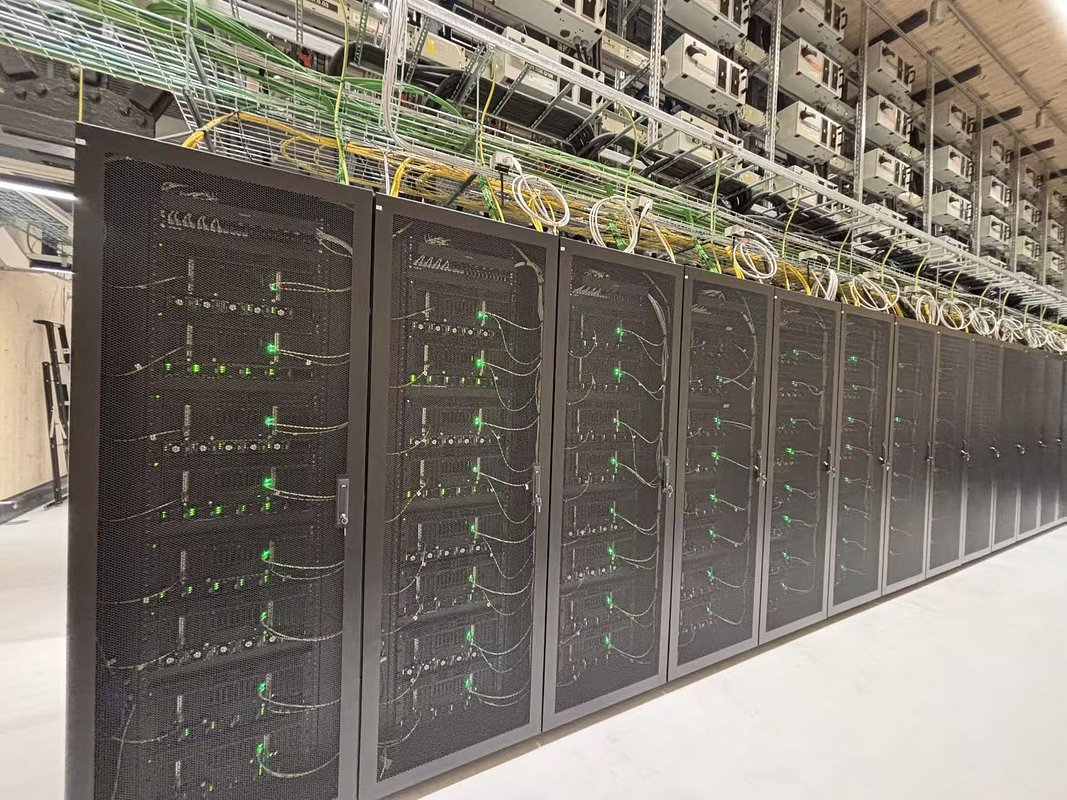
KAYTUS Aims to Cool the AI Boom with New End-to-End Solution
SINGAPORE – January 13, 2026 – As the global artificial intelligence race intensifies, the immense energy consumption and heat generated by AI infrastructure have become critical challenges. Addressing this, KAYTUS, a provider of AI and liquid cooling systems, has launched a One-Stop End-to-End Liquid-Cooled Data Center Solution designed to simplify deployment and dramatically improve energy efficiency for the demanding AI market.
The announcement comes as nations and corporations alike grapple with the dual imperatives of advancing AI capabilities while adhering to stringent carbon neutrality goals. The new solution from KAYTUS aims to bridge this gap by offering a comprehensive package that covers the entire lifecycle of a data center—from initial design and development to rapid deployment and ongoing operational management.
Powering South Korea's National AI Strategy
The solution's launch is particularly timely for South Korea, a nation aggressively pursuing a top-three global ranking in AI capabilities. The government's ambitions are backed by significant policy and investment, including the establishment of the National AI Committee in 2023 and the ambitious National AI Computing Center project, which is projected to receive hundreds of millions in initial investment. This national push has created a surge in demand for high-performance AI data centers (AIDCs).
However, this rapid expansion runs headlong into the country's firm environmental commitments, such as the Framework Act on Carbon Neutrality and Green Growth and its participation in the RE100 initiative. These policies make energy efficiency a non-negotiable requirement for new infrastructure. KAYTUS is positioning its solution to directly meet these converging demands.
The company claims its liquid-cooled systems can achieve a Power Usage Effectiveness (PUE) below 1.1. This figure represents a significant leap in efficiency, placing it among the industry's elite and far surpassing the current average PUE of 1.55 for many conventional data centers. For a country like South Korea, where industrial electricity demand is soaring, such efficiency is paramount for sustainable growth in the AI sector.
Taming the Complexity of Liquid Cooling
While liquid cooling offers superior thermal performance, its deployment has historically been a complex and fragmented process, creating a high barrier to entry for many organizations. The process involves intricate coordination across multiple disciplines, including power distribution, HVAC engineering, and structural planning. Managing various contractors and ensuring seamless integration can lead to project delays and budget overruns.
KAYTUS aims to eliminate these hurdles with its “4D Integrated Solution,” a proprietary strategy encompassing Design, Develop, Deploy, and Dynamic Optimization.
Design: The company provides advanced Building Information Modeling (BIM) blueprints, allowing clients to visualize the entire data center before construction begins. This includes detailed planning for the primary and secondary cooling loops, from the large-scale Coolant Distribution Units (CDUs) down to the intricate network of pipes.
Develop: By offering a full-stack portfolio of its own products—including servers, storage, networking hardware, and intelligent management software—KAYTUS ensures that all components are designed to work together, maximizing compatibility and system reliability.
Deploy: A key innovation is the use of modular, prefabricated components. Key equipment and pipelines are pre-integrated and tested at the factory, which the company claims can improve delivery efficiency by over 50%.
Dynamic Optimization: Post-deployment, KAYTUS provides system-tuning services to ensure that AI and High-Performance Computing (HPC) workloads run at peak performance and stability.
This integrated, single-vendor approach is designed to de-risk the transition to liquid cooling, making its benefits more accessible to a broader range of enterprises.
The Engineering Behind Next-Generation Efficiency
The technical specifications of the KAYTUS solution underscore its focus on high-density AI workloads. The system is designed to support up to 15 kW per individual node and an impressive 130 kW per cabinet, densities that are increasingly difficult and inefficient to manage with traditional air cooling.
At the heart of the system is a self-developed, megawatt-class CDU capable of managing a heat exchange capacity of up to 1,200 kW. It is engineered to operate reliably with primary inlet water temperatures as high as 36°C, making it suitable for warmer climates and reducing the reliance on energy-intensive chillers. For safety, the system incorporates a sophisticated leak detection system paired with a dual-valve design that can automatically isolate a single affected cabinet in the event of a coolant leak, minimizing downtime and risk to expensive IT hardware.
Furthering its commitment to sustainability, the coolant used in the system is fully compliant with stringent European Union regulations, including RoHS 2.0 and REACH. This ensures the fluid is free from hundreds of Substances of Very High Concern (SVHC), safeguarding both personnel and the environment.
Slashing Deployment Time with Prefabricated Containers
For organizations needing to launch AI services on an accelerated timeline, KAYTUS is also offering a prefabricated container solution. This approach dramatically shortens the construction cycle for a new data center. While a traditional 500-rack facility can take approximately 18 months to build, KAYTUS claims its container solution can reduce that timeline to just four months.
This speed is achieved by completing around 90% of the assembly and testing in a factory-controlled environment before shipping the modules to the site. These containers are not just fast to deploy but also highly flexible, with eight functional types that can be combined for AI, general-purpose, or edge computing scenarios. The design supports both horizontal and vertical expansion up to five layers, allowing for scalable growth as computing needs evolve.
A Global Shift in a Competitive Market
KAYTUS is entering a fiercely competitive market. Established industry giants like Vertiv, Schneider Electric, and Dell Technologies, along with specialized firms such as CoolIT Systems and LiquidStack, are all vying for leadership in the liquid cooling space. This intense competition underscores a fundamental industry shift: as AI processors become more powerful and generate more heat, liquid cooling is moving from a niche technology to a mainstream necessity.
To establish its credentials in this crowded field, KAYTUS points to its global deployment experience, which includes over 200 MW of projects. One notable example involved providing an end-to-end turnkey service for a leading European financial firm, deploying 96 rack-scale liquid-cooled systems. This project highlighted the company's ability to manage complex, large-scale implementations that require uninterrupted 24/7 operation.
By combining high-efficiency hardware with a streamlined deployment model, KAYTUS is making a strategic bid to become a key enabler of the next wave of AI infrastructure, promising not just raw power but also the speed and sustainability required for the modern digital economy.