
- May 16, 2026: Air date of the CNN Original Series episode featuring Kara Swisher and her AI twin.
- Two integrated technologies: StoryFile (authentic responses) and Lookalike (real-time adaptation) power the digital avatar.
- Dynamic interaction: The AI twin 'got smarter by the second' and used personal phrases, surprising Swisher.
Experts view this technology as a breakthrough in digital immortality but caution about ethical concerns, including identity, misinformation, and societal impact.
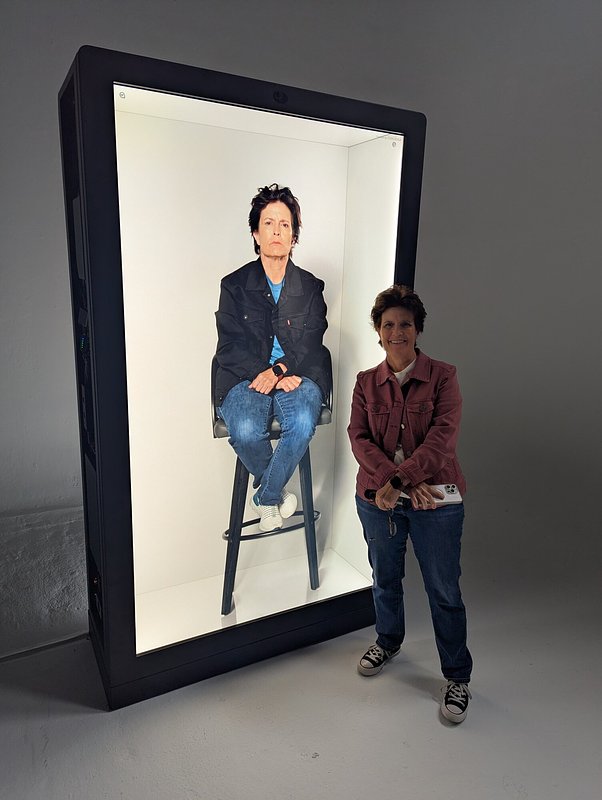
Kara Swisher Meets Her AI Twin, Mainstreaming Digital Immortality
LOS ANGELES, CA – May 15, 2026 – In a television event that blurred the line between human and machine, veteran tech journalist Kara Swisher sat down for an interview with her most challenging subject to date: herself. On a recent episode of the CNN Original Series Kara Swisher Wants to Live Forever, Swisher came face-to-face with her own digital doppelganger, an AI-powered avatar that could not only answer questions but debate, learn, and even joke in her own voice. The segment, powered by technology from Authentic Interactions, marked a watershed moment, pulling the abstract concept of digital immortality out of science fiction and placing it squarely into the mainstream cultural conversation.
From Niche Tech to National Television
The appearance on CNN, which airs May 16th and will stream on the network's app, represents a significant leap for the field of conversational AI and digital preservation. For years, the idea of creating a digital version of oneself has been relegated to futurist conferences and the research labs of Silicon Valley. Authentic Interactions, the company behind the technology, has now catapulted the concept into millions of living rooms.
The series itself follows Swisher as she navigates the burgeoning and often-criticized longevity industry, applying her signature skepticism to everything from biotech breakthroughs to the tech-bro fascination with cheating death. Her decision to become the subject of this experiment provides a powerful narrative framework. Instead of merely reporting on the technology, she immersed herself in it, turning her razor-sharp wit and penetrating questions on the most personal topic imaginable: her own legacy.
The episode showcased a digital Kara Swisher engaging in a real-time debate with the real Kara Swisher. This wasn't a simple chatbot with canned responses; it was a dynamic interaction that left the famously unflappable journalist visibly stunned, noting that her digital self "got smarter by the second" and even "freaked her out" by using a personal phrase she says to her children.
The Authentic Illusion: A Tale of Two AIs
The magic behind Swisher's digital twin is the work of two distinct but integrated technologies from Authentic Interactions: StoryFile and Lookalike. This dual-engine approach aims to solve the central paradox of creating a digital human: the tension between authenticity and adaptability.
First, StoryFile provides the foundation of authenticity. It is a conversational video AI platform built on a library of pre-recorded answers. Before the CNN production, Swisher sat for an extensive interview, recording her stories, opinions, and personality in her own voice and on video. When the digital Swisher is asked a question, the StoryFile AI interprets the query and pulls the most relevant, pre-recorded video clip. This ensures that every initial response is 100% genuine, delivered directly from the source.
However, the interaction on CNN went a step further, thanks to Lookalike. This generative AI technology creates a hyper-realistic digital representation through real-time video synthesis. While StoryFile provided the authentic core, Lookalike dynamically adapted the conversation. The AI was fed additional data, including Swisher's autobiography, "Burn Book," allowing the digital avatar to generate novel responses that incorporated details beyond the initial recording session. This integration enabled a true two-way debate, with the digital Kara challenging the real Kara on the potential and perils of the very technology that created her.
Debating the Digital Ghost
The on-air exchange highlighted the profound ethical and philosophical questions at the heart of this technology. While the potential for preserving a loved one's stories or allowing future generations to "meet" their ancestors is compelling, the implications are complex and, for many, unsettling.
Swisher herself has been a vocal critic of what she calls the "narcissism driving the tech bro fascination with immortality," advocating instead for a focus on extending "health span," not just lifespan. Her on-screen encounter with a smarter, ever-learning version of herself brings these concerns into sharp focus. If an AI can perfectly mimic a person and then evolve beyond their recorded knowledge, what does that mean for identity and truth?
The episode touches on a broader societal anxiety surrounding synthetic media. The same technology that can preserve a legacy can also be used to create deepfakes and spread misinformation. Furthermore, the rise of "synthetic relationships" with AI companions, a topic also explored in the CNN series, raises red flags for ethicists. Some experts warn that while these AIs can combat loneliness on the surface, they offer "connection without vulnerability," potentially eroding our capacity for the messy, challenging, and ultimately more rewarding friction of real human relationships. The accessibility of such powerful technology also remains a critical question, with fears that digital immortality, like many other longevity treatments, could become a luxury reserved for the ultra-wealthy.
A New Market for Memory
Despite the ethical minefield, Authentic Interactions is betting on a future where digital humans are a part of our lives. The company's high-profile CNN debut serves as a powerful proof-of-concept, moving its product from a theoretical offering to a tangible, emotionally resonant experience. By showcasing a blend of recorded reality and generative adaptation, the company is positioning itself at the forefront of a nascent industry.
The competitive landscape includes other players like HereAfter AI, which also focuses on creating interactive avatars for legacy preservation. However, the demonstrated ability to create a dynamic, learning digital human that can synthesize new, relevant information in real-time could be a key differentiator. The vision, as articulated by the company, is not just about creating a static archive but enabling new forms of connection.
"Kara’s storyfile demonstrated the future of human preservation — one that builds new personal human connections grounded in real lived experiences and authentic personalities," said Valorie Jones, CTO of Authentic Interactions, in a statement. The goal is to create a digital legacy that isn't just a monument to be observed, but an interactive presence that can continue to engage, teach, and connect with the living, long after the original person is gone. As this technology continues to evolve and enter the mainstream, society will be forced to grapple with what it truly means to live on.