
- Trillion-dollar market: KaiTu targets the rapidly growing industrial automation and AI logistics sectors.
- 100+ countries served: The company's global delivery network already operates in over 100 nations.
- Double-digit growth: Market research forecasts consistent double-digit CAGR for industrial robotics and AMR markets.
Experts would likely conclude that KaiTu Technology's entry into the North American market with its embodied AI robots represents a significant challenge to established players, leveraging advanced automation and competitive pricing to capture a growing share of the trillion-dollar industrial logistics sector.
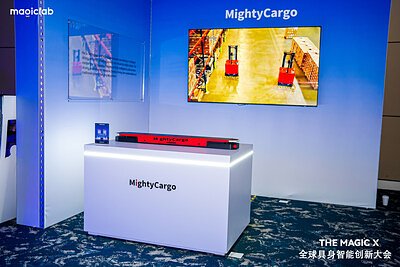
KaiTu Tech Brings Embodied AI Robots to Challenge US Market
SANTA CLARA, CA – April 29, 2026 – The landscape of industrial automation in North America faces a new and technologically advanced challenger. KaiTu Technology, a global developer of industrial mobile robots also known as MightyCargo, made its formal North American debut today at the inaugural Embodied AI Innovation Summit in Santa Clara. The move signals an aggressive global expansion strategy, leveraging what the company calls a new generation of embodied artificial intelligence and new energy solutions to redefine industrial material handling.
Under the summit's theme, "Code the Future Together," a Vice President from the Suzhou-based firm delivered a keynote address that framed the opportunity in stark terms, analyzing what he described as trillion-dollar market trends for forklift mobile equipment and Autonomous Mobile Robots (AMRs). The presentation laid out KaiTu's strategic roadmap, centered on intelligent driving electric forklifts and heavy-duty AMRs, designed to capture a significant share of the rapidly evolving logistics and manufacturing sectors.
Beyond Automation: The Rise of Embodied AI
For many in the logistics and supply chain industries, "AI" has become a ubiquitous buzzword, but KaiTu's focus on embodied AI represents a significant leap beyond traditional automation. Embodied AI integrates advanced intelligence directly into physical systems, empowering them to perceive, reason, and act within dynamic, real-world environments. This transforms warehouse vehicles from pre-programmed machines into adaptive, autonomous partners.
Unlike conventional automated guided vehicles (AGVs) that follow fixed paths, equipment powered by embodied AI can navigate complex and changing warehouse floors with human-like flexibility. Using a suite of sensors like LiDAR and 3D vision, they can identify and maneuver around unexpected obstacles, reroute paths in real-time, and collaborate with human workers safely and efficiently. KaiTu demonstrated these capabilities at the summit, showcasing intelligent forklifts and heavy-duty AMRs performing complex tasks, from efficient warehouse operations to extreme heavy-load testing.
Furthermore, the company is building a full-stack technology ecosystem that extends from single-machine intelligence to "swarm collaboration." This technology enables fleets of robots to communicate and coordinate their actions autonomously, optimizing workflow for an entire facility. For instance, a group of AMRs can work together to fulfill a large order, dynamically assigning tasks and managing traffic flow without central human intervention, leading to dramatic gains in productivity and throughput.
A New Challenger in a Crowded Arena
KaiTu Technology's entry into North America is a calculated move into one of the world's most competitive and lucrative automation markets. The region is home to established material handling giants like KION Group and Toyota Material Handling, which are themselves heavily investing in automation. It also hosts a vibrant ecosystem of specialized AMR providers, such as Locus Robotics and Zebra Technologies' Fetch Robotics, which have become integral to e-commerce fulfillment operations.
This strategic debut is emblematic of a broader trend: the growing global influence of Chinese smart manufacturing. Bolstered by a robust domestic robotics market—the world's largest—and strong government support for technological advancement, Chinese firms like KaiTu are increasingly looking outward. They often bring to market highly advanced solutions at competitive price points, putting pressure on incumbent players.
During its Silicon Valley debut, KaiTu reported strong interest and positive feedback from engagements with leading North American logistics enterprises and investment institutions. This initial reception could pave the way for strategic partnerships and pilot programs, providing the company a crucial foothold as it seeks to build trust and demonstrate the real-world value of its technology in a new market.
The 'Trillion-Dollar' Vision and Green Logistics
The company's projection of a "trillion-dollar" market, while ambitious, reflects the combined, explosive growth of several interconnected sectors. Market research reports consistently forecast double-digit compound annual growth rates for the industrial robotics, automated material handling, and AMR markets. When combined with the burgeoning market for AI in logistics and supply chain—projected by some analysts to grow from under $25 billion today to several hundred billion within a decade—the long-term outlook for the total addressable market is immense.
Driving this growth is the urgent need across industries to solve labor shortages, increase supply chain resilience, and meet the ever-rising demands of e-commerce. KaiTu is positioning its technology as the solution to these challenges.
Beyond pure efficiency, the company is also emphasizing its commitment to sustainability. Its focus on "new energy" electric forklifts and intelligent AMRs aligns with a powerful corporate push toward greener logistics. By optimizing routes, reducing idle time, and running on efficient electric power, these AI-driven systems can significantly lower a warehouse's carbon footprint. This dual promise of boosting both productivity and environmental, social, and governance (ESG) metrics makes the technology particularly attractive to modern corporations.
From Suzhou to Silicon Valley: A Global Ambition
Headquartered in the manufacturing hub of Suzhou, KaiTu Technology claims to possess large-scale production facilities and a global delivery network that already serves over 100 countries. The company's North American launch is not a starting point but a pivotal milestone in a well-defined global strategy. Its presence at other international trade shows, from Vietnam to Barcelona, underscores its commitment to becoming a worldwide player in industrial automation.
By choosing Silicon Valley for its North American coming-out party, KaiTu made a clear statement of its technological ambitions. The company aims not just to sell equipment, but to be seen as a leader in the next wave of intelligent robotics. As stated in its official communications, the firm sees this debut as a starting point to continue driving the transformation of global industrial mobile equipment with embodied AI. It is dedicated to providing customers with more reliable, efficient, and intelligent material handling solutions to boost industrial automation and green development worldwide.