
- 60% of Indian consumers are willing to purchase cultivated meat, citing nutritional security as a key motivator.
- Biokraft Foods aims for a B2B price point of ₹300-350 per kilogram for cultivated chicken, targeting competitiveness with conventional chicken.
- The event featured a cultivated chicken dish tasting, with over 400 consumer trials already conducted.
Experts agree that sustainable food innovation, including cultivated meat and zero-waste practices, is crucial for reducing environmental strain and ensuring food security, with Mumbai emerging as a key hub for climate action.
Mumbai's Menu for Climate Action: Cultivated Meat to Zero-Waste Cafes
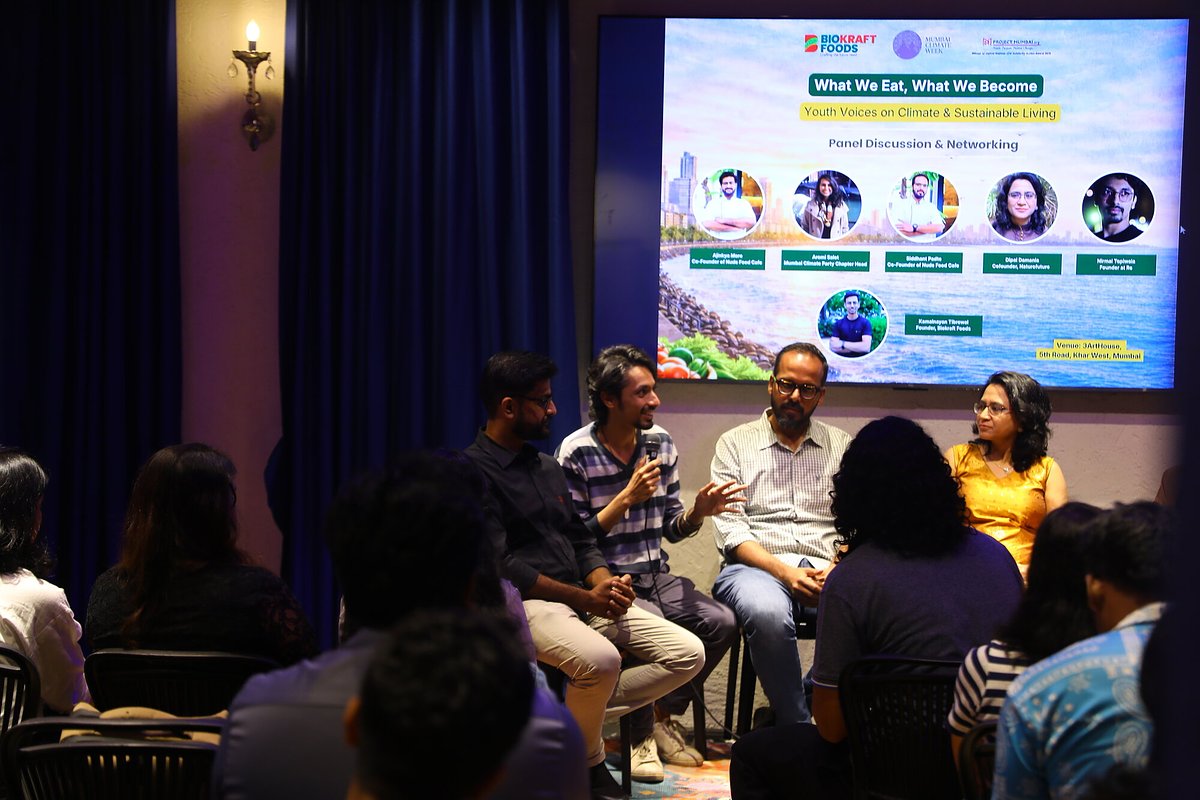
MUMBAI, India – February 10, 2026 – In a city gearing up for its inaugural Climate Week, the most potent tool for environmental change might not be a solar panel or an electric car, but a dinner plate. This was the central message at What We Eat, What We Become, a pivotal panel discussion hosted by biotech startup Biokraft Foods and the civic organization Project Mumbai. The event, held at the 3 Art House, brought a diverse group of entrepreneurs, conservationists, and data experts together to dissect the profound link between our daily meals and the future of the planet.
The discussion, a prelude to the much-anticipated Mumbai Climate Week, moved beyond abstract carbon targets to the tangible, everyday choices facing urban citizens. The evening culminated not just in a shared vision, but in a shared taste: a cultivated chicken dish, grown in a lab and prepared by a chef, offering a glimpse into a potential future for sustainable protein.
A Taste of the Future: Cultivated Meat on the Table
At the heart of the discussion was the role of technological innovation in solving age-old problems of food production. Kamalnayan Tibrewal, the founder of Biokraft Foods and moderator for the evening, framed the challenge. How can a growing global population be fed without further straining land, water, and ecosystems?
His company's answer lies in cellular agriculture. Biokraft Foods is one of India's pioneers in cultivated meat, using advanced 3D bioprinting and tissue engineering to produce chicken meat directly from cells. The process begins with cells sourced from chicken eggs, which are then nurtured in a nutrient-rich medium and assembled into complex, meat-like structures using a proprietary bio-ink. The result is real meat, without the need for traditional animal farming.
"Food innovation can help us reduce pressure on land, water, and animals without asking people to give up the foods they love," Tibrewal explained during the panel. "Technologies like cultivated meat offer a way to meet growing demand while improving environmental outcomes and food security."
This wasn't just theoretical. Following the discussion, attendees were served a cultivated chicken dish prepared by Biokraft's NPD Chef, Demetrius D'Souza. The tasting offered tangible proof of concept, moving the idea of lab-grown meat from a scientific journal to a culinary experience. With over 400 consumer trials already conducted and plans for commercial rollout in 2026, the company is aggressively moving to make this future a reality.
The Ecosystem of Change: Beyond the Biotech Lab
While Biokraft’s technology represented a futuristic solution, the panel made it clear that sustainable food is an ecosystem requiring action at every level. The discussion was enriched by voices from the front lines of Mumbai's grassroots food movement.
Siddhant Padte and Ajinkya More, co-founders of Nude Food Cafe, shared their journey of building a zero-waste restaurant. They challenged the notion of sustainability as a mere buzzword, grounding it in mindful, practical action.
"Today sustainability has become a cliché... at its core it is very simple; it is about being mindful," Padte stated. He described their restaurant's philosophy of working "from back to front, always keeping the bin in mind." This involves refusing single-use packaging, minimizing kitchen waste, and fostering a direct connection between the diner, the chef, and the farmer. More added that this transparency is resonating with customers. "When consumers start asking questions, sustainability becomes a shared effort between the kitchen, the farmer, and the table," he said.
Connecting the plate to the planet, Dipal Damania, Co-founder of Naturefuture, spoke about the foundational role of biodiversity. She argued that the health of our ecosystems directly dictates the quality and resilience of our food supply. "When ecosystems are disrupted, the consequences show up in our food and our health," Damania warned, advocating for a return to eating local and seasonal foods to support natural cycles.
Data provides the blueprint for turning these individual actions into collective impact. Aromi Salot, a Nature & Impact Data Expert and Chapter Head for the Mumbai Climate Party, emphasized the need for measurable climate action. "When people understand where their waste goes, how their food choices affect emissions, and when they see the data, they begin to act differently," Salot explained. "Data helps turn good intentions into measurable impact."
Nirmal Topiwala, Founder of Re, echoed this sentiment, focusing on the power of small, behavior-driven changes. "Real change starts with small, mindful actions in daily life," he noted. "When millions of people take those small steps together, the impact becomes powerful."
Navigating the Path to Market
The enthusiasm in the room is reflective of a broader shift, but innovators like Biokraft Foods face a complex path to commercialization. The regulatory landscape for cultivated meat in India is still taking shape. The Food Safety and Standards Authority of India (FSSAI) has classified cultivated meat as a "Novel Food," requiring companies to seek prior approval before going to market. FSSAI has convened a working group to develop a formal framework, and Biokraft is actively consulting with the agency, planning to file for approval in mid-2025.
This proactive engagement is crucial. While challenges of cost and scale remain, consumer appetite appears promising. A 2024 survey indicated that over 60% of Indian consumers are willing to purchase cultivated meat, citing nutritional security as a key motivator. This suggests a significant market awaits once regulatory and production hurdles are cleared.
Biokraft Foods, having already secured ₹2 crore in pre-seed funding, is targeting a B2B price point of ₹300-350 per kilogram, aiming for competitiveness with conventional chicken and accelerating the transition.
Mumbai on the Global Climate Stage
The 'What We Eat, What We Become' event serves as a powerful microcosm of the ambition behind the upcoming Mumbai Climate Week. Scheduled for February 17–19, the week is positioned as India's first major platform dedicated to accelerating citizen-driven climate action, with a specific focus on developing scalable solutions for the Global South.
The convergence of grassroots activism from cafes, data-driven insights from climate experts, and deep-tech innovation from biotech labs all in one room points to a new, integrated approach to tackling environmental challenges. The central takeaway was undeniable: cities like Mumbai are not just victims of climate change, but potent laboratories for creating a more sustainable and resilient future. As innovators, chefs, and citizens continue to ask what's on their plate, they are collectively shaping the world they will become.
Topics & Related
ESG
Decarbonization
Net Zero
Climate Risk
Artificial Intelligence
Machine Learning
Large Language Models
Digital Transformation
Revenue
EBITDA
Biotechnology
AgTech
Venture Capital
Software & SaaS
AI & Machine Learning
Robotics & Automation
Pharmaceuticals & Therapeutics
Cryptocurrency & Digital Assets
Related Company Pulse