
- 8% of the world's green coffee: JDE Peet’s sources this amount, making its nature-positive plan significant in scale.
- 200,000 hectares by 2030: The company aims to expand regenerative agriculture practices to this area.
- 100% responsibly sourced coffee by 2028: Up from 83.2% in 2024, aligning with sustainability schemes like Rainforest Alliance.
Experts would likely conclude that JDE Peet’s ‘Grounded in Nature’ plan sets a new benchmark for corporate accountability in the coffee industry, integrating leading global frameworks to address biodiversity loss and supply chain resilience.
JDE Peet's Brews New Standard with Nature-Positive Coffee Plan
AMSTERDAM, NL – January 29, 2026 – JDE Peet’s, the world's largest pure-play coffee company, today unveiled an ambitious strategy aimed at fundamentally reshaping its relationship with the natural world. The ‘Grounded in Nature’ plan is a comprehensive roadmap designed to secure the future of coffee by advancing regenerative agriculture and eliminating deforestation from its vast supply chains.
The move is significant not just for its scale—the company sources approximately 8% of the world's green coffee—but for its pioneering approach to corporate accountability. JDE Peet’s claims to be the first food and beverage company to fully align its nature strategy with a trio of leading global frameworks: the Taskforce on Nature-related Financial Disclosures (TNFD), the Kunming-Montreal Global Biodiversity Framework (GBF), and the Science Based Targets for Nature (SBTN).
"Without nature there is no coffee," stated Laurent Sagarra, VP Engagement at JDE Peet’s, in the announcement. "Nature-related risks are no longer distant threats – they are here, now, impacting coffee farmers and supply chains worldwide. Our Nature Transition Plan is both a clear roadmap, and a call to action for the coffee industry to work together."
A New Framework for Accountability
The simultaneous alignment with TNFD, GBF, and SBTN sets a potential new benchmark for environmental, social, and governance (ESG) reporting in the sector. While competitors like Nestlé are also engaged with frameworks like SBTN, JDE Peet's integrated approach is a deliberate step toward embedding nature into the core of its financial and strategic planning.
The TNFD framework, in particular, pushes companies to assess and disclose financial risks and opportunities related to biodiversity loss and ecosystem decline, much like its climate-focused predecessor, the TCFD. This means moving beyond simple sustainability reports to quantifying how the degradation of soil, water, and forests could impact the company's bottom line—and what they are doing about it. By adopting this, JDE Peet's is signaling to investors that nature risk is business risk.
Alignment with the Global Biodiversity Framework links the corporate strategy to the international policy goals agreed upon by 196 countries at COP15, specifically Target 15, which calls on large companies to monitor and disclose their impacts on biodiversity. The Science Based Targets for Nature provides the methodology to translate these high-level goals into measurable, time-bound corporate actions, ensuring that commitments are grounded in ecological realities.
From the Ground Up: Regenerative Farming and Farmer Resilience
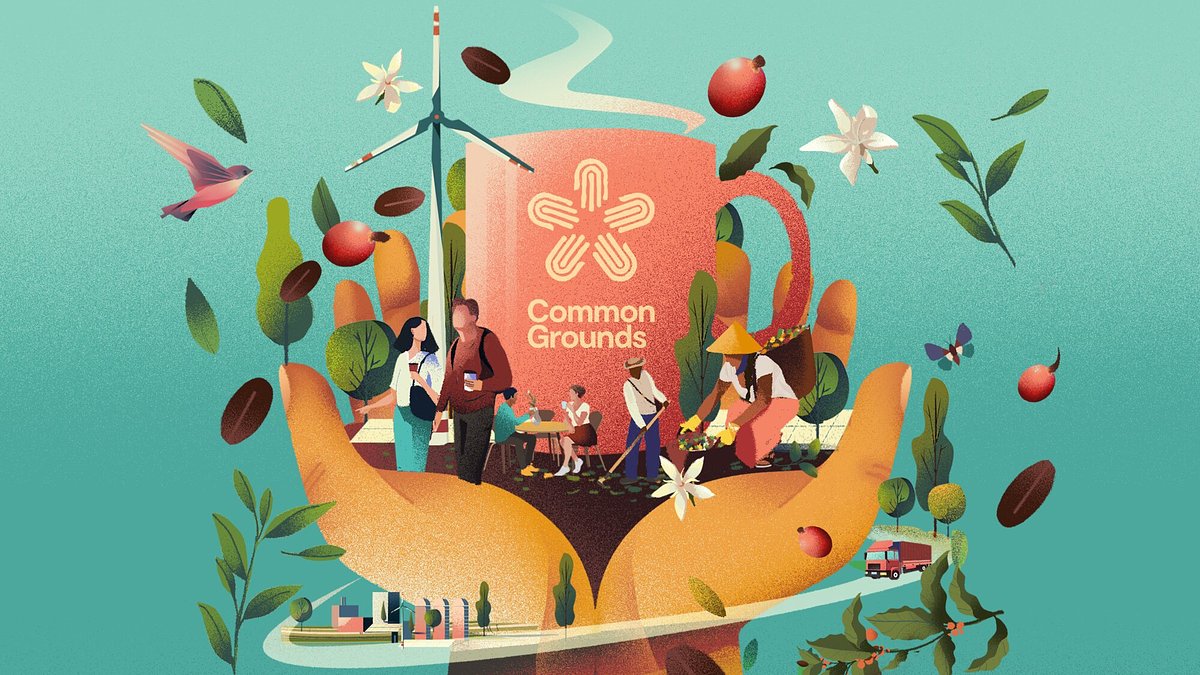
At the heart of the ‘Grounded in Nature’ plan is a commitment to transform how coffee is grown. The company has pledged to expand regenerative agriculture practices to an additional 200,000 hectares of coffee farms by 2030. This initiative builds on the company's long-running Common Grounds program, which has already connected with nearly one million farmers since 2015.
Regenerative agriculture moves beyond simply "sustaining" current conditions and aims to actively improve ecosystem health. For coffee farmers, this translates into practices like intercropping—planting other crops alongside coffee to improve soil health and diversify income—as well as enhancing water retention and reducing the need for chemical fertilizers. In a pilot program in Vietnam, for instance, the company has been training farmers on climate resilience and resource management across 30,000 hectares.
The plan acknowledges that a one-size-fits-all approach won't work. It identifies three distinct production archetypes to tailor its interventions: the high-yield, mechanized systems of Brazil and Vietnam; the medium-yield, shade-grown farms of Latin America; and the low-yield, low-mechanization systems common in East Africa and Indonesia. This nuanced strategy aims to deliver targeted support that addresses the specific environmental and economic challenges of each region, strengthening farmer resilience against climate shocks and market volatility.
Scrutinizing the 'Responsibly Sourced' Label
A cornerstone of the new plan is the target to source 100% of its green coffee "responsibly" by 2028, an increase from the 83.2% achieved in 2024. The definition of "responsibly sourced" hinges on sourcing coffee under industry-recognized sustainability schemes—such as Rainforest Alliance or Fairtrade—alongside the company's own Common Grounds sourcing principles.
While such certifications provide a valuable framework for social and environmental standards, supply chain watchdogs often caution that their effectiveness can vary. The true impact depends on the rigor of audits and the ability of certification to deliver meaningful economic benefits to smallholder farmers. JDE Peet's appears to be supplementing these schemes with its own verification programs, partnering with organizations like Enveritas for independent farm assessments to identify and mitigate risks.
Similarly, the company's commitment to drive "collective sector action" for deforestation-free coffee aims to go beyond mere compliance with regulations like the European Union's Deforestation Regulation (EUDR). The EUDR, which requires companies to prove products sold in the EU were not grown on land deforested after 2020, has already sent shockwaves through supply chains. By aiming to go "beyond," JDE Peet's suggests a more holistic approach that addresses the underlying socio-economic drivers of deforestation, such as farmer poverty, and applies these standards across its global sourcing, not just for products destined for Europe.
The Business Case for a Greener Bean
Ultimately, JDE Peet's' ambitious plan is a strategic calculation. With climate change threatening the viability of coffee production in many parts of the world, securing a stable, long-term supply of high-quality beans is a business imperative. Proactively managing nature-related risks is no longer just a corporate social responsibility initiative; it is a core component of long-term risk management.
By positioning itself as a leader in sustainability, the company also aims to strengthen its brand reputation among an increasingly environmentally conscious consumer base and attract ESG-focused investors. The plan is a significant wager that investing in the health of the planet and the resilience of farming communities is the most effective way to secure the future of coffee and the profitability of the company.
The 'Grounded in Nature' plan lays out a comprehensive and scientifically-grounded vision. Its success will now hinge on transparent implementation, rigorous verification of its ambitious targets, and the genuine impact it delivers to the millions of farmers and vast ecosystems upon which the global coffee industry depends. The entire sector will be watching to see if the world's largest coffee company can truly bend the curve on biodiversity loss while delivering a coffee for every cup.
Topics & Related
Revenue
ESG
Decarbonization
Trade Wars & Tariffs
Corporate Finance
Related Company Pulse