
- New Direct Flight: United Airlines launches first-ever nonstop service from San Francisco to Sapporo (Hokkaido) starting December 11, 2026.
- Visitor Growth: International guests now account for 59% of overnight stays in Niseko, with American visitors rising from 8% to 13% of the international total.
- Luxury Demand: Chalet Ivy Weiss offers rooms starting at $450 per night, peaking at $5,000 for its flagship suite during peak season.
Experts would likely conclude that Niseko's new direct flight and luxury offerings signal a transformative shift in accessibility and tourism growth, though sustainability challenges will shape its future.
Japan's Powder Paradise Unlocked: The New Engine Powering Niseko's Rise
NISEKO, Japan – June 25, 2026 – For decades, accessing the legendary powder snow of Niseko, Japan, involved a pilgrimage: a long-haul flight to Tokyo, followed by a domestic connection and a final ground transfer. This winter, that calculus fundamentally changes. A new engine is revving up in the skies over the Pacific, poised to directly connect the American market to one of the world's most coveted ski destinations.
On December 11, United Airlines will launch the first-ever nonstop service from the continental U.S. to Hokkaido, connecting its San Francisco hub with Sapporo's New Chitose Airport. This strategic move effectively removes the Tokyo bottleneck, transforming Niseko from an insider's secret into a prime-time destination for American skiers. Coinciding with this new era of accessibility is the full winter season debut of Chalet Ivy Weiss, a luxury mountain retreat designed to capture the very essence of this evolving landscape: exclusive, serene, and deeply connected to its natural splendor.
The Direct Connection: A New Engine for Growth
The new United route, operating three times weekly on a Boeing 787-9 Dreamliner, is more than just a convenient flight schedule; it's a structural shift in the tourism economy of northern Japan. By slashing transit times and complexity, the service opens a high-value firehose of winter sports enthusiasts directly into Hokkaido. United's move is part of a broader strategic expansion in Japan and is being echoed by competitors like Air Canada, signaling a global consensus on Hokkaido’s rising prominence.
For Niseko's burgeoning luxury sector, this is a watershed moment. “We are thrilled that United Airlines’ new nonstop service from San Francisco will make Niseko more accessible than ever for American travelers,” said Makoto Iwasa, General Manager of Chalet Ivy Weiss. The hotel, which saw a soft opening in late 2025, is now positioned to welcome a new wave of international guests who prioritize seamless travel.
This influx is arriving in a destination already experiencing robust growth. Niseko has not only rebounded from the pandemic but has surpassed its pre-COVID visitor records, with international guests now accounting for a commanding 59% of overnight stays. The share of American visitors, in particular, has climbed from 8% to 13% of the international total, a figure this new direct access is set to accelerate dramatically.
Chalet Ivy Weiss: The New Face of Secluded Luxury
As Niseko’s popularity grows, so does the demand for experiences that transcend the increasingly crowded central hubs. This is the niche Chalet Ivy Weiss is built to fill. Located in the quiet Hanazono Weiss district, the property is a deliberate departure from the bustling Hirafu village. Its architecture and placement are designed for one purpose: to deliver an uncompromised connection with the landscape.
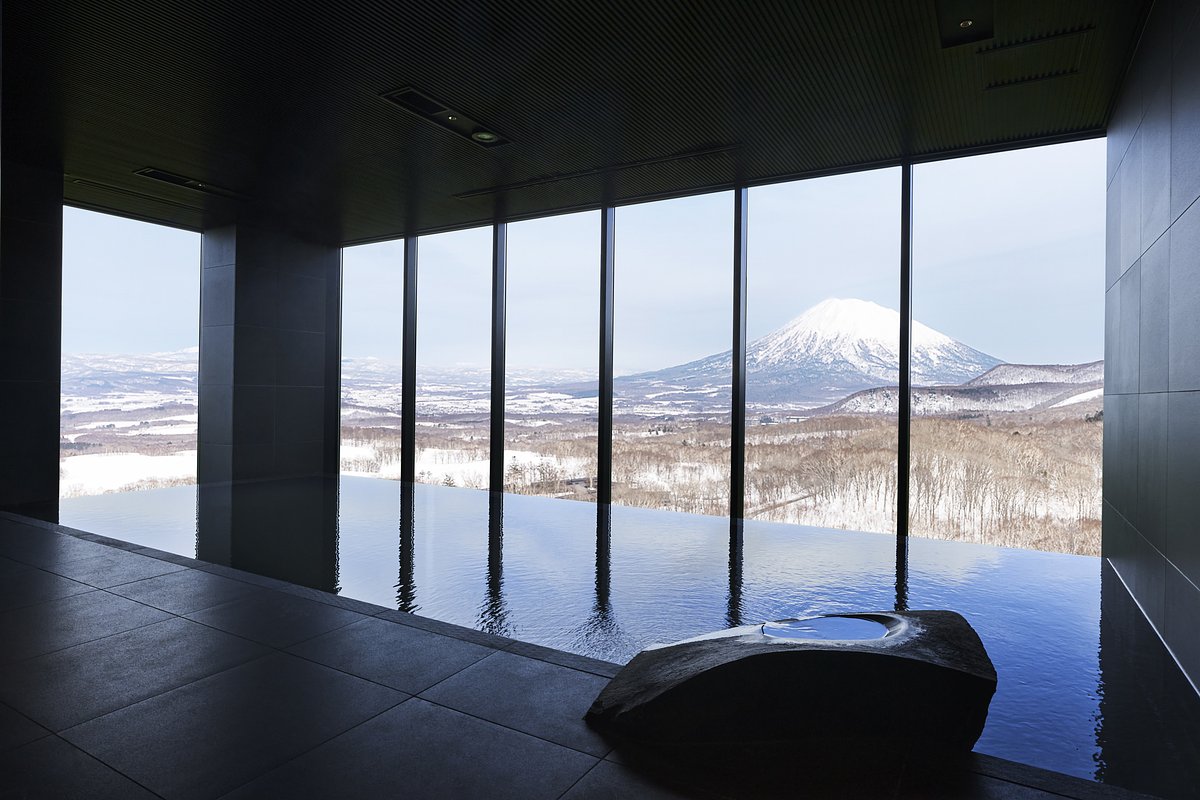
Every one of its 87 guest rooms faces the mountains, offering unobstructed, panoramic views of the iconic Mt. Yotei and the surrounding Niseko peaks. There are no neighboring buildings to spoil the sightlines, creating a sense of immersion and tranquility that is becoming a rare commodity. This philosophy extends to its amenities. The hotel features a natural onsen (hot spring) drawn from its own private source, feeding an infinity bath that frames the mountain vista, as well as private in-room onsen baths available in select suites.
This commitment to a high-end, regionally-inspired experience is a hallmark of the Chalet Ivy collection, which operates sister properties in Hirafu and the onsen town of Jozankei. At Weiss, this is expressed through dining at Haruka, which showcases Hokkaido’s celebrated local ingredients in seasonal omakase courses, and the NIKUR Spa, the first in Hokkaido to feature Japanese botanical essential oils. With rates starting around $450 and climbing to $5,000 per night for its flagship suite during peak season, Chalet Ivy Weiss is firmly positioned within the ultra-luxury segment, competing with global brands like Park Hyatt and Ritz-Carlton Reserve that have also put down roots in Niseko.
From 'Best Kept Secret' to Global Powerhouse
The narrative of Niseko as a 'best kept secret' is now a relic of a bygone era. Fueled by decades of foreign investment, primarily from Australia and Asia, the region has transformed into a polished, international resort town where English is common and luxury condominiums dot the landscape. The 'secret' is out, and the focus has shifted from discovery to management of its world-class status.
Local infrastructure is racing to keep pace. To alleviate congestion and enhance visitor experience, Niseko United's resorts are making significant capital investments. Grand Hirafu recently installed a new 10-person gondola, dramatically increasing uphill capacity, with further lift upgrades planned for the coming seasons. These developments are critical preparations for the increased volume of visitors expected from the new direct flight routes.
This rapid development, however, raises critical questions about sustainability and authenticity—the very soul of the Ronald King column's inquiry. The influx of capital and visitors puts pressure on the local environment and community. Recognizing this, Niseko has been designated an 'Eco-Model City' by the Japanese government, with ambitious goals to reduce its carbon footprint. Local authorities are actively exploring measures like a tourism bed tax to fund environmental initiatives and manage the impacts of growth. Campaigns like 'Enjoy & Respect Niseko' are now part of the visitor experience, a gentle reminder that this powder paradise is also a community with a delicate ecosystem. The story of Niseko is no longer just about snow; it's about the complex, high-stakes balancing act between economic expansion and preservation, a dynamic that will define the next chapter for this global destination.