
- 870,000 people worldwide affected by facioscapulohumeral muscular dystrophy (FSHD) with no approved therapies.
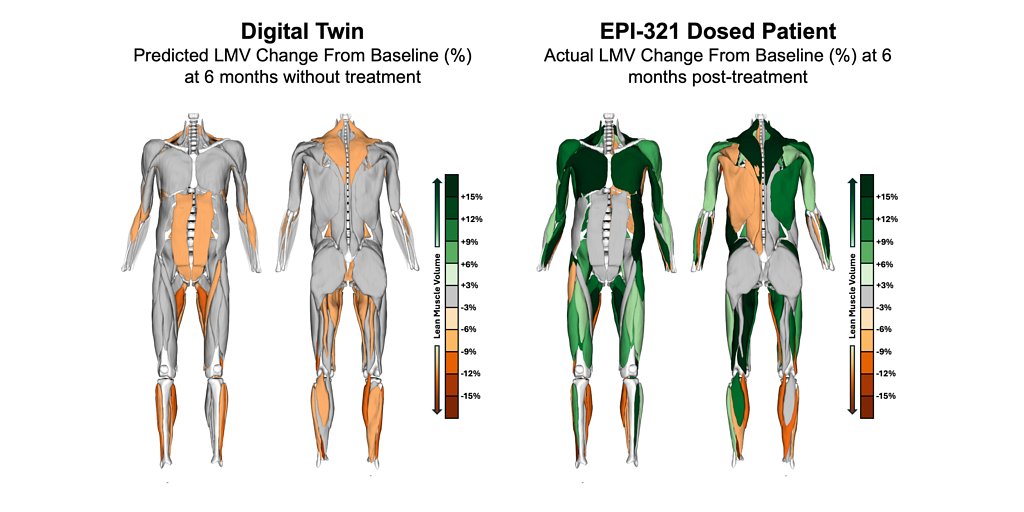
- 370 milliliters (0.8 pounds) average increase in lean muscle volume after EPI-321 treatment.
- 15% growth observed in specific muscles via advanced MRI analysis.
Experts would likely conclude that Epicrispr's gene silencing technology represents a groundbreaking advancement in treating FSHD, offering the first evidence of muscle gain in a disease characterized by progressive muscle loss.
Epicrispr's Gene Silencing Tech Flips the Script on Muscle Wasting
SAN FRANCISCO, CA – June 26, 2026 – For patients with facioscapulohumeral muscular dystrophy (FSHD), the diagnosis has always meant a one-way street of progressive muscle loss. Now, a San Francisco-based biotech may have just built the first off-ramp. Epicrispr Biotechnologies has unveiled interim data suggesting its therapy, EPI-321, is not only safe but is the first treatment ever reported to increase lean muscle volume in individuals with this debilitating genetic condition.
The early but stunning results from a Phase 1/2 study represent a potential paradigm shift in treating a disease that affects an estimated 870,000 people worldwide and currently has no approved therapies. By demonstrating muscle gain in a disease defined by muscle loss, Epicrispr is providing a tangible proof-of-concept for its novel epigenetic editing platform and injecting a powerful dose of hope into the neuromuscular disease community.
A Paradigm Shift in a Degenerative Disease
The data, from the company's ongoing open-label study, is striking. Among the first three evaluable patients who received a target dose of EPI-321, all demonstrated gains in lean muscle volume six months after a single intravenous infusion. The average increase was approximately 370 milliliters, equivalent to about 0.8 pounds of new muscle. Individual gains ranged from 0.5 to 1.3 pounds, with advanced MRI analysis showing that some specific muscles grew by as much as 15%.
To understand the significance of this, one must consider the natural history of FSHD. “Historically, we have had very limited ability to alter the course of the disease,” said Dr. Russell Butterfield, the study's principal investigator and an Associate Professor at the University of Utah. “Patients with FSHD face a lifelong, progressive loss of muscle that can affect nearly every aspect of daily living.”
Indeed, patients in previous FSHD clinical trials, even recent Phase 3 studies for other potential drugs, have consistently shown a decline in muscle mass over time. Epicrispr’s results, showing a consistent increase across all evaluable patients, stand in stark contrast to this expected trajectory. The findings were further supported by favorable reductions in a novel biomarker that reflects the activity of DUX4, the toxic gene that drives FSHD, providing biological evidence that the therapy is hitting its intended target.
“These results represent a major scientific breakthrough for both the FSHD community and the field of epigenetic medicine,” stated Dr. Amber Salzman, CEO of Epicrispr Biotechnologies. “The alignment between imaging, biomarker, and functional data strengthens our confidence in the potential of EPI-321 to meaningfully alter the course of disease.”
The Science of Silencing: Epigenetics Enters the Clinic
What sets EPI-321 apart is its underlying technology. Rather than using conventional gene editing tools like CRISPR-Cas9, which create permanent cuts in the DNA, Epicrispr's proprietary Gene Expression Modulation System (GEMS) platform acts more like a dimmer switch for genes.
FSHD is caused by the aberrant expression of the DUX4 gene, which is normally silent in adult muscle but becomes active in patients, leading to cell death and inflammation. EPI-321 is designed to turn this gene back off. It uses a harmless adeno-associated virus (AAV) as a delivery vehicle to get its therapeutic payload into muscle cells. This payload consists of a non-cutting, “nuclease-dead” CRISPR protein (dCasONYX) fused with epigenetic modulators.
Guided by an RNA molecule, this complex travels to the precise location of the DUX4 gene and re-establishes the natural silencing marks (a process called methylation) that should have kept it dormant. By doing so, it durably suppresses DUX4 expression without altering the fundamental DNA sequence. This approach, which earned Epicrispr the first-ever open Investigational New Drug (IND) authorization for an epigenetic editing therapy in the U.S., could offer a superior safety profile compared to technologies that permanently alter the genome.
The precision of this approach is being captured with equally innovative tools. The MRI analyses were conducted in partnership with Springbok Analytics, whose AI-powered platform quantified changes across 140 individual muscles. “The consistency of the MRI findings across all evaluable patients was remarkable,” noted Dr. Silvia Blemker, Springbok's Chief Scientific Officer.
Navigating the Competitive and Clinical Landscape
While groundbreaking, Epicrispr’s success arrives in an increasingly active landscape for rare disease innovation. The significant unmet need in FSHD has drawn the attention of other players. For instance, a recent study of a hormone combination therapy also showed gains in lean body mass, and pharmaceutical giant Roche is advancing its own muscle-growth-promoting drug into Phase 2 trials. However, these approaches are largely anabolic or functional, whereas EPI-321 is the only one in the clinic designed to silence the genetic root cause of the disease.
From a business perspective, Epicrispr is making strategic moves that suggest a clear-eyed view of the path to market. The therapy has received Fast Track Designation from the FDA, and the company has secured a manufacturing partnership with Forge Biologics to prepare for later-stage development. Innovatively, the company is also using “digital twins”—AI-driven models that predict disease progression in untreated patients—to serve as a comparator arm, a clever strategy to contextualize data in a small, open-label trial.
Of course, the bottom line depends on continued success. The data, while promising, is from a very small number of patients. The nine patients treated so far have shown a positive safety profile, a critical hurdle for any new gene therapy. The investment world and patient community will be watching closely as the company prepares to present additional data at the World Muscle Society Annual Congress in September and completes the primary portion of the study in mid-2027.
While the road from a Phase 1/2 trial to an approved therapy is long and fraught with risk, these early results have firmly positioned epigenetic editing as a powerful new tool in the fight against genetic disease. For the hundreds of thousands living with FSHD, it represents the most tangible sign of hope that the tide of muscle loss may finally be turned.