
- Annual Savings Potential: Up to $13.4 million for a single hospital by preventing severe IV injuries
- ROI Range: 7 to 14 times the initial cost of early detection technology
- Injury Reduction: 93% reduction in severity of IV infiltration/extravasation with continuous monitoring (per British Medical Journal study)
Experts agree that IV injuries represent a significant, underreported financial and patient safety risk, and early detection technology offers a compelling ROI while improving care quality.
IV Injury Costs Exposed: New Model Shows Millions in Hospital Savings
NEWPORT NEWS, Va. – March 10, 2026 – A routine IV drip, one of the most common invasive procedures in modern medicine, is exposing healthcare systems to millions of dollars in underreported costs and significant patient harm. A new financial model, developed through a partnership between IV safety company ivWatch and global risk consultant Aon, is bringing these hidden costs to light, demonstrating that early detection technology can yield an annual margin impact of up to $13.4 million for a single hospital.
The analysis provides a stark financial argument for addressing peripheral intravenous (IV) infiltration and extravasation—events where fluid accidentally leaks into the surrounding tissue. By quantifying the cascading costs of these failures, from uncompensated care to legal liability, the model presents a compelling business case for investing in patient safety technologies that offer a return of 7 to 14 times the initial cost.
The Hidden Economic Burden of a Common Procedure
For decades, the standard of care for monitoring IV lines has relied on intermittent visual and tactile assessments by clinical staff. However, IV injuries often develop silently, making them difficult to detect before significant harm occurs. This reality, combined with high patient-to-nurse ratios and heavy workloads, creates a systemic vulnerability that independent patient-safety organizations like the ECRI Institute have flagged as a major concern.
These complications are widely considered to be one of the most underreported adverse events in healthcare. When an IV fails, the consequences can range from simple medication dosing errors to severe patient injuries like skin necrosis, nerve damage, and in rare cases, amputation. The subsequent clinical response—including surgical interventions, extended hospital stays, and ICU days—is often absorbed by the hospital as costly, unreimbursed care.
"IV extravasations represent a significant source of risk and downstream costs for hospitals, and that risk is often underestimated or goes uncalculated altogether," said John Rudoy, healthcare industry practice leader at Aon. "When those costs are finally quantified, it becomes clear that severe IV injuries drain millions from hospital margins every year and that earlier detection can significantly reduce that exposure."
Quantifying the Risk: A New Financial Blueprint
The Return on Investment (ROI) model created by Aon leverages its vast proprietary data, including the largest database of healthcare professional liability claims and real-world costs of care. By combining this financial data with the clinical efficacy of ivWatch's continuous monitoring technology, the analysis paints a detailed picture of the potential savings.
According to the validated model, a 150-bed pediatric hospital could see an annual margin impact between $8.9 million and $13.4 million by preventing severe extravasation events. For non-pediatric hospitals of a similar size, the projected impact ranges from $5.1 million to $7.9 million annually. Aon estimates that simply reducing the need for unreimbursed remedial care could improve hospital margins by $1.6 million to $5.6 million alone, depending on the patient population.
These figures account for a wide range of previously unquantified financial drains, including:
- Professional Liability: Reduced legal exposure from fewer patient lawsuits, leading to lower legal costs and potentially lower insurance premiums.
- Workflow Disruption: Avoiding the operational chaos caused by increased readmissions, extended lengths of stay, and the need to pull in additional clinical resources.
- Patient Satisfaction: The model notes that patients who avoid complications are twice as likely to give top satisfaction ratings. For hospitals, a 10% improvement in these top ratings can translate to an estimated 1.5% improvement in revenue.
A Technological Shift in the Standard of Care
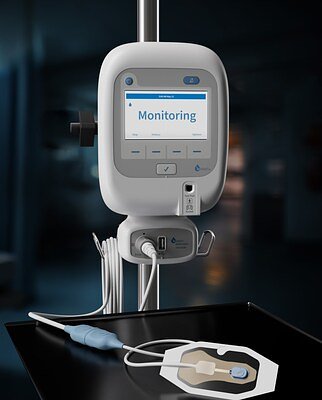
At the heart of this financial argument is a technological solution designed to move IV safety from a reactive to a proactive discipline. The ivWatch system uses a miniaturized sensor placed near the IV insertion site. It employs near-infrared light and a predictive algorithm to continuously monitor the tissue and detect fluid leakage at its earliest stages, long before it becomes visible to the human eye.
The technology's effectiveness was highlighted in a large retrospective study published in the British Medical Journal, which found a 93% reduction in the severity of IV infiltration and extravasation injuries when continuous sensor-based monitoring was used compared to traditional observation methods.
"When serious IV injuries occur, hospitals are often blindsided by a cascade of clinical and financial challenges," said ivWatch President Erin Wendell. "What starts as a routine procedure can quickly escalate into catastrophic outcomes for patients, clinicians, and healthcare institutions. These events are largely preventable with proven technology that delivers better patient care and a significant return on investment."
As the only FDA-cleared and CE-marked solution of its kind, the technology represents a potential paradigm shift, offering an objective, around-the-clock safeguard that complements the crucial work of nursing staff.
Broader Implications for Policy and Performance
The release of a robust, data-driven ROI model for a patient safety technology could have ripple effects across the healthcare industry. In an era of value-based care, where reimbursement is increasingly tied to patient outcomes and quality metrics, technologies that demonstrably reduce complications and associated costs are becoming strategically essential.
A clear financial justification for preventing IV injuries gives hospital administrators a powerful tool to advocate for investment in new technologies. Furthermore, it provides a data-backed argument for discussions with medical malpractice insurers about potential premium reductions for facilities that adopt proactive risk-management solutions.
By illuminating the true cost of a common but consequential complication, the joint analysis from ivWatch and Aon challenges the long-standing acceptance of IV failure rates. The model suggests that improving this fundamental aspect of patient care is not just a clinical imperative but a sound financial strategy that can enhance operational efficiency, reduce liability, and ultimately protect both patients and a hospital's bottom line.