
- $11,000+: Average annual cost of child care in Georgia, with 50% of providers raising tuition in the past year. - 52%: Providers unable to meet demand for infant and toddler care, creating a 'child care desert.' - $2.5 billion: Annual economic loss in Georgia due to child care challenges.
Experts emphasize that Georgia's child care crisis requires urgent systemic investment to stabilize providers, ensure affordability, and support early childhood development, as current funding falls far short of meeting demand.
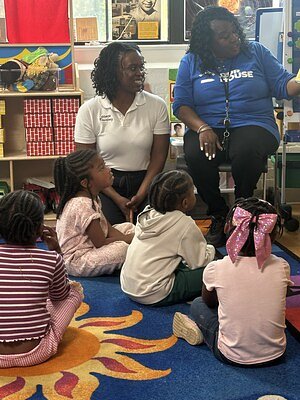
Georgia's Child Care Crisis: Costs Soar as Care Vanishes
ATLANTA, GA – April 22, 2026 – Georgia’s child care system is buckling under immense financial pressure, forcing providers to raise tuition while families face dwindling access, particularly for infants and toddlers. A new statewide survey released today by Quality Care for Children (QCC), a leading nonprofit, paints a stark picture of a sector dedicated to improving early learning but struggling for its own survival.
The 2026 Provider Pulse Check Survey, which gathered responses from nearly 600 child care programs across 90 counties, reveals a paradox: while providers are strengthening their focus on early literacy to prepare children for kindergarten, they are simultaneously being crushed by rising operational costs. The result is a growing crisis that threatens the stability of Georgia families and the health of the state's economy.
"Georgia's child care providers are doing more than ever to support children's learning and development, but they are also carrying enormous financial pressure," said Ellyn Cochran, president and chief executive officer of Quality Care for Children. "Without stronger, coordinated investment, families will continue to face fewer options and higher costs."
The Squeeze on Georgia Families
For working parents across Georgia, the cost of child care has become an unsustainable burden. With care already averaging over $11,000 per year, the new survey found that half of all providers increased their tuition or fees in the past year. More alarmingly, over 40% expect to raise prices again in the coming year to offset their own rising expenses.
These escalating costs are having a tangible impact on the state's workforce. Recent studies show that child care challenges in Georgia contribute to at least $2.5 billion in lost economic activity annually. More than a quarter of Georgia parents with young children have reported quitting a job, turning down a promotion, or significantly altering their employment due to the inability to find or afford reliable care. For many families, the math simply doesn't work, with child care costs consuming a disproportionate share of their income.
Providers are caught in the middle, forced to choose between raising rates on already-strapped families or cutting costs in ways that could impact quality, such as delaying facility maintenance or reducing supplies. This financial vise is tightening access and pushing affordable, high-quality care further out of reach for the average Georgia family.
Georgia's Growing 'Infant-Toddler Desert'
Nowhere is the crisis more acute than in the search for care for the state's youngest children. The survey highlights a critical shortage of available spots for infants and toddlers, with 52% of providers reporting they are unable to meet the overwhelming demand for these age groups. This creates what experts call a "child care desert" for families with babies and toddlers, leaving them with few, if any, viable options.
Caring for infants and toddlers is the most expensive form of child care due to the need for smaller group sizes and lower staff-to-child ratios. As providers struggle with razor-thin margins and persistent staffing shortages, many find it financially unfeasible to expand or even maintain their infant and toddler classrooms.
This shortage has profound consequences. The first few years of a child's life are a period of rapid brain development, and access to high-quality early learning environments is crucial for long-term success. When parents cannot find care, it not only hinders their ability to work but also denies their children foundational learning experiences. The scarcity of infant and toddler care is a bottleneck that impacts families' financial stability and children's developmental trajectories from the very beginning.
Providers on the Brink: A Fragile Business Model
Behind the scenes, Georgia's child care providers are navigating a fragile and often unforgiving business model. The QCC survey reveals that the financial strain extends beyond simple operational budgets and into the personal lives of the providers themselves. In a startling finding, nearly 30% of providers reported personally experiencing food insecurity in the past year.
This personal hardship exists alongside their critical role in community food security. A staggering 74% of providers noted that the families they serve rely on their child care program for consistent, nutritious meals for their children. This underscores the expanded role of providers, who function not just as educators but as a vital social safety net for communities.
Persistent workforce challenges exacerbate the financial strain. Many providers report they could serve more children if they had sufficient staff, but they struggle to compete with rising wages in retail and other sectors. The expiration of federal pandemic-era relief funds has removed a critical lifeline, forcing many to raise tuition to cover staffing costs that are essential for maintaining quality and safety standards. Without this support, many programs are operating on the edge of viability.
A Commitment to Quality Amidst the Strain
Despite the immense financial and operational pressures, Georgia's child care providers have demonstrated a resilient commitment to improving the quality of early education. A significant bright spot in the survey was a reported increase in the focus on early literacy. Providers are intentionally embedding language-rich interactions throughout the day and ensuring their classrooms are filled with books and materials that reflect the diverse cultures and experiences of the children in their care.
Many providers credited professional development and coaching programs, like those offered by QCC, with helping them strengthen their classroom practices. This dedication ensures that even as the business model for child care becomes more precarious, the focus on preparing children for kindergarten and beyond remains a top priority.
This commitment highlights the passion and professionalism within the early education field. Providers are not simply watching children; they are nurturing brain development, fostering social-emotional skills, and laying the groundwork for a lifetime of learning. Their efforts to enhance literacy and quality in the face of economic hardship underscore the value they provide to Georgia's future, a value that advocates argue is critically underfunded.
A Call for Systemic Investment
The survey's findings serve as an urgent call to action for state leaders and policymakers. While recent legislative efforts, such as expanding the Child and Dependent Care Tax Credit, offer some relief to families, the scale of the crisis requires a more substantial and coordinated response. Georgia's child care subsidy program, CAPS, currently serves only an estimated 5% of potentially eligible children, leaving thousands of low-income families without support.
Experts and advocates, including QCC, argue that stabilizing the sector requires significant public investment to support providers directly and make care more affordable for all families. This includes increasing subsidy reimbursement rates to cover the true cost of quality care and creating sustainable funding streams that allow providers to pay their staff a living wage.
"Child care is essential to children's overall development and school readiness, family stability, and Georgia's economy," Cochran stated. "If we want more families to find and afford quality care, we have to support the providers who make that possible." Without such support, the threads holding Georgia's child care system together may continue to unravel, with lasting consequences for generations to come.