
- 20% of infertility cases are solely due to male factors, with male factors contributing in 30-40% more (ASRM).
- $40 billion projected global value for relational wellness by 2026.
- $1.5 million Pre-A funding round for U.S. market expansion.
Experts would likely conclude that Soonr Health's dyadic approach aligns with medical best practices, offering a scientifically grounded solution to address the often-overlooked male factor in fertility.
It Takes Two: Soonr Health Reboots Fertility Tech for the Modern Couple
SEOUL, South Korea – June 04, 2026 – The multi-billion dollar fertility technology market has long operated on a simple, if incomplete, premise: that the journey to conception is primarily a woman's to navigate, track, and troubleshoot. A wave of apps and devices has digitized the menstrual cycle, but the other half of the equation has often been treated as an afterthought. Today, Seoul-based Vespexx Inc. is making a significant bid to change that narrative with the official U.S. launch of Soonr Health, a preconception platform built not for an individual, but for a couple.
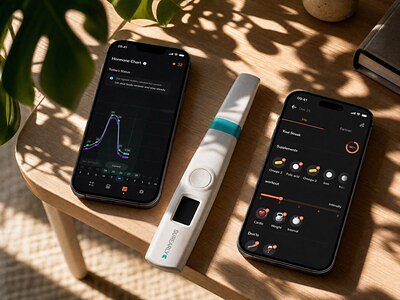
The launch introduces a comprehensive ecosystem designed around "dyadic health"—the principle that health outcomes, particularly in fertility, are shaped by the biology and behaviors of both partners. The Soonr Health app, now available on iOS and Android, syncs across two phones, creating a shared dashboard for the conception journey. It arrives in the U.S. market alongside its hardware counterpart, the Surearly SMART, a connected at-home device that tests for key ovulation and reproductive hormones, with results flowing directly into the shared app experience. This integrated approach represents a deliberate and data-driven pivot from the individualistic focus that has defined the femtech category for years.
The Scientific Case for a Two-Player Game
Soonr's strategy is not just a marketing angle; it's a direct reflection of long-established medical science. According to the American Society for Reproductive Medicine (ASRM), male factors are the sole cause of infertility in about 20% of cases and a contributing factor in another 30% to 40%. The World Health Organization corroborates this, placing overall male factor involvement at roughly 50% of all infertility cases.
Despite these statistics, the consumer-facing fertility industry has been slow to catch up. The burden of tracking, testing, and timing has disproportionately fallen on one partner, often leading to a siloed and stressful experience. Medical guidelines from both the ASRM and the American Urological Association (AUA) have long recommended the concurrent assessment of both partners during an initial infertility evaluation to avoid unnecessary, invasive, and costly procedures for the female partner.
"Most fertility products were designed for a woman to use alone, often with the quiet assumption that her partner would cheer her on from the sidelines," said Scarlett Joowon Jung, CEO of Vespexx, in the company's announcement. Soonr Health aims to codify the medical best practice of parallel investigation into a consumer-friendly digital experience, transforming the process from a solo endeavor into a collaborative project.
From Niche App to a Broader Behavioral Platform
Vespexx is not new to the concept of "relational healthcare." The company first tested these waters with its flagship app, Signaling, which launched in 2023 and pioneered couple-based period tracking. Amassing over 800,000 users across Asia, Signaling proved a significant market appetite for shared health-tracking experiences. Soonr Health is the evolution of that thesis, applying it to the high-stakes, emotionally charged period of trying to conceive.
But Soonr aims to be more than a simple data-sharing tool. Vespexx explicitly describes it as a "behavioral platform." Beyond the core functions of cycle and hormone tracking, both partners are prompted to log daily habits, symptoms, meals, and exercise. This data feeds into a gamified visualization that grows and evolves as the couple contributes more information, creating a shared digital representation of their joint effort.
This design choice is strategic. It provides each partner with tangible, daily actions they can take, fostering a sense of shared agency. It shifts the focus from a narrow set of biological markers to a more holistic view of health, acknowledging that lifestyle factors from both sides can influence fertility outcomes. By building a daily rhythm of shared data entry, the platform aims to make the process of trying to conceive a more connected and less isolating experience.
The Hardware-Software Symbiosis
The platform's ambitions are anchored by a tangible piece of biotechnology: the Surearly SMART device. Manufactured by Vespexx's parent company, Sugentech, a publicly listed Korean biotech firm with 15 years of in-vitro diagnostic expertise, the device brings clinical-grade data into the home. Sugentech has a history of navigating the U.S. regulatory landscape, with several FDA-approved digital tests already on the market, lending significant credibility to its hardware.
The Surearly SMART Starter Kit, launching on Amazon at an introductory price of $119 (regularly $169), integrates seamlessly with the app, allowing hormone test results to be viewed and tracked by both partners in near real-time. This combination of a free app (with premium features at $12.99/month or a promotional $65.99/year) and a connected device places Soonr in a competitive but distinct market position. While competitors like Mira Fertility offer similar device-app integrations, and services like Modern Fertility provide at-home hormone panels, Soonr's unique selling proposition remains its unwavering focus on the couple as the unit of analysis.
Crucially, Vespexx has signaled that this is just the beginning. The company has a clear roadmap to expand its platform with additional device integrations, explicitly mentioning future male reproductive health testing. This move would fully close the loop on its dyadic health promise, creating a single platform where all relevant biological signals from both partners can be monitored.
Navigating Data, Privacy, and the U.S. Market
Launching a health platform that handles a couple's most sensitive data requires an ironclad commitment to privacy, a point Vespexx appears to have taken seriously. The company's privacy policy explicitly states it does not sell user data for advertising or marketing. For users who grant access, data from platforms like Apple HealthKit is used only for in-app features and is not leveraged for data mining. In an era of intense scrutiny over data handling by tech companies, this public stance is a critical component of building user trust.
By entering the U.S., Vespexx is stepping into a large, sophisticated, and crowded market. However, by carving out the niche of "relational wellness," a segment projected to be worth over $40 billion globally by 2026, the company is betting that its dyadic approach is a powerful differentiator. The launch is backed by a recent $1.5 million Pre-A funding round aimed at North American localization and partnership development.
Ultimately, the success of Soonr Health will depend on whether couples find that a shared platform genuinely improves the emotional and practical experience of trying to conceive. But its arrival signals a maturing of the femtech industry—a recognition that women's health does not exist in a vacuum and that the next frontier of innovation may lie in the connections between us.