
- 39% of professionals find AI outputs to be generic
- 19% do not trust AI results (Interact AI Masterclass poll)
- #1 ranking in the 2026 ClearBox Consulting Intranet and Employee Experience Platforms Report
Experts view Interact's Action Agent as a significant step toward agentic AI, offering potential efficiency gains but requiring careful implementation to address trust, accuracy, and ethical challenges in autonomous moderation and task execution.
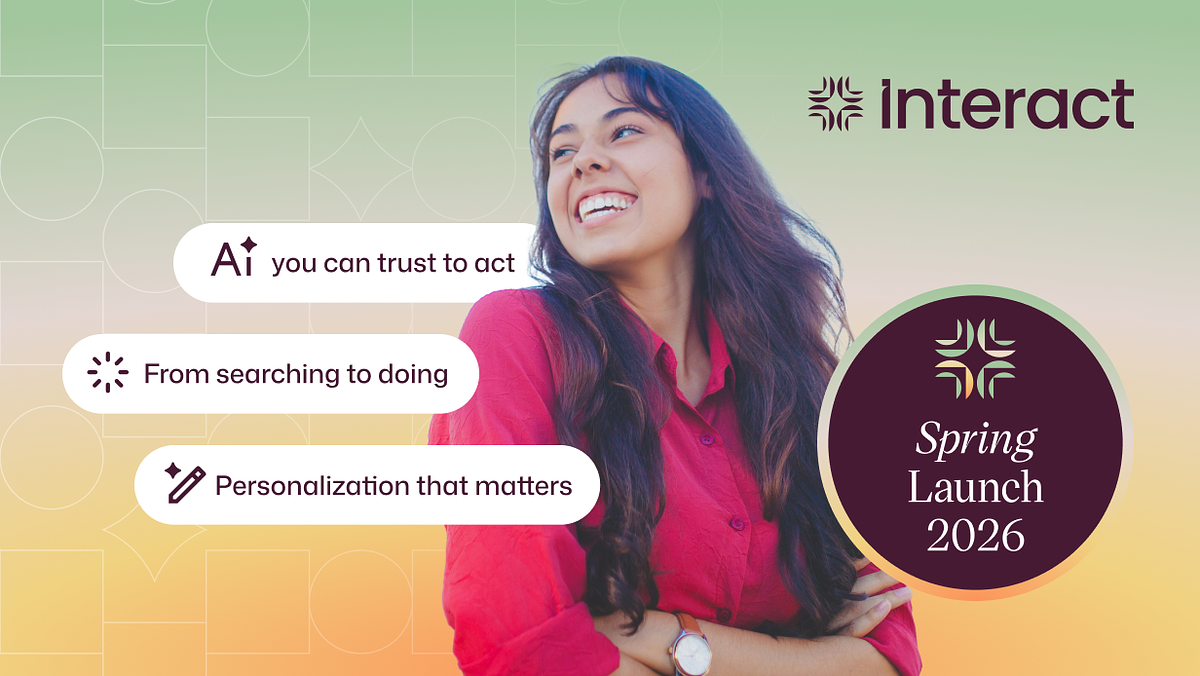
Interact's 'Action Agent' Pushes AI from Assistant to Autonomous Actor
MANCHESTER, United Kingdom and NEW YORK – May 20, 2026
By Sharon Henderson
Interact Software today launched Action Agent, a new capability that pushes its employee experience platform into the burgeoning territory of 'agentic AI,' where artificial intelligence transitions from a passive assistant to an autonomous actor within the enterprise. The release, which also features a cross-system AI search and deeper Workday integrations, signals a significant strategic move to create a more proactive and automated digital workplace.
The new features are designed to address persistent challenges in large organizations: managing community risk, breaking down information silos, and simplifying daily administrative tasks. Action Agent joins 'Signal Agent' in the company's AI platform, advancing what Interact CEO Simon Dance describes as a journey from AI that listens, to AI that learns, to AI that acts.
The Dawn of the Agentic Workplace
The concept of 'agentic AI' represents a pivotal evolution in enterprise software. It moves beyond systems that merely analyze data or respond to user queries, envisioning AI agents that can independently reason, plan, and execute multi-step tasks to achieve specific goals. Interact's strategy hinges on this evolution.
"Signal Agent listens. AI Search enables learning. Action Agent safeguards," stated Simon Dance, CEO of Interact, in the official announcement. "We're not adding features. We’re building the AI-driven platform that meets all seven needs better than anything else on the market."
This move reflects a broader industry trend toward more sophisticated automation. While traditional AI might suggest a relevant document, an agentic AI is designed to understand a user's intent and take the necessary actions across multiple applications to fulfill it. For enterprises, the promise lies in unprecedented efficiency, proactive problem-solving, and a more seamless experience for employees who are often burdened by navigating a complex web of disconnected software.
AI as Guardian: The Double-Edged Sword of Moderation
A core function of the new Action Agent is its role as an automated content moderator. In an era where unmoderated employee-generated content on internal platforms can pose significant brand, legal, and cultural risks, Interact is positioning its AI as a digital guardian. The system is designed to automatically remove or flag content that triggers classifications for inappropriate or risky material, enabling companies to manage their internal communities at scale without a proportional increase in human moderation teams.
However, the deployment of AI for such a nuanced task is not without its challenges and ethical considerations. The effectiveness of these systems hinges on their ability to understand context, sarcasm, and cultural subtleties—areas where AI has historically struggled. The risk of false positives, where innocuous content is incorrectly flagged, can stifle open communication and erode employee trust. Conversely, false negatives that miss genuinely harmful content can leave the company exposed.
This challenge is compounded by a persistent trust gap. A recent poll from an Interact AI Masterclass revealed that 39% of professionals find AI outputs to be generic, and 19% do not trust the results. Building confidence in a system that can autonomously censor employee communication requires a high degree of transparency, accuracy, and a robust process for human oversight and appeals—a "human-in-the-loop" model that many compliance experts advocate for.
Navigating a Competitive AI Landscape
Interact’s push into agentic AI comes as competition in the employee experience market intensifies, with AI innovation becoming a key differentiator. The company's leadership was recently validated by the 2026 ClearBox Consulting Intranet and Employee Experience Platforms Report, which awarded Interact a #1 ranking and recognized its "significant innovation, especially around AI."
However, Interact is not alone. The same report designated other platforms, including Workai, Unily, and MangoApps, as "AI Innovators," indicating a vibrant and competitive ecosystem. Microsoft's Viva suite, deeply integrated within the M365 ecosystem, leverages the tech giant's powerful AI for intelligent search and workflow automation. Other competitors like Fresh Intranet and Diggspace feature their own AI assistants for natural language search and content creation. While many platforms use AI for recommendations and insights, Interact's explicit focus on an AI that acts—autonomously removing content or completing tasks—is a bold move to distinguish its offering.
Unifying the Fragmented Digital Experience
Beyond the headline-grabbing moderation feature, the latest release includes practical updates aimed at solving everyday employee frustrations. The platform's AI Search has been expanded to understand content within uploaded documents and to connect with external systems like SharePoint and ServiceNow. This enhancement turns static digital handbooks into searchable knowledge bases and allows employees to find information across the entire tech stack from a single search bar, reducing the time lost to "information scavenger hunts."
Furthermore, the expanded Workday integration addresses a common pain point in HR workflows. By allowing employees to submit Paid Time Off (PTO) requests directly from the intranet homepage, the platform eliminates the need to switch between systems for a frequent task. This deep integration with core HRIS platforms like Workday is in high demand as organizations strive to create a single, cohesive digital front door for their employees. This is complemented by simplified mobile authentication for frontline workers, who can now use Google or Apple credentials to sign in, removing a common barrier to access for the deskless workforce.
These updates collectively reinforce the vision of a unified platform where AI not only provides information but actively works to streamline processes and connect a disparate digital environment, making the everyday work of employees easier.