
- 35%: Republican and Democratic voter registrations in California's 47th District are virtually tied, each hovering around 35%.
- 2020 Election: President Biden won the district by nearly ten points.
- 2023 DUI Arrest: Incumbent David Min was arrested for driving under the influence with a blood alcohol level nearly double the legal limit.
Experts would likely conclude that Troutman's strategy of weaponizing a holiday message with targeted attacks reflects the increasing sophistication and aggressiveness of modern political campaigning, particularly in highly competitive districts.
Innovation in Attack: How a Holiday Greeting Became a Political Weapon
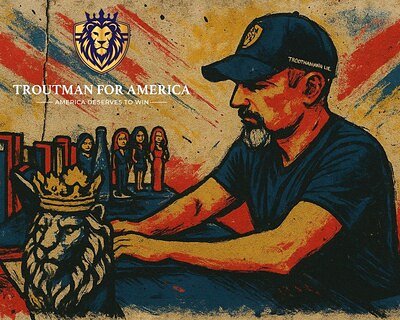
IRVINE, CA – November 26, 2025 – In the hyper-competitive business of American politics, even the most cherished traditions of unity are becoming assets for strategic disruption. As families across the country prepared for Thanksgiving, a holiday message from Eric J. Troutman, a litigator and candidate for California's 47th Congressional District, offered a striking case study in the evolution of campaign tactics. In a press release that blended calls for national healing with surgical political strikes, Troutman demonstrated how the language of forgiveness can be innovatively weaponized, turning a seasonal greeting into a potent tool of opposition.
On its surface, the message from the "Troutman For America" campaign was a festive appeal to a higher national purpose. "We live in the greatest country in this history of the world and we are all so very very blessed," Troutman stated, urging Americans to pause and appreciate one another. He positioned himself as a unifying force against a broken system, claiming, "the political parties want us to fight each other and hate each other. It's crazy." But this platform of unity quickly became the springboard for a highly targeted critique of his opponent, incumbent Democrat David Min.
The Anatomy of a Paradoxical Attack
The brilliance of the strategy lies in its rhetorical framing. Troutman first establishes a magnanimous position, offering to pardon his rival's perceived political weaknesses. "Look, we know Min is maybe not the strongest guy and can't stand up to Trump," Troutman declared, adding, "but we can forgive him." This statement serves a dual purpose: it paints his opponent as ineffectual while casting himself as a gracious, forgiving leader.
However, this veneer of forgiveness quickly dissolves. The message pivots sharply to a more serious and personal issue: Min's 2023 arrest for driving under the influence. "We have to be very forgiving but also very smart," Troutman continued, his tone shifting from magnanimity to grave concern. "Dave Min was arrested for a very serious DUI recently and he lied about how much he drank... when you risk people's lives like Dave Min did—and then lie about it—that really shows a lack of respect for the law, for the people, and for law enforcement. That's tough to forgive."
This juxtaposition is a masterstroke of political communication. By wrapping a damaging attack in the language of holiday grace, the campaign aims to neutralize potential accusations of mudslinging. It attempts to reframe a negative attack as a reluctant, morally necessary duty. The final, pointed jest—"Let's eat some turkey, watch some football and maybe have a drink or two—but don't drive afterward (this includes you Dave)"—cements the attack, ensuring the core message is not one of unity, but of his opponent's specific, documented failing.
A Battleground Forged in Data and Discontent
This aggressive messaging is not happening in a vacuum. It is a direct product of the political landscape of California's 47th District, one of the nation's premier battlegrounds. Spanning coastal Orange County cities from Seal Beach to Irvine, the district is a microcosm of suburban political turbulence. While President Biden won it by nearly ten points in 2020, its history and voter registration numbers reveal a deep-seated competitiveness. As of late 2024, Republican and Democratic voter registrations were virtually tied, each hovering around 35%, making every vote a hard-fought prize.
In the November 2024 election, David Min secured the seat vacated by Katie Porter, defeating Republican Scott Baugh in a race that was deemed "too close to call" on election night and was a top priority for both national parties. The thin margin of victory ensures that the district remains a prime target. In such an environment, campaigns cannot rely on traditional party-line messaging alone. They must innovate to gain an edge, and Troutman's strategy reflects this reality. By leveraging a documented personal failing—Min’s DUI—the Troutman campaign is employing a data-driven tactic that has already been field-tested by Republican groups in the previous election cycle. The calculation is that in a district this evenly divided, swaying a small percentage of independent voters by raising questions of character and judgment could be the key to victory.
The Strategy of Selective Truth
A deeper analysis reveals the sophistication of Troutman's message, which carefully selects its facts to construct a compelling but incomplete narrative. The claim that Min "can't stand up to Trump," for example, appears to be a strategic fiction designed to appeal to moderate voters. Public records show Min has been a vocal and consistent critic of the former president, referring to him as a "convicted felon" and condemning the "MAGA agenda." This discrepancy highlights how the campaign is not just presenting facts, but building a brand for its opponent.
Conversely, the attack on the DUI is grounded in undisputed facts. In May 2023, Min was arrested in Sacramento with a blood alcohol level nearly double the legal limit. He subsequently pleaded no contest to a misdemeanor charge, was sentenced to three years of informal probation, and issued a public apology. While Troutman's press release accurately references the event, its innovation lies in framing it as a current, unresolved character flaw under the guise of holiday forgiveness. It exploits a kernel of truth to paint a much broader picture of untrustworthiness and disrespect for the law, a narrative that research from the 2024 campaign showed resonated with a segment of the electorate.
This approach signals a shift in political branding. Troutman, a self-described "powerhouse complex litigator," is positioning himself as an outsider who is above the fray. His platform, detailed on his website AmericaDeservesToWin.com, calls for "ending gang warfare in Washington" and even "outlawing political parties." This Thanksgiving message, in its paradoxical nature, perfectly embodies his brand: he decries political fighting while simultaneously engaging in it with a lawyer's precision. He is not just another politician; he is a disruptive entrepreneur entering the business of governance, using the tactics of a litigator to prosecute his case against the incumbent in the court of public opinion. The message serves to reinforce his identity as a "winner" who is unafraid to break with convention to achieve his goals, even if it means redefining the spirit of Thanksgiving.