
- 3.6%: USDA predicts food prices will climb another 3.6% in 2026, exceeding the 20-year historical average.
- 36%: Shoppers are opting for store-brand or generic items over national brands.
- 35%: Consumers are cutting beef from their grocery lists to save money.
Experts warn that sustained reductions in fresh, nutrient-dense foods due to inflation could lead to micronutrient deficiencies, malnutrition, and long-term health problems, particularly in children.
Inflation's Bite: Americans Cut Healthy Foods to Survive High Costs
COLUMBUS, OH – March 26, 2026 – A seismic shift is underway in American kitchens and grocery store aisles as persistent food inflation forces consumers into a difficult series of tradeoffs, with affordability now standing on equal footing with taste as a top purchasing driver. New national research reveals that more than half of U.S. consumers are fundamentally changing their buying habits, leading to stark choices that could have long-term consequences for the nation's health and its food industry.
The research, a joint effort by agriculture insights firm Stratovation Group and communications agency Inspire, paints a picture of a nation under economic pressure. With the USDA predicting food prices will climb another 3.6% this year—exceeding the 20-year historical average—consumers are responding with a mix of savvy cost-cutting strategies and concerning nutritional sacrifices.
The New Reality at the Grocery Aisle
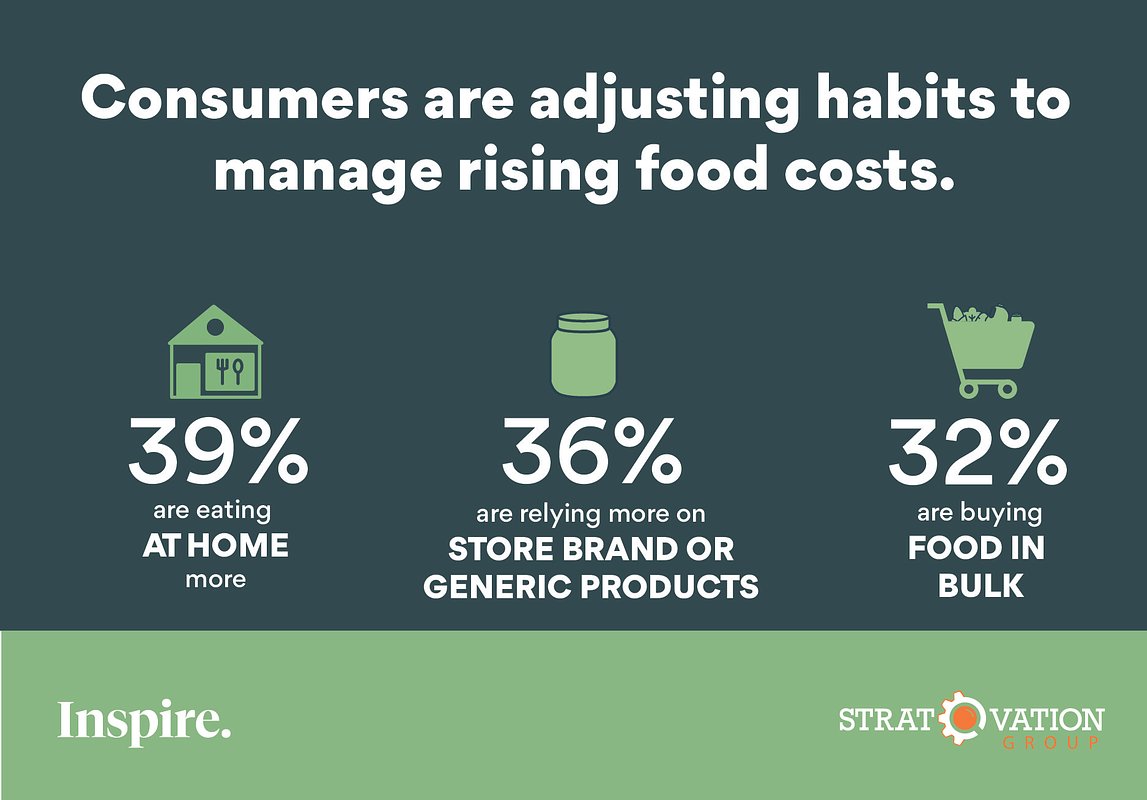
Shoppers are rewriting their household playbooks to stretch budgets. The study shows a significant move toward at-home cooking, with 39% of households eating in more frequently to save money. Nearly half of all respondents are actively trying to make food last longer, stretching ingredients across multiple meals.
This new frugality has also fueled a revolution in brand loyalty. A remarkable 36% of shoppers are now opting for store-brand or generic items over national brands, a trend corroborated by wider market data. Private label sales have soared, claiming a record 23.9% of all units sold in U.S. retail as of early 2025. This isn't just about choosing the cheapest option; consumers are finding comparable quality in private labels, fundamentally redefining what "value" means to them.
In addition to switching brands, 32% of consumers are buying in bulk to lock in lower prices. This has boosted warehouse clubs and prompted traditional grocers to introduce their own bulk options and enhance loyalty programs. When cuts are necessary, perceived luxuries are the first to go. Nearly half of those surveyed would eliminate alcohol from their shopping lists, followed by gourmet foods and sweets.
The High Price of Health: Fresh Foods on the Chopping Block
The most alarming trend revealed by the data is not what consumers are adding to their carts, but what they are taking out. To manage costs, Americans are systematically removing fresh, nutrient-dense foods—the very building blocks of a healthy diet—from their grocery lists.
Beef is the single most-cited item to be cut, with 35% of consumers saying they would remove it from their list to save money. Other proteins are not far behind, including pork (23%), chicken (21%), and turkey (17%). The cuts extend across the entire fresh food category, with 11% to 13% of shoppers also reducing purchases of eggs, cheeses, fresh produce, and other dairy products.
This behavior directly contradicts the recommendations in the USDA's Dietary Guidelines, which emphasize the importance of these foods for a healthy diet. Public health experts warn that such sustained shifts can have dire consequences. When households reduce diet diversity to afford cheaper, less-nutrient-dense foods, it can lead to micronutrient deficiencies, increased malnutrition, and long-term health problems. Children are especially vulnerable; studies have shown that even modest increases in food prices can correlate with higher risks of childhood stunting and wasting, potentially causing developmental delays and poor health outcomes that last a lifetime.
A Paradox of Priorities: The MAHA Movement and Market Realities
Complicating this landscape is the powerful influence of the 'Make America Healthy Again' (MAHA) movement. The survey found remarkably high awareness of the commission, which was established just over a year ago. Approximately 30% of respondents are "highly aware" of MAHA, and more than half believe the movement has their "family's best interest at heart."
Led by prominent figures, MAHA champions a return to whole, unprocessed foods and scrutinizes the role of processed ingredients, pesticides, and pharmaceuticals in the nation's chronic disease crisis. This creates a striking paradox: at the very moment a significant portion of the public is putting its trust in a movement advocating for healthier, natural foods, economic reality is forcing them to buy fewer of those exact products.
"The survey results on MAHA reflect how swiftly the movement has gained momentum, and the likely volatility it will have going forward," noted Hinda Mitchell, president of Inspire. "Especially in the context of potential shifts away from fresh, nutritious and perishable foods, consumers are making tradeoffs for affordability that may not fully align with trends away from processed foods and toward real food and quality proteins."
This disconnect presents a major challenge for the food industry. "Farmers and agricultural companies are not operating in a vacuum," said Cam Camfield, CEO of Stratovation Group. "They are fully aware of the broader consumer narratives, and MAHA is clearly on their radar... The opportunity now is making sure that awareness translates into practical, science-based policy decisions on the ground."
Industry in Flux: Retailers and Restaurants Adapt to Survive
The food industry is scrambling to adapt to this cost-conscious consumer. Retailers are leaning heavily into the private label boom, expanding their store-brand offerings to include premium tiers that compete directly with national brands on quality, not just price. The integration of bulk-buying options, digital coupons, and enhanced loyalty programs is becoming standard practice for grocers fighting to retain customers.
Meanwhile, the restaurant sector, while impacted by the increase in home cooking, is not being abandoned. The survey indicates that convenience remains a powerful motivator. About half of consumers still eat at a restaurant once a week or twice a month, and a staggering 8 in 10 order restaurant delivery at least monthly, with DoorDash (64%) and UberEATS (47%) dominating the market.
This reveals a consumer navigating a constant balancing act. They cook at home to save money but still pay for the convenience of delivery. They aspire to the ideals of health movements but fill their carts based on the reality of their wallets. As Hinda Mitchell explained, it's no longer just about concern over prices, but "how those concerns translate into decision making at retail and restaurants." These behavioral shifts, born from economic necessity, are actively reshaping the entire American food system, forcing producers, retailers, and policymakers to confront a new and challenging consumer landscape.