
- 1,750+ test flights across five previous generations of aircraft
- 90-mile range for the Gen 6 aircraft, cruising at 120 knots
- Two active Gen 6 aircraft in flight testing, accelerating data collection and validation
Experts agree that Wisk's aggressive flight testing and dual-aircraft strategy position it as a front-runner in the autonomous air taxi race, though regulatory hurdles remain significant.
Wisk Doubles Down on Autonomous Flight, Accelerates Air Taxi Race
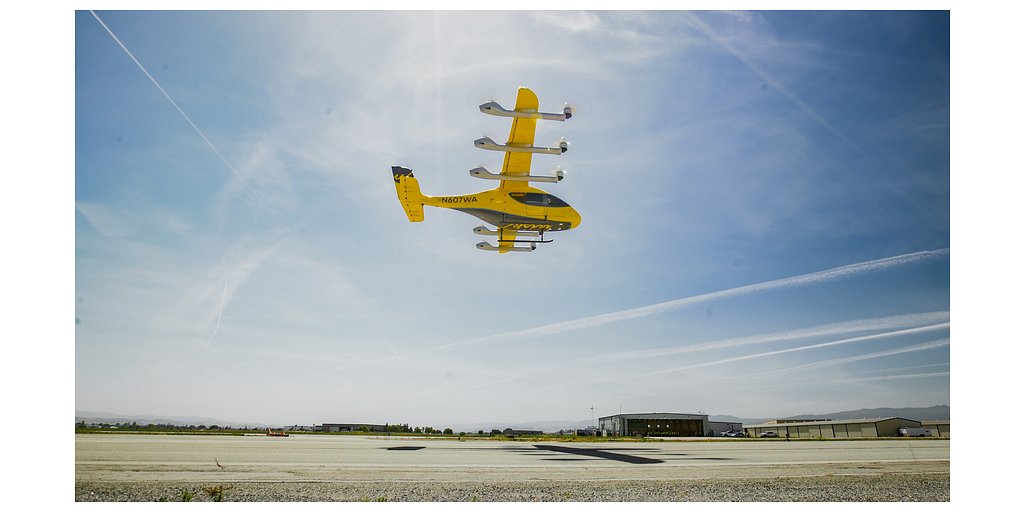
MOUNTAIN VIEW, CA – May 04, 2026 – Wisk Aero, a subsidiary of Boeing, has significantly accelerated its flight test program with the successful first flight of its second Generation 6 autonomous aircraft. The event, which took place at the company's test facility in Hollister, California, marks a critical step in the race to bring certified, self-flying air taxis to market.
This milestone comes less than five months after the first Gen 6 prototype began its flight campaign in mid-December 2025, signaling an aggressive pace of development. The addition of a second aircraft to the test fleet dramatically increases Wisk's capacity to gather data and validate the performance of its all-electric, vertical takeoff and landing (eVTOL) vehicle. The initial flight successfully performed key maneuvers, including vertical takeoff, hover, and a series of “chirp” tests designed to characterize the aircraft's control responses.
“Seeing the second Gen 6 aircraft take to the skies is a proud moment for Wisk,” said Sebastien Vigneron, CEO of Wisk, in a statement. “This pace of execution is exactly what is required to meet the rigorous safety standards of commercial aviation. Having multiple aircraft in flight testing allows us to move faster, learn quicker, and stay on the leading edge of autonomous aviation. Every flight provides crucial data that matures our aircraft and autonomous system, bringing us one step closer to delivering a certified, autonomous air taxi service.”
A Strategy of Speed and Data
The dual-aircraft test campaign is designed to do more than just repeat tests; it enables parallel development paths and a more comprehensive understanding of the aircraft's capabilities. With two active vehicles, engineers can expand the flight envelope more rapidly, moving from the current hover and low-speed maneuvers to the complex and critical phase of transitioning from vertical lift to wing-borne forward flight. This transition is a key aerodynamic challenge for most eVTOL designs.
This accelerated data collection is vital for refining the aircraft’s control laws and validating its complex systems. The Gen 6 aircraft, which has been in development for years and builds upon the learnings from over 1,750 test flights across five previous generations, is designed to carry four passengers on routes up to 90 miles. It is intended to cruise at speeds of up to 120 knots at altitudes between 2,500 and 4,000 feet, offering a quiet, emission-free alternative for urban and regional travel.
Every maneuver, from a simple hover to a complex transition, generates terabytes of data that feed into simulation models and are used to prove the system's reliability to regulators. Having a second aircraft in the air means Wisk can test different software builds, hardware components, or flight scenarios simultaneously, effectively halving the time required for certain validation tasks and building a more robust safety case.
Navigating the Autonomous Frontier
Wisk's unwavering focus on full autonomy from day one sets it apart in the crowded and competitive Advanced Air Mobility (AAM) market. While leading competitors like Joby Aviation and Archer Aviation are pursuing a piloted-first approach to get their aircraft certified and into service sooner, Wisk is betting that a supervised autonomous model is the ultimate key to safety, scalability, and affordability.
The competitive landscape is heating up globally. Joby Aviation recently conducted demonstration flights in New York City, and Archer is targeting commercial operations in the UAE. Meanwhile, China's EHang received the world's first type certificate for an autonomous passenger-carrying eVTOL from its national regulator in 2023 and recently conducted passenger flights in Mexico. Wisk’s strategy, however, is to be the first to certify a commercial autonomous passenger aircraft in the United States under the stringent oversight of the Federal Aviation Administration (FAA).
The company’s model is not about removing humans entirely but rather shifting their role. Instead of an onboard pilot, Wisk’s aircraft will be monitored by ground-based Multi-Vehicle Supervisors, with each supervisor capable of overseeing multiple aircraft. Wisk argues this approach eliminates the single point of failure associated with a single pilot and allows for a more consistent, system-wide approach to safety management.
The Regulatory Gauntlet and Boeing's Strategic Bet
Achieving FAA certification for a novel, pilotless passenger aircraft is perhaps the greatest challenge Wisk faces. The FAA has not yet finalized a complete certification pathway for autonomous eVTOLs, though it is actively working on adapting existing regulations like Part 23 and developing new special class criteria under Part 21.17(b). Key hurdles include proving the reliability of artificial intelligence and machine learning algorithms, ensuring robust cybersecurity, and validating the performance of sophisticated detect-and-avoid (DAA) systems.
This is where Wisk's relationship with its parent company, Boeing, becomes a formidable advantage. As a wholly-owned subsidiary, Wisk represents a cornerstone of the aerospace giant’s strategy to secure a leading position in the next generation of aviation. Boeing provides not only substantial financial backing but also decades of experience in aircraft certification, safety engineering, and navigating the complex regulatory environment of the FAA.
By funding Wisk, Boeing is making a strategic, long-term bet on the future of autonomous flight. The progress made by Wisk in developing and testing its technology de-risks this future market for Boeing and provides invaluable data that can inform the integration of autonomy across its broader portfolio. Wisk's mission to pioneer the certification of an autonomous aircraft is, in effect, a mission to help write the rulebook for the entire industry, with Boeing's support.
From Test Flights to Texas Skies
The accelerated flight testing in California is not just an engineering exercise; it directly supports Wisk’s path to commercialization. This progress is crucial for the company's role in the Electric Vertical Takeoff and Landing (eVTOL) and Advanced Air Mobility (AAM) Integration Pilot Program (eIPP), a U.S. Department of Transportation initiative.
The Texas Department of Transportation (TxDOT) was selected to participate in this program, partnering with Wisk to drive the operational execution. This means the data and validated performance from the Gen 6 test flights will soon be applied to real-world scenarios in the U.S. National Airspace. The eIPP program aims to tackle the practical challenges of integrating these new aircraft, including developing vertiport infrastructure, refining air traffic management procedures, and engaging with local communities.
In Texas, Wisk will have the opportunity to demonstrate its autonomous systems and ground-based oversight model in a live environment, providing critical insights for regulators and helping to build public trust. This collaboration, along with ongoing work with the FAA and NASA, is designed to solidify U.S. leadership in AAM and pave a clear, data-driven path toward a future where autonomous air taxis are a safe and routine part of daily life.