
- 700,000 units: Menarini projects exporting up to 700,000 Dermatix units to China by the end of 2025.
- 2.8 million units: MiLab's total export volume is on track to reach 2.8 million units by 2025, more than doubling since 2023.
- USD 11 billion: Indonesia's pharmaceutical market is projected to hit USD 11 billion in 2025, the largest in Southeast Asia.
Experts view Menarini's expansion in Indonesia as a strategic bet on the country's rising role as a global pharmaceutical manufacturing hub, driven by government incentives, supply chain diversification, and long-term economic vision.
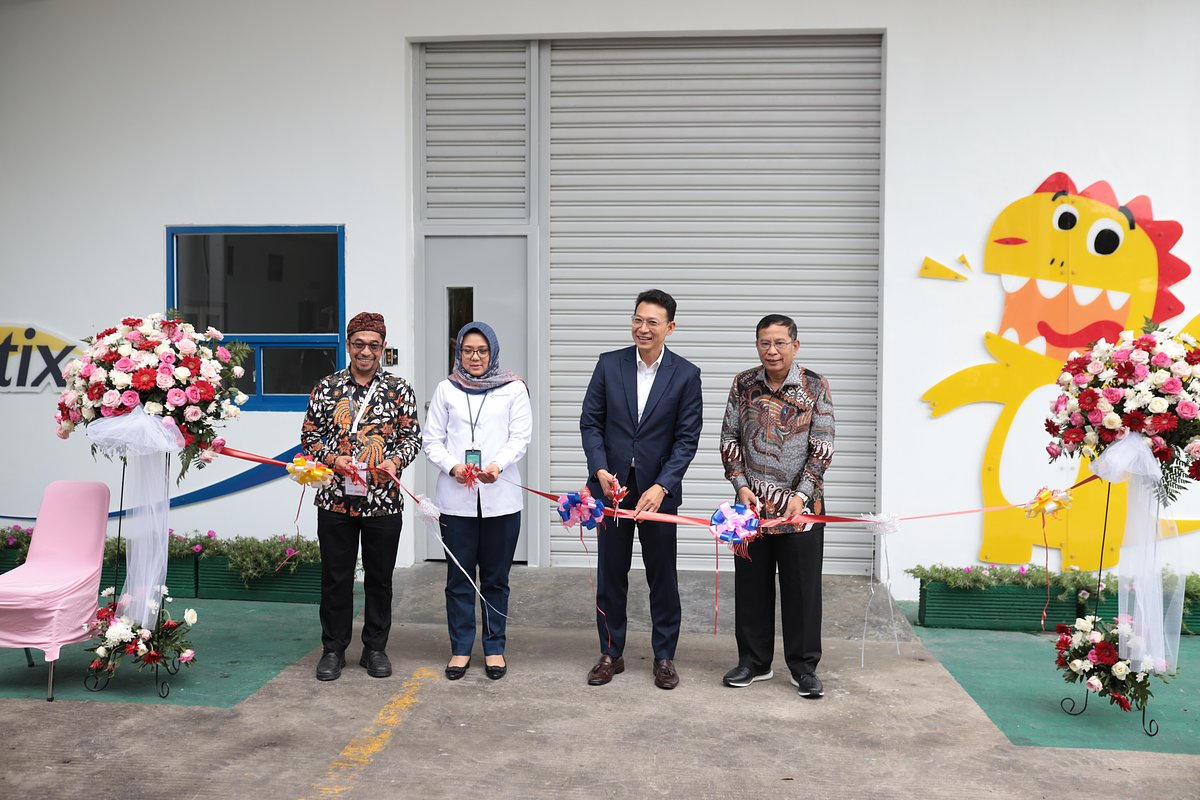
Indonesia's Pharma Rise: Menarini's Bet on a New Global Hub
JAKARTA, Indonesia – December 04, 2025 – In the sprawling industrial landscape of Cikarang, West Java, a significant transformation is taking shape. European biopharmaceutical giant Menarini Asia-Pacific has announced a major expansion of its PT. Menarini Indria Laboratories (MiLab) facility, a move that transcends a standard corporate investment. This development represents a calculated bet on Indonesia's future, a tangible sign of shifting global supply chain dynamics, and a powerful case study in how public-private partnerships are forging the next generation of regional economic powerhouses.
While the addition of a new warehouse and upgraded production lines might seem like routine operational news, the strategic implications are profound. Menarini is not merely increasing its footprint; it is anchoring a key part of its regional export strategy in a nation actively positioning itself as the new nexus of pharmaceutical manufacturing in Southeast Asia. This move provides a crucial lens into the future of global trade, where resilience, sustainability, and national ambition are becoming as important as cost efficiency.
A Strategic Bet on Scale and Speed
The expansion is engineered for impact. By upgrading its facilities, MiLab is set to double its packaging speeds, a critical enhancement designed to meet soaring export demand with greater efficiency. The primary beneficiary of this increased capacity is Dermatix, Menarini's flagship scar management brand. Since first being exported to six countries in 2023, the product's reach has doubled to 12 nations, with China now representing a major new market.
The numbers underscore the scale of this ambition. Menarini projects it will export up to 700,000 units of Dermatix products to China alone by the end of this year. Looking at the broader portfolio, which includes other oral solid and liquid pharmaceuticals, the growth is even more striking. The total export volume from MiLab is on track to more than double between 2023 and 2025, reaching a projected cumulative total of 2.8 million units.
This aggressive push is a testament to the company's long-term vision for the region. "Milab has firmly positioned us as a key player in Indonesia's pharmaceutical industry, reflecting Menarini's ongoing commitment to continuously evaluate and expand in regional markets with a focus on efficiency and the highest product quality standards," said Idham Hamzah, President Director of Menarini Indonesia. "As an Italian pharmaceutical company with a strong regional presence, Menarini is dedicated to supporting local export growth and strengthening Indonesia's role as a regional manufacturing hub, while proudly establishing ourselves on the global stage."
Powering a Nation's Economic Vision
Menarini's investment is not happening in a vacuum. It is deeply intertwined with Indonesia's strategic economic goals, most notably the 'Golden Indonesia 2045 Vision' and the 2025-2029 National Medium-Term Development Plan. The government has been methodically laying the groundwork to attract exactly this type of high-value foreign direct investment (FDI). With a pharmaceutical market projected to hit USD 11 billion in 2025—the largest in Southeast Asia—and pharmaceutical exports forecast to grow at a compound annual rate of 7.7%, the country is ripe for this transformation.
To catalyze this growth, Indonesia has rolled out a suite of powerful incentives. Key among them is the liberalization of foreign ownership rules, now allowing 100% foreign ownership in pharmaceutical manufacturing, a significant change from previous caps. This is complemented by attractive fiscal policies, including tax holidays for up to 20 years for designated "pioneer industries" and streamlined regulations under the landmark Omnibus Law.
The strategy is clearly paying off. "This milestone reflects the confidence of global investors like Menarini in Indonesia's manufacturing potential," noted Saribua Siahaan, Director of Investment Promotion for the Ministry of Investment. The collaboration is seen as a blueprint for future growth, turning national ambition into industrial reality and enhancing the country's contribution to the global supply chain.
Reshaping the Global Pharmaceutical Supply Chain
The implications of Menarini's move extend far beyond Indonesia's borders. It taps into a crucial post-pandemic business imperative: supply chain diversification. The disruptions of the past few years exposed the vulnerabilities of over-reliance on a few traditional manufacturing hubs. In response, savvy global companies are actively de-risking their operations by building capacity in new, strategic locations. Indonesia, with its large domestic market, growing workforce, and government support, is emerging as a prime candidate.
In the booming Asia-Pacific scar treatment market, this expansion gives Menarini a distinct competitive advantage. The increased production of Dermatix, known for its innovative CPX technology and Vitamin C formulation, allows the company to more effectively compete against a crowded field of regional and global players. However, the path is not without challenges. Indonesia's pharmaceutical industry still relies heavily on imported raw materials, with approximately 90% of active pharmaceutical ingredients (APIs) sourced from abroad. This dependency remains a strategic vulnerability that the government is actively working to mitigate by encouraging domestic production of drug inputs.
The Mandate for Responsible Manufacturing
Perhaps most indicative of future business trends is that this expansion is not just about volume and speed, but also sustainability and responsibility. MiLab's facility has achieved a prestigious Gold Flag for its compliance with a suite of rigorous international standards: ISO 14001 for environmental management, ISO 45001 for occupational health and safety, and ISO 50001 for energy management.
In the highly regulated pharmaceutical industry, these certifications are more than just accolades. They represent a deep-seated commitment to operational excellence, risk management, and long-term value creation. Adherence to these frameworks ensures that as production scales up, environmental impact is controlled, employee safety is paramount, and energy consumption is optimized—a critical alignment with Indonesia's own vision for "green industry development."
This commitment to global standards is a cornerstone of the public-private partnership. "The Ministry of Health appreciates Menarini's contribution in supporting national goals through increased production capacity and expanded export markets," stated Dita Novianti Sugandi Argadiredja, Director of Pharmaceutical Production and Distribution at the Ministry of Health. "The development of the Milab facility in Cikarang serves as a concrete example of how public and private sector collaboration can position Indonesia as an increasingly competitive player."
This fusion of corporate strategy, national policy, and global trends is creating a powerful new paradigm. The Menarini facility in Cikarang is more than just a factory; it's a microcosm of the future of international business, where strategic investments in emerging markets are inextricably linked to sustainability and shared development goals. The partnership demonstrates a replicable model for how innovation and responsible growth can elevate an entire industry, and a nation, onto the world stage, with an impact that will reshape trade routes and investment strategies for years to come.