
- 220,000+ participants from over 100 countries in the 10th Huawei ICT Competition Global Final.
- Over 2,000 universities worldwide partner with Huawei's ICT Academy program.
- 5x growth in participation since 2021, from 40,000 to 220,000 students.
Experts would likely conclude that Huawei's ICT Competition is a strategic long-term investment in talent cultivation, ecosystem development, and global influence, leveraging education as a tool for soft power and technological self-sufficiency.
Huawei's Global Classroom: More Than a Competition, It's a Strategy
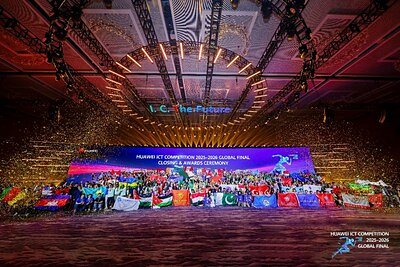
SHENZHEN, China – June 09, 2026 – As the confetti settled at the 10th Huawei ICT Competition Global Final, the numbers were staggering: over 220,000 students and faculty from more than 100 countries had participated, making it the largest in the event's history. On the surface, it was a celebration of bright young minds from 49 nations, rewarded for their prowess in cloud, AI, and networking. But behind the awards and applause lies a far more significant story—one about a decade-long strategic investment in building a global technology ecosystem from the ground up.
At the ceremony, Ritchie Peng, President of Huawei's ICT Strategy & Business Development, framed the competition as a commitment to "using technology for good and for sustainable social and environmental development." It's a polished corporate message, but the data tells a deeper tale. This competition isn't just a philanthropic gesture; it's the operational arm of a long-term strategy to cultivate talent, embed technology standards, and build influence on a global scale. As a former analyst, I've learned that the most insightful trends aren't always in the financial reports; sometimes, they're in the enrollment figures of a global classroom.
A Decade of Exponential Growth
The most telling metric of this initiative is its explosive growth. What began in 2015 has scaled dramatically. Just five years ago, the competition attracted around 40,000 students. Today, that number has more than quintupled. This isn't accidental; it's the result of a deliberate and well-funded expansion of the Huawei ICT Academy program, which partners with over 2,000 universities worldwide.
For the students and instructors involved, the benefits are tangible and immediate. Participants gain hands-on experience with cutting-edge technology that is often out of reach for their home institutions. As one instructor from Nigeria, a country that saw multiple teams win awards, noted in a past forum, the competition provides a crucial bridge between academic theory and the practical skills demanded by the industry. Students from Algeria, Brazil, and Kenya, who took home Grand Prizes, are not just winning a trophy; they are gaining a significant advantage in the global tech job market. Many past participants report that the credential fast-tracked their careers, leading to opportunities within Huawei or its vast network of partners.
By providing training materials, certification programs, and a competitive platform, Huawei is effectively shaping the curriculum for the next generation of ICT professionals. It is building a global pipeline of talent that is not only skilled in the technologies of the future but is also intimately familiar with Huawei's hardware and software. This creates a self-reinforcing loop: universities get to offer world-class training, students get career-defining skills, and Huawei gets a future workforce fluent in its technological language.
The Power of Partnership: Aligning with Global Institutions
To legitimize and amplify its educational outreach, Huawei has forged powerful alliances, most notably with the United Nations Educational, Scientific and Cultural Organization (UNESCO). This isn't a simple sponsorship; it's a deep, programmatic collaboration. Dr. Shafika Isaacs of UNESCO praised the partnership at the ceremony, highlighting that the future of AI requires collaboration between industry, academia, and international organizations.
This collaboration goes far beyond a name on a banner. Joint initiatives include AI capacity-building programs in Arab nations and ICT education partnerships across Central Asia and the Caucasus. For example, the "AI in Schools" project in Morocco, co-launched by Huawei and UNESCO, aims to integrate AI skills directly into secondary education curricula. By aligning with UNESCO's Sustainable Development Goals for education, Huawei positions itself as a partner in global development, not just a vendor of technology.
This strategic alignment provides a powerful shield of credibility. In regions where Huawei faces political and security scrutiny from Western governments, a partnership with a respected UN agency offers an invaluable endorsement. It reframes the company's activities from purely commercial or national interests to a shared global mission of bridging the digital divide. The ICT Skills Development Insight Report for Central Asia, released during the summit, is another example of this strategy—providing data-driven recommendations that position the company as a thought leader and a development partner.
The Ascend Track: Cultivating a Proprietary Ecosystem
Perhaps the most strategically significant announcement from the event was the introduction of a new Ascend AI Operator Development Track. This isn't just another competition category; it's a move to build an army of developers for Huawei's proprietary AI ecosystem. The Ascend platform, featuring its own processors and software frameworks, is the company's answer to Western dominance in the AI hardware market, particularly from firms like NVIDIA.
For any technology platform to succeed, it needs a thriving ecosystem of developers who can build applications and create value. By introducing a competition track focused on its Ascend platform, Huawei is directly incentivizing the world's brightest students to learn, innovate, and ultimately build their careers using its technology. The track, which will debut in the Chinese mainland, is designed around task-based challenges, ensuring that participants develop practical, real-world skills on the Ascend platform.
This move is a clear reflection of the broader geopolitical landscape and China's push for technological self-sufficiency. By creating a talent pipeline specifically for its own AI stack, Huawei is not only securing its future workforce but also accelerating the adoption and maturation of its technology, aiming to create a viable, independent alternative to the current market leaders. It’s a long-term investment in building a moat around its most critical future technology.
Education as Soft Power in a Complex World
When viewed through a geopolitical lens, the Huawei ICT Competition is a masterclass in corporate soft power. In an era where the company is often portrayed as a security risk in Western capitals, this initiative allows it to project a different image: that of an educator, a partner, and a force for global good. The competition's emphasis on diversity, with special awards for "Women in Tech" and teams from developing nations, further enhances this narrative.
By investing heavily in the education and careers of tens of thousands of young people in Africa, Latin America, and Asia, Huawei is building deep reserves of goodwill. These students will become the next generation of engineers, CTOs, and policymakers in their home countries. Their positive experiences and familiarity with Huawei's technology will inevitably shape future procurement decisions and technology standards, creating long-term market access that no amount of traditional advertising could buy.
This isn't a conspiracy; it's simply smart, long-term strategy. As the digital economy becomes the backbone of global development, the company that trains the builders will have an undeniable and enduring influence. The 18 Grand Prize-winning teams from eight countries are the immediate victors, but the real winner is the ecosystem they are now a part of.