
- 220,000 students from over 2,000 universities across 100+ countries participated in the 10th Huawei ICT Competition Global Final.
- 4 million developers have joined Huawei's Ascend AI ecosystem by 2025.
- 8 countries represented among Grand Prize winners, including Nigeria, Egypt, Kenya, and the Dominican Republic.
Experts would likely conclude that Huawei's Global Classroom initiative is a strategic long-term play to cultivate a global talent ecosystem, project soft power, and secure its technological future in an increasingly fractured world.
Huawei's Global Classroom: A Blueprint for a New Tech Order
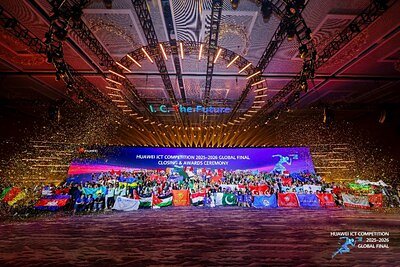
SHENZHEN, China – June 09, 2026 – As the confetti settled at the 10th Huawei ICT Competition Global Final, the scale of the event was undeniable. With a record 220,000 students from over 2,000 universities across more than 100 countries, the competition has evolved into a global phenomenon. While the awards ceremony celebrated brilliant young minds from Algeria to Brazil, the event itself signifies something far more profound than a corporate social responsibility initiative. It represents a meticulously crafted, decade-long strategy to build a global talent ecosystem, project soft power, and secure the company's technological future in a fractured world.
This isn't just a competition; it's a global classroom and a recruitment pipeline rolled into one, designed to cultivate a generation of engineers fluent in Huawei's technological language. As one industry analyst noted, this is a key front in the “ecosystem wars” being waged by global tech giants, and Huawei is playing the long game.
Building a Global Talent Pipeline
The competition's primary and most visible function is addressing a critical global need. With regions like the Middle East and Africa facing a projected shortage of millions of ICT professionals by 2030, the demand for skilled talent in AI, cloud, and cybersecurity is insatiable. Huawei's initiative directly tackles this gap. The competition's structure—divided into Practice, Innovation, and Programming tracks—pushes students beyond theory and into practical, real-world problem-solving.
This year's Grand Prize winners, hailing from eight different countries including Nigeria, Egypt, Kenya, and the Dominican Republic, underscore the program's global reach and its focus on emerging markets. Ritchie (Honghua) Peng, President of Huawei's ICT Strategy & Business Development Department, stated that the competition reflects the company's commitment to “sustainable social and environmental development.” He praised participants for their “dedication, curiosity, and deep technical focus,” highlighting how the event serves as a tool to address real-world challenges.
The impact on participants is tangible. Students gain hands-on experience with cutting-edge technologies that are often inaccessible at their home institutions. One former participant, a law student, remarked on how the competition gave her critical ICT knowledge and the confidence to enter a new field. For many, it's a direct pathway to a career. An instructor from Pakistan emphasized that top performers are frequently offered internships and employment, creating life-changing opportunities and empowering a new generation of tech leaders.
The Soft Power of a Digital Ecosystem
Beyond skill development, the ICT Competition is a potent instrument of corporate soft power. By investing heavily in the education and careers of young people across Asia, Africa, and Latin America, the Shenzhen-based giant builds immense goodwill. It cultivates future CTOs, policymakers, and engineers who are not only familiar with its technology but also view the company as a partner in their national development.
This strategy is amplified by a crucial partnership with UNESCO. At the ceremony, Dr. Shafika Isaacs, a director at the UNESCO Institute for Information Technologies in Education, praised the collaboration, noting that “the future of AI requires collaboration among governments, international organizations, academia, and industry.” This partnership lends significant international legitimacy to Huawei's efforts, reframing its activities from purely commercial interests to a shared global mission of bridging the digital divide.
The collaboration goes deep. Joint initiatives include AI capacity-building programs in Arab countries and ICT education partnerships in Central Asia and the Caucasus. By co-releasing publications like the “ICT Skills Development Insight Report,” Huawei positions itself not just as a vendor, but as a thought leader and an indispensable partner for governments seeking to build a future-ready workforce. This deep institutional access, facilitated by a respected UN agency, is a strategic masterstroke in navigating a complex geopolitical landscape.
Forging the AI Frontier on Its Own Terms
Perhaps the most telling indicator of Huawei's long-term vision was the announcement of a new Ascend AI Operator Development Track. This isn't merely an addition; it's a declaration of intent. The Ascend platform, which includes Huawei's own AI processors and software frameworks, is the company's answer to Western dominance in the AI hardware and software stack, particularly from competitors like NVIDIA.
By creating a dedicated track for its proprietary AI ecosystem, Huawei is methodically building an army of developers who can build, innovate, and scale on its platform. This initiative is a critical component of a broader national strategy for technological self-sufficiency. Since 2020, the company has worked with China's Ministry of Education to integrate Ascend-based courses into university curricula, and the effort is bearing fruit. By 2025, the Ascend ecosystem had already attracted over 4 million developers.
The goal is clear: to cultivate a dedicated talent pool that ensures the long-term viability and growth of its platform, reducing reliance on foreign technology. While analysts note that individual Ascend chips may still lag behind their Western counterparts in certain performance metrics, Huawei's focus on system-level design, large-scale clusters, and software orchestration creates a resilient and increasingly competitive alternative, especially within China and its partner nations.
A Platform for Inclusion and Sustainability
Reinforcing its image as a global citizen, the company also presented special accolades that align with worldwide priorities. The Women in Tech Award, given to seven all-female teams from countries like Azerbaijan, Nigeria, and Kenya, highlights a concerted effort to foster female participation in STEM. Similarly, the Green Development Award, won by teams from Ghana and China, recognized solutions that leverage technology for environmental protection. One winning project from Ghana, for example, employed AI to help protect endangered forests.
These awards are more than just a public relations exercise; they demonstrate an alignment with the UN's Sustainable Development Goals and signal to partner nations that Huawei is invested in creating a more equitable and sustainable future. This was further underscored by the AI Accelerating Education Transformation Summit held during the event, where Huawei launched its ICT Academy AI Course Solution, ensuring the cycle of talent development continues long after the competition ends.