
- 68.6% of Vanderbilt’s third-graders are reading proficiently, nearly three times the 25% projected rate for similar schools.
- Only 38.9% of Michigan’s third-graders statewide met proficiency standards in English Language Arts (2025 M-STEP).
- NHA schools gained 46 extra days of learning in reading compared to traditional public schools (Stanford CREDO study).
Experts would likely conclude that Vanderbilt Charter Academy’s success demonstrates that targeted, early literacy interventions and a structured, data-driven approach can significantly improve reading proficiency, even for at-risk students, challenging socioeconomic barriers to academic achievement.
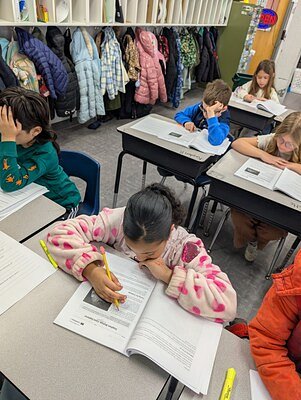
How One Michigan School Tripled Reading Scores for At-Risk Students
HOLLAND, Mich. – May 26, 2026 – In a quiet corner of West Michigan, Vanderbilt Charter Academy is achieving results that defy state trends and national statistics. The public elementary school has been named one of the top five in Michigan for third-grade reading performance, an honor made extraordinary by its student demographics. With over 80% of its students qualifying for free- and reduced-price lunch, the school is shattering expectations about the link between poverty and academic achievement.
An analysis by the education news site The 74 Million, which sought to identify schools “beating the odds,” found that 68.6% of Vanderbilt’s third-graders are reading proficiently. This figure is nearly three times higher than the 25% proficiency rate the analysis projected for schools with similar economic profiles. The recognition highlights a potent early literacy program that serves as a powerful counter-narrative to the educational challenges facing the state.
“This recognition reinforces what we know, that when you focus on strong foundations, students rise,” said Vanderbilt Principal Jeff Groggel, crediting the dedication of his team and the learning culture they have cultivated.
A Stark Contrast to State Trends
Vanderbilt’s success is particularly significant when set against the backdrop of Michigan’s broader struggles with early literacy. Recent data from the 2025 Michigan Student Test of Educational Progress (M-STEP) painted a concerning picture, revealing that only 38.9% of third-graders statewide met proficiency standards in English Language Arts—a new low for the state. This means over 61% of Michigan’s third-graders are not reading at grade level.
The challenge is even more acute for economically disadvantaged students. Across Michigan, a wide proficiency gap persists between low-income students and their more affluent peers. While state-level policies like the “Read by Grade Three Law” mandate interventions such as individual reading plans, Vanderbilt’s proactive, ground-up approach appears to be outpacing the impact of broader legislative efforts.
By demonstrating that high achievement is possible regardless of socioeconomic status, the school offers a compelling case study in closing opportunity gaps at a time when they appear to be widening elsewhere.
The Blueprint Begins in Kindergarten
At Vanderbilt, the journey to third-grade reading proficiency does not begin in third grade. It starts on the first day of kindergarten.
“We believe our success starts in kindergarten,” Groggel stated. “Our No. 1 priority is making sure every student builds the foundational skills they need early.”
Many students arrive at the school without knowing their letters or sounds, a reality the school’s educators view not as a deficit but as a starting point. The curriculum, part of the National Heritage Academies (NHA) network to which Vanderbilt belongs, emphasizes daily, structured phonics instruction. This focus on the science of reading helps students systematically learn how sounds and letters form words, building the decoding skills essential for fluency and confidence.
This foundational work is supported by a rigorous system of continuous assessment. Using benchmarking and consistent progress monitoring, teachers track each student’s development in letter recognition, phonics, and fluency. This data-driven approach allows for rapid instructional adjustments to meet individual needs, ensuring no student falls behind. One-on-one and small-group interventions are woven into the daily classroom structure, providing targeted support where it's needed most.
This heavy front-loading of foundational skills means that by the time students reach third grade, the focus can shift from learning to read to reading to learn. Classrooms can delve deeper into comprehension, critical thinking, and engaging with complex, grade-level texts because the mechanical aspects of reading have already been mastered.
Sustaining Momentum Through Partnership
The school’s strategy extends beyond early grades and outside the classroom walls. In third grade, instruction becomes even more targeted, with teachers analyzing student data weekly to fine-tune their lessons in real-time. Reading specialists and small-group interventions provide additional layers of support, reinforcing skills and building confidence.
A key component of this strategy is fostering a love of reading and engaging families as partners. Vanderbilt’s “Book Bag” initiative is a prime example. The program requires third-graders to take a new book home every night to read independently and aloud with family members. The goal is ambitious: for each student to read 100 books over the course of the school year. This daily habit not only builds fluency and vocabulary but also creates a powerful home-school connection centered on literacy.
This supportive and structured environment cultivates students who are motivated and engaged. “Our students love being here,” Groggel noted. “They feel supported, and they’re willing to take academic risks.”
A Replicable Model for Closing Gaps
Vanderbilt’s achievements are not an isolated anomaly but a reflection of the educational model of its parent network, National Heritage Academies. A landmark 2023 study from Stanford University’s Center for Research on Education Outcomes (CREDO) identified NHA as a “gap buster”—a designation for school networks that not only post high overall achievement but also demonstrate stronger-than-average growth for Black, Hispanic, and economically disadvantaged students.
The CREDO study found that, on average, students in NHA partner-schools gained the equivalent of 46 extra days of learning in reading compared to their matched peers in traditional public schools. NHA was ranked in the top 20% of charter school operators nationally for its impact. This external validation suggests that the systems in place at Vanderbilt—rigorous academics, a character-based curriculum, and a focus on closing gaps early—are part of a successful, scalable blueprint.
Founded on the principle that every child deserves a high-quality education, the NHA network is demonstrating that with the right systems and a relentless focus on foundational skills, schools can empower students to overcome socioeconomic barriers and achieve academic excellence.